Summary of Main Ideas
– The canonical gospels contain an 18-year gap in Jesus’s life, from age 12 to 30, with no documented activities.
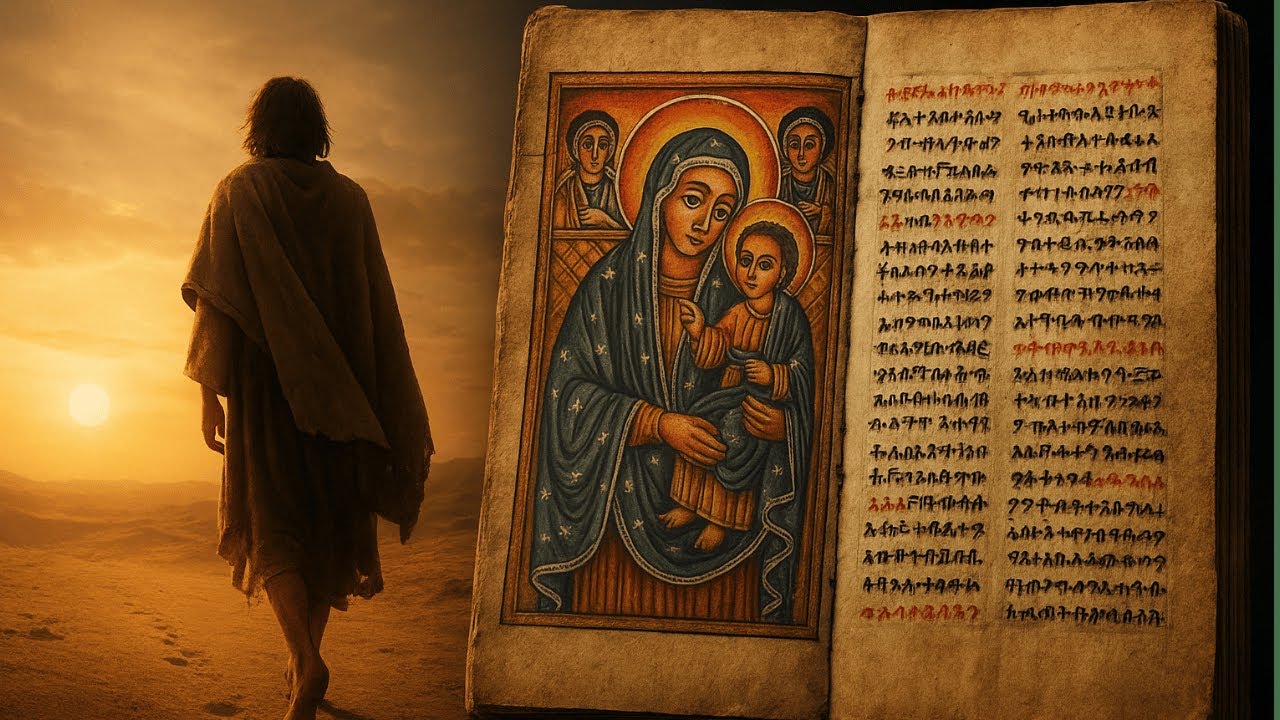
– The Ethiopian Bible’s 81-book canon does not provide details about Jesus’s “lost years” despite viral claims.
– Popular theories (India, Tibet, Egypt) lack credible historical evidence and stem from debunked 19th-century claims.
– Modern YouTube videos falsely attribute hidden knowledge to the Ethiopian Bible without textual support.
– Scholarly consensus suggests Jesus worked as a carpenter in Nazareth during this period.
– The Ethiopian Orthodox Tewahedo Church preserves unique ancient texts, but none address Jesus’s youth.
– Understanding this mystery teaches us valuable lessons about verifying sources and distinguishing fact from sensationalism.

Introduction
Ever wondered what happens when a compelling narrative meets zero evidence? You get one of history’s most persistent mysteries—and a masterclass in how misinformation spreads.
As business leaders, you know the importance of due diligence. You wouldn’t sign a contract based on YouTube rumors or invest in a company based on sensational claims. Yet when it comes to historical and religious narratives, even smart professionals sometimes fall for well-packaged myths. Today, we’re diving into one of Christianity’s most intriguing puzzles: the 18 missing years of Jesus’s life and what the Ethiopian Bible actually says about it.
Spoiler alert: It’s not what the internet wants you to believe.

The 18-Year Gap: What We Actually Know
Let’s start with the facts. The four canonical gospels—Matthew, Mark, Luke, and John—provide a surprisingly incomplete biography of Jesus. We see him as an infant fleeing to Egypt. We glimpse him at age 12, debating religious teachers in Jerusalem’s Temple with remarkable insight (Luke 2:41-52). Then? Silence. Complete radio silence for 18 years.
The narrative picks up again when Jesus is 30 years old, getting baptized by John the Baptist. His public ministry begins. But where was he between ages 12 and 30?
(For credible analysis of gospel silence and missing years in extra-canonical sources, see Ethiopian Orthodox Bible Explained: The Truth About Jesus’s Missing Years)
Think of it like a resume with a massive employment gap. Any recruiter would immediately ask questions. Historians and theologians have been asking those same questions for centuries. The difference? Some people decided to fill in the blanks with creative fiction.

The Ethiopian Bible: A Unique Treasure, But Not a Missing Puzzle Piece
Here’s where things get interesting—and where misconceptions multiply. The Ethiopian Orthodox Tewahedo Church maintains one of the most fascinating biblical canons in Christianity. While Protestant Bibles contain 66 books, the Ethiopian Bible includes 81 books, all preserved in Ge’ez, an ancient Semitic language.
This expanded canon includes remarkable texts lost to most Christian traditions:
- Book of Enoch: Ancient Jewish apocalyptic literature describing angelic realms and cosmic mysteries
- Book of Jubilees: A retelling of Genesis and Exodus with additional chronological details
- Kebra Nagast: A 14th-century epic linking Ethiopian kingship to King Solomon and the Ark of the Covenant
These texts offer a non-Roman Hellenistic perspective on early Christianity. They preserve traditions that Western church councils deemed non-apostolic and excluded from official canons. For scholars, this is literary gold—a window into how different Christian communities understood their faith.
But here’s what the Ethiopian Bible doesn’t contain: details about Jesus’s activities between ages 12 and 30. None of its 81 books fill this gap. The Ethiopian canon mirrors the canonical gospels’ silence on this period precisely.
(For a detailed treatment that debunks viral claims about the Ethiopian Bible on this topic, see Ethiopian Bible Canon Explained: The Real Value Beyond Jesus’s Missing Years and Ethiopian Bible Canon Explored: Insights on Jesus’s Missing Years and Lessons for Leaders)

The Theories: From Plausible to Preposterous
Nature abhors a vacuum, and apparently, so does human curiosity. Over centuries, various theories have emerged to explain Jesus’s missing years. Let’s examine them with the same critical thinking you’d apply to a business proposal.

Theory 1: Jesus in India and Tibet
This theory originated with Nicolas Notovitch, a Russian aristocrat who claimed in 1894 that he discovered Pali texts at Hemis monastery in Ladakh. According to Notovitch, these documents described Jesus studying Vedas in Puri, learning Buddhism in the Himalayas and Tibet, and returning to Judea at age 29.
Sounds exotic and intriguing, right? There’s just one problem: It’s been thoroughly debunked as a hoax. Multiple scholars have visited Hemis monastery. None found the texts Notovitch described. The monastery’s own records contradict his claims. No verified documents support this theory whatsoever.
Evidence level: Zero. Comparable to claiming your competitor is secretly run by time travelers—entertaining fiction, but fiction nonetheless.

Theory 2: The Essenes and Qumran
This theory suggests Jesus studied with the Essenes, a Jewish sect associated with the Dead Sea Scrolls and the Qumran community. It’s more plausible than the India theory—at least the geography works. The Essenes existed in first-century Judea, and some of their teachings align with Jesus’s later ministry.
However, the evidence remains indirect and speculative. Noncanonical gospels hint at connections, but nothing concrete exists. Think of it as circumstantial evidence that might interest you but wouldn’t hold up in court.
Evidence level: Possible but unverified. Like hearing your competitor might be developing a new product—worth monitoring, but don’t restructure your business plan yet.

Theory 3: Jesus in Britain
This folklore claims Jesus traveled to Britain with Joseph of Arimathea, possibly involved in tin trading. It’s a charming story that inspired William Blake’s famous hymn “Jerusalem” (“And did those feet in ancient time / Walk upon England’s mountains green?”).
Unfortunately, charm doesn’t equal truth. No historical evidence supports this claim. It’s pure folklore, likely developed centuries later for nationalistic or religious reasons.
Evidence level: Fantasy. Like claiming your company invented the internet—a nice story for company culture, perhaps, but not for the annual report.

Theory 4: The Carpenter of Nazareth
Here’s the least exciting but most probable explanation: Jesus worked as a tektōn—a builder or carpenter—in Galilee alongside his father, Joseph. He lived a quiet, unremarkable life, advancing “in wisdom and stature” as Luke 2:52 describes.
No exotic travels. No secret mystical training. Just work, family, and community life in a small Galilean town. For most first-century Jewish men, this was normal life. Why should Jesus’s youth be any different before his ministry began?
Evidence level: High. The gospels don’t contradict it, Christian tradition assumes it, and it aligns with historical context. Think Occam’s Razor—the simplest explanation is usually correct.
(For more evidence on the mainstream scholarly view and why sensational claims persist online, see Ethiopian Orthodox Bible Explained: The Truth About Jesus’s Missing Years)

The Modern Myth Machine: YouTube and the Ethiopian Bible
Now we arrive at the heart of our mystery—or rather, the modern manufacturing of mystery. Recent years have seen an explosion of YouTube videos making extraordinary claims about the Ethiopian Bible revealing Jesus’s lost years.
Titles scream about “hidden knowledge,” “Black Jesus,” and journeys through “deserts and kingdoms.” The thumbnails are compelling. The narration is authoritative. The view counts are impressive. There’s just one tiny problem: It’s all nonsense.
Detailed analysis of these videos’ transcripts reveals pure sensationalism. They quote no actual Ge’ez texts. They cite no Ethiopian Orthodox scholars. They reference no specific passages from the 81-book canon. Why? Because no such content exists in the Ethiopian Bible.
The Kebra Nagast focuses on Solomonic lineage and Ethiopian kingship, not Jesus’s youth. The Book of Enoch deals with Old Testament expansions and eschatology, not Jesus’s teenage years. The Book of Jubilees retells Genesis and Exodus, ending centuries before Jesus’s birth.
These videos exploit people’s fascination with hidden knowledge and alternative narratives. They package speculation as revelation, imagination as scholarship. As business leaders, you recognize this tactic—it’s the same strategy used by snake oil salesmen and investment scammers. Create mystery, promise exclusive access to truth, deliver nothing of substance.

The Real Origins of the “Lost Years” Obsession
So where did this fascination begin? Interestingly, the “hidden years” phenomenon surged during the 19th century with Theosophy and New Age movements. These spiritual movements sought to synthesize world religions, often by creating connections that historical evidence didn’t support.
Notovitch’s India theory emerged in this context—not from scholarly research but from a desire to paint Jesus as a universal spiritual teacher who studied all major religions. It’s a theologically interesting idea, but wanting something to be true doesn’t make it so.
This pattern continues today. People want Jesus’s missing years to be exotic and mysterious because it makes for a better story. It allows projection of various agendas onto a historical blank slate. But good storytelling and good history are different disciplines.

Why This Matters: Lessons for Leaders
You might wonder why a business publication is diving into ancient religious texts and historical mysteries. Here’s why this matters for your professional life:

1. Source Verification Is Everything
Just as you wouldn’t make business decisions based on unverified claims, we shouldn’t accept historical or religious narratives without examining sources. The Ethiopian Bible claims collapse under basic scrutiny—no one citing these theories actually quotes the primary texts. If someone can’t show you the receipts, be skeptical.
(In-depth discussion of the need for primary sources in religious and historical claims: Ethiopian Bible Canon Explained: The Real Value Beyond Jesus’s Missing Years)
In your business, how often do you encounter “everyone knows” claims that fall apart when you demand evidence? Apply the same rigor everywhere.

2. Sensationalism Sells, But Truth Endures
YouTube videos about Jesus in Tibet get millions of views. Scholarly articles about first-century Galilean carpentry get hundreds of reads. Which is accurate? The boring one. Sensational claims often signal weak foundations. When evaluating opportunities, partnerships, or market trends, beware of the most exciting story in the room.

3. Narrative Gaps Invite Projection
The 18-year silence in Jesus’s biography invites people to project their own hopes, beliefs, and agendas. Similarly, incomplete information in business contexts invites speculation and rumor. When you control the narrative by providing transparent, factual information, you prevent others from filling gaps with fiction.

4. Diversity of Sources Enriches Understanding
The Ethiopian Bible’s unique canon reminds us that different perspectives preserve different treasures. While it doesn’t solve the missing years mystery, it offers valuable insights into early Christian diversity and textual history. In business, diverse viewpoints and information sources prevent groupthink and reveal blind spots.
(For understanding the rich diversity of the Ethiopian canon that goes beyond the topic of Jesus’s youth, see Ethiopian Orthodox Bible Insights on the Watchers and Sons of God)

5. Orthodox Doesn’t Mean Wrong
The scholarly consensus—Jesus as a Nazareth carpenter—isn’t exciting, but it’s probably correct. Sometimes the mainstream view is mainstream because it’s supported by evidence. Contrarian thinking has value, but contrarianism for its own sake wastes time and resources.

The Historical and Theological Implications
Beyond business lessons, this mystery offers important insights into how religious canons formed and evolved. The existence of the Ethiopian Bible’s 81-book canon demonstrates early Christianity’s remarkable diversity. Different communities preserved different texts based on their theological priorities and historical circumstances.
Western church councils excluded books deemed non-apostolic or doctrinally problematic. The Ethiopian Orthodox Church preserved texts that Rome and Constantinople rejected. Neither approach is inherently superior—they represent different historical trajectories and theological emphases.
However, accepting unverified theories about Jesus’s missing years carries risks. It blurs the line between legend and documented history. It can undermine orthodox doctrine by prioritizing esoteric narratives over canonical texts. Most importantly, it trains people to prefer exciting fiction over careful scholarship.
The value of historical mysteries isn’t always in solving them. Sometimes the value lies in recognizing what we don’t know and resisting the temptation to invent answers. That humility—the willingness to say “we don’t have enough information”—is crucial in both historical scholarship and business decision-making.

What the Evidence Actually Supports
Let’s summarize what credible scholarship tells us:
Highly Probable:
- Jesus lived in Nazareth from age 12 to 30
- He worked as a carpenter/builder with his father Joseph
- He lived a conventional life within Jewish religious and cultural norms
- His education was typical for a Jewish male of his time and place
- The gospels’ silence indicates nothing extraordinary occurred during this period
Possible But Unverified:
- Contact with various Jewish sects including possibly the Essenes
- Travel within Judea and surrounding regions for work or religious observance
- Deeper study of Hebrew scriptures and Jewish law
Debunked or Unsupported:
– Travels to India, Tibet, or the Far East
– Study of Buddhism, Hinduism, or Eastern mysticism
– Secret initiations into mystery religions
– Any details allegedly preserved in the Ethiopian Bible about this period (see Ethiopian Bible Canon Explored: Insights on Jesus’s Missing Years and Lessons for Leaders and Ethiopian Bible Canon Explained: The Real Value Beyond Jesus’s Missing Years)

The Bottom Line
The Ethiopian Bible is a genuine treasure of early Christian literature, preserving ancient texts lost to most traditions. Its 81-book canon offers scholars invaluable insights into how different Christian communities understood their faith. But it doesn’t solve the mystery of Jesus’s missing years because no ancient source—Ethiopian or otherwise—documents this period.
For a business-focused summary of what the Ethiopian canon does and does not say, see Ethiopian Bible Canon Explained: The Real Value Beyond Jesus’s Missing Years.
The most likely explanation remains the simplest: Jesus worked as a carpenter in Nazareth, living an unremarkable life until his ministry began at age 30. Not every gap in historical records conceals profound secrets. Sometimes silence just means nothing extraordinary happened.
For business leaders, the lessons are clear. Verify your sources. Question sensational claims. Distinguish between what’s documented and what’s speculated. Recognize when you’re being sold a story rather than shown evidence. These skills serve you whether you’re evaluating a potential acquisition, assessing market research, or simply deciding what to believe about history.
The next time you see a video promising to reveal what “they” don’t want you to know about ancient texts, ask yourself: Who are “they”? What actual evidence is presented? Can I verify these claims independently? Apply the same critical thinking you use in business decisions.
Truth might be less sensational than fiction, but it’s infinitely more valuable. And unlike viral myths, truth actually stands up to scrutiny—the ultimate test for anything worth believing, whether in boardrooms or ancient history.

FAQ
-
Does the Ethiopian Bible really contain information about Jesus’s lost years?
No. Despite viral video claims, none of the 81 books in the Ethiopian Bible offer details about Jesus’s activities between ages 12 and 30.
-
What books are in the Ethiopian Bible that aren’t found in most Christian Bibles?
The Ethiopian canon includes the Book of Enoch, Book of Jubilees, 1 Enoch, and Kebra Nagast, among others. These are unique ancient texts but do not discuss Jesus’s early life.
-
Is there any historical support for the theory that Jesus traveled to India or Tibet?
No. This theory is based on a 19th-century hoax by Nicolas Notovitch and has been thoroughly debunked by scholars.
-
Is there any evidence Jesus studied with the Essenes or other Jewish sects during his youth?
There are some speculative connections, but no direct or conclusive evidence. It remains unproven.
-
What do historians believe Jesus did during his “missing years”?
The scholarly consensus is that Jesus lived in Nazareth, working as a carpenter (tektōn) with his father Joseph, and leading a typical life for a Jewish man of his era.
-
Why do so many YouTube videos and blogs claim otherwise?
Sensational stories generate more views, clicks, and ad revenue. Many online claims are based on speculation, not primary sources or credible scholarship.
-
What’s the value of the Ethiopian Bible if it doesn’t solve the “lost years” question?
The Ethiopian canon preserves diverse ancient traditions and provides unique insights into early Christianity, textual history, and the development of doctrine—not secrets about Jesus’s youth.
-
How should leaders approach sensational historical claims?
Always demand original sources, scrutinize the evidence, and separate fact from fiction—the same discipline you use for business decisions.
See more at this link: https://youtu.be/ZxRK9BILXys?si=GSC27PuSbu8u6nrd