Summary of Main Ideas
Mel Gibson’s The Passion of the Christ delivered a staggering 2,040% return on investment—turning $30 million into $612 million worldwide. But the real story isn’t just about box office numbers. Behind the cameras, Gibson orchestrated one of Hollywood’s most daring productions, marked by life-threatening injuries, lightning strikes, and challenges that would test any leader’s resolve. Jim Caviezel, who portrayed Jesus, suffered dislocated shoulders, hypothermia, pneumonia, and was even struck by lightning during filming. Gibson self-financed the entire project after every major studio rejected it, betting his personal fortune on a vision the industry deemed too risky. The production team filmed entirely in dead languages—Aramaic, Hebrew, and Latin—with no modern dialogue, requiring months of linguistic preparation. This deep dive reveals the untold sacrifices, strategic decisions, and leadership lessons from a production that redefined faith-based cinema and proved that unwavering conviction can overcome institutional resistance.

The $30 Million Gamble That Hollywood Rejected
What happens when you bet $30 million of your own money on a film every major studio has rejected? For Mel Gibson, it meant creating one of the most profitable independent films in history. But it also meant navigating unprecedented challenges that would make most business leaders reconsider their strategy.
The Passion of the Christ wasn’t just a movie production. It was a masterclass in high-stakes leadership, crisis management, and vision execution under the most extreme conditions imaginable.

When Your Lead Actor Gets Struck by Lightning (Literally)
Managing teams through adversity is one thing. Managing them through biblical-level catastrophes is another entirely.
During the filming of the Sermon on the Mount scene, Jim Caviezel was struck by lightning. The bolt singed his beard and left him visibly dazed. Assistant director Jan Michelini was hit simultaneously, along with the script supervisor.
A crew member had just joked, “Lord, send us an angel.” Then thunder cracked.
Caviezel interpreted the incident as divine affirmation. Production continued. No lawsuits. No shutdowns. The team pressed forward.
Think about the leadership dynamics at play here. Gibson had cultivated such commitment to the project’s mission that even near-death experiences didn’t derail progress. That level of team alignment doesn’t happen by accident.
If you’re interested in how strong team alignment under adversity transforms organizational outcomes, the Wolf Moon Super Moon’s effect on team alignment and strategic planning is discussed here.

The Physical Cost of Authentic Leadership
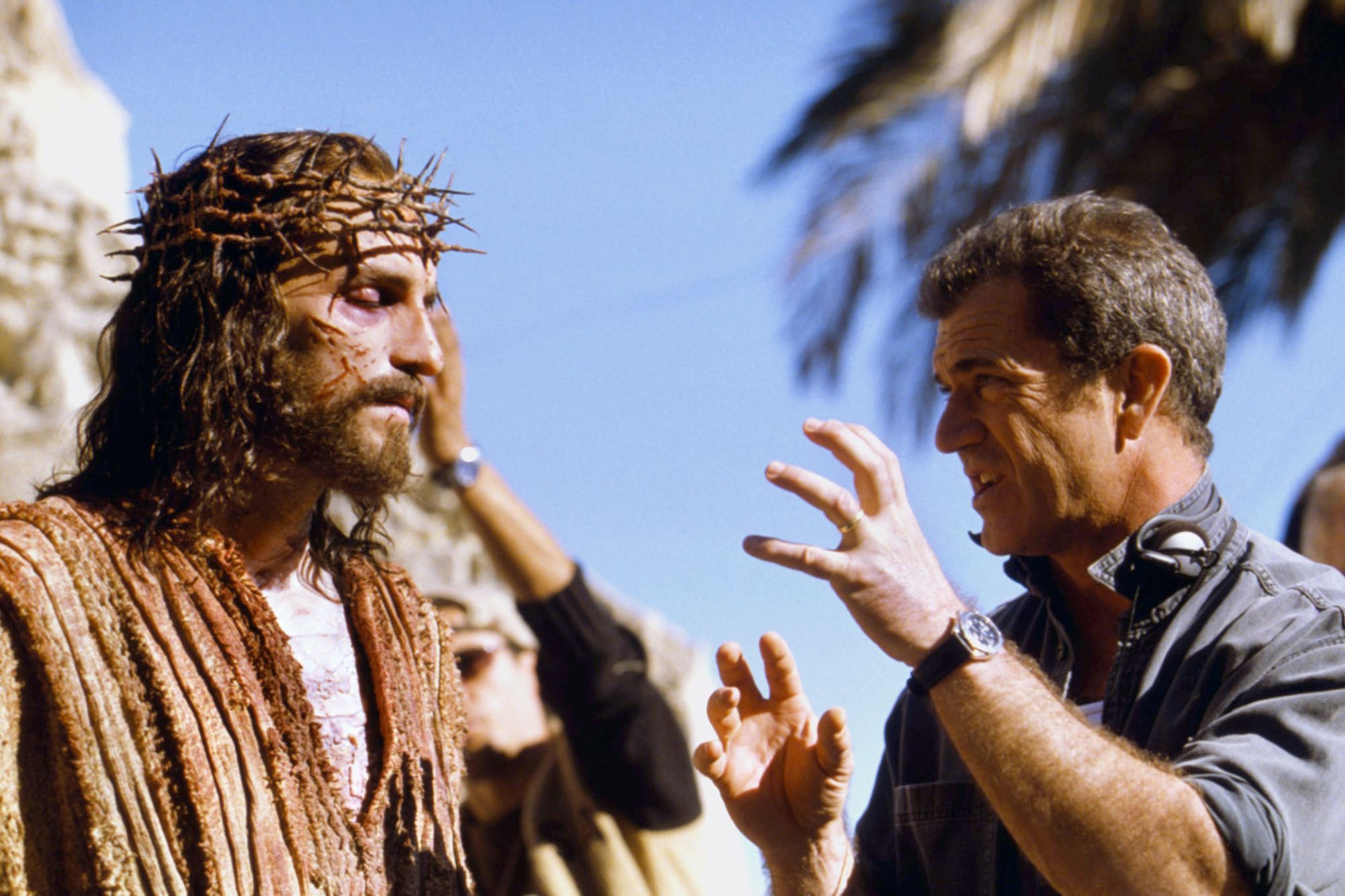
Caviezel’s commitment to the role went far beyond Method acting. It entered territory that most employment contracts would never permit.
- The Scourging Scene: Whipped over 100 times with latex-embedded whips designed to simulate Roman flagrums. His shoulder dislocated twice from carrying the 150-pound cross. The chronic pain lasted years.
- Crucifixion Sequences: Hung on an actual cross for hours. Makeup and harnesses created prolonged immobility that exacerbated existing injuries. Medical staff monitored constantly.
- Extreme Weather Conditions: Filmed in temperatures dropping to -12°F (-24°C) in Matera, Italy, and rural Texas. Caviezel collapsed from pneumonia and required hospitalization.
In 2017, Caviezel underwent heart surgery, linking the cardiovascular stress to filming conditions a decade earlier.
Here’s the business lesson: Caviezel knew the risks. He chose to proceed anyway because he believed in the project’s purpose. Gibson created an environment where that level of sacrifice made sense to his team.

Innovation Through Authenticity: The Dead Language Strategy
Gibson made another decision that conventional wisdom would label “commercial suicide.” He filmed the entire movie in Aramaic, Hebrew, and Latin—dead languages requiring subtitles throughout.
No modern English. No compromises for mainstream accessibility.
He hired linguists to reconstruct accurate first-century phonetics. Caviezel spent months learning Aramaic lines until he achieved near-fluency. Every actor underwent intensive language training.
Why? Because Gibson’s vision demanded authenticity over convenience.
This mirrors what the best companies do—they refuse to dilute their product for mass appeal. Apple didn’t add keyboards to iPhones because customers wanted them. Tesla didn’t make cheaper gas-electric hybrids to ease consumer transition.
Gibson bet that audiences would embrace something genuinely different, even if it required more effort to consume. He was right. Test audiences wept. Word-of-mouth exploded through church communities.
The film opened at number one with an $83 million opening weekend.
If you’re searching for more about strategic innovation and the courage to set new industry standards with authenticity, explore how Boeing’s folding wingtips redefined industry expectations here.

Crisis Management: Navigating Antisemitism Accusations
Not every challenge came from weather or physical injuries. Gibson faced intense criticism from the Anti-Defamation League and various theologians who labeled the film antisemitic.
Critics argued that emphasizing Jewish leaders’ role in Jesus’ death would revive dangerous blood libel stereotypes.
Gibson’s response demonstrated measured crisis communication: “No movie could be antisemitic that shows the scourging by Romans. It blames all humanity for Christ’s death.”
He cited biblical sources. He engaged with Vatican theologians who ultimately praised the film. He didn’t retreat from his vision, but he also didn’t ignore legitimate concerns.
The controversy became publicity. The film became a cultural phenomenon.
For business leaders, this illustrates an important principle: not all criticism requires capitulation. Sometimes standing firm on core principles—while engaging respectfully with critics—strengthens your position.
For detailed crisis management strategies and learning from extreme environments (even space), review NASA’s approach here.

The Special Effects Challenge: Realism Without CGI
Keith VanderLaan’s makeup team faced an unprecedented challenge: create injuries so realistic they’d convey brutal suffering without relying heavily on CGI.
The solution required innovation:
- Prosthetic wounds applied daily using air-compressed mechanisms for flesh-tearing effects
- Gallons of fake blood used across production
- Medical personnel on constant standby for actor safety
- Practical effects over digital shortcuts
The MPAA gave it an R rating. Critics called it “torture porn.” Gibson defended it as biblically mandated, citing John 19:37: “They will look on the one they have pierced.”
This commitment to quality—even controversial quality—created visceral impact that CGI couldn’t match. Audiences felt the suffering. That emotional connection drove repeat viewings and word-of-mouth marketing.
The lesson? Premium quality sometimes means making choices that attract criticism. The market ultimately decides whether your standards were justified.
To see how practical technical excellence defines organizational legacy and quality standards, read how legacy technology like Linux has impacted business here.

Distribution: When No One Will Carry Your Product
Major studios wouldn’t finance the film. They also wouldn’t distribute it.
Gibson’s Icon Productions partnered with Newmarket Films, a smaller independent distributor, after test screenings demonstrated undeniable audience response.
This forced Gibson to rely on grassroots marketing. Church groups became distribution partners. Pastors organized group viewings. The faith community became an alternative distribution network that bypassed traditional Hollywood channels entirely.
Sound like any successful direct-to-consumer brands that circumvented traditional retail?
By release day, the film had built-in demand that no marketing budget could buy. The audience was pre-sold through community networks and authentic engagement.
Grassroots distribution can be a critical advantage—see how conservation efforts leverage community networks for mission alignment and impact here.

The Symbolic Hand: When Leaders Share the Burden
In perhaps the film’s most personal moment, Gibson inserted himself literally into the story. His left hand appears on screen, driving the nails into Jesus’ hands during the crucifixion.
He explained in interviews: “It should be my hand. We all drove the nails.”
This wasn’t ego. It was symbolic accountability—the director acknowledging his own complicity in the story’s central theme of universal guilt and redemption.
For leaders, this represents something profound: sharing the burden publicly. Gibson didn’t just direct suffering; he participated in its depiction. He made his role visible.
How often do leaders visibly share the hardest parts of their team’s work?

The Long-Term Impact: Physical and Cultural
As of 2026, the film’s legacy extends beyond box office records.
- Physical Toll: Caviezel still battles chronic arthritis from injuries sustained during filming. His body bears permanent marks from his commitment to the role.
- Cultural Influence: The film sparked a faith-based film boom. Gibson’s sequel, The Passion of the Christ: Resurrection, builds on the original’s foundation.
- Industry Transformation: It proved that subtitled, ultra-realistic, faith-focused content could dominate mainstream markets.
For business leaders, the question becomes: What are you building that will still matter in 20 years? What principles are worth physical, financial, and reputational risk?

Leadership Lessons From an Unlikely Source
Gibson’s production reveals principles that transcend Hollywood:
- Conviction Over Consensus: Every expert said no. Gibson proceeded anyway. The market validated his vision.
- Authentic Quality: Dead languages and practical effects over convenient shortcuts created differentiation competitors couldn’t replicate.
- Team Alignment: Cultivating shared purpose so strong that team members endured extraordinary hardship willingly.
- Crisis Navigation: Addressing criticism without compromising core principles strengthened market position.
- Alternative Channels: When traditional distribution failed, grassroots networks provided superior market access.
- Visible Leadership: Literally putting his hand in the frame—sharing the burden publicly.

The Numbers Behind the Vision
Let’s return to the metrics that matter to business leaders:
- Budget: $30 million (self-financed)
- Worldwide Gross: $612 million
- ROI: 2,040%
- Opening Weekend: $83 million (number one)
- Production Timeline: 2002-2004 (including pre-production)
- Languages: Zero modern dialogue—100% Aramaic, Hebrew, Latin
- Rating: R (unprecedented for faith film with mass appeal)
These numbers tell a story of calculated risk executed with uncompromising standards.

What Would You Bet Your Fortune On?
Most leaders never face a decision to self-finance $30 million on a vision everyone rejects. But the principle scales.
Would you bet your career on an idea your industry dismisses? Would you maintain quality standards that critics call excessive? Would you cultivate team commitment so deep they’d endure hardship for a shared purpose?
Gibson did. His lead actor was struck by lightning, hospitalized for pneumonia, and suffered injuries requiring years of recovery. The industry predicted failure. Distribution channels closed.
Yet the film grossed $612 million and reshaped an entire genre.
The untold story of The Passion of the Christ isn’t just about filmmaking. It’s about what happens when unwavering conviction meets strategic execution—when leaders refuse to compromise vision for convenience.
For executives navigating their own “impossible” projects, Gibson’s journey offers a compelling framework: bet on your vision, demand authentic quality, align your team around shared purpose, and let the market—not the experts—validate your choices.
Sometimes the most profitable path is the one everyone says is too risky to walk.

Key Takeaways
- Unwavering conviction and risk-taking can yield historic rewards even when industry experts reject your ideas.
- Radical authenticity—using dead languages, real injuries, and practical effects—can differentiate your project or product in a crowded market.
- Cultivating team purpose and buy-in enables extraordinary endurance and commitment.
- Addressing criticism head-on, without abandoning core principles, can turn a liability into an asset.
- Alternative distribution channels and grassroots advocacy can bypass traditional gatekeepers.
- Visible leadership and willingness to share hard burdens set culture and expectations from the top down.
FAQ
- Did Mel Gibson really fund The Passion of the Christ personally?
Yes. Gibson mortgaged his own property and used personal wealth to fully finance the $30 million production. - Was Jim Caviezel actually injured during filming?
Caviezel suffered multiple on-set injuries including two shoulder dislocations, pneumonia, hypothermia, and a lightning strike. - Why did Gibson insist on dead languages?
To preserve historical and cultural authenticity, believing it increased emotional power and uniqueness, even at commercial risk. - Did controversy help or hurt the film?
The antisemitism debate increased publicity and curiosity, contributing to word-of-mouth and box office success. - Was there any CGI used in the film?
The film relied almost exclusively on practical effects for realism, with minimal digital alterations. - Is there a sequel to The Passion of the Christ?
Yes. Gibson has confirmed The Passion of the Christ: Resurrection as the sequel, with development ongoing as of 2026.
See more at this link: https://www.youtube.com/@ThePowerofJesus-e9e