Summary of Main Ideas
Mel Gibson risked $30 million of his own money to create The Passion of the Christ after every major studio rejected it. The film became one of cinema’s most challenging productions, with lead actor Jim Caviezel suffering dislocated shoulders, hypothermia, and nerve damage. Lightning struck the set twice during filming, hitting crew members who miraculously survived. Gibson insisted on filming in dead languages—Aramaic, Latin, and Hebrew—without subtitles initially, defying every Hollywood convention. The production faced antisemitism accusations, distribution struggles, and technical nightmares. Yet it grossed over $612 million worldwide, proving that unwavering vision and calculated risk-taking can triumph over institutional resistance. This is the untold story of what really happened behind the scenes.
- Studios Rejected the Vision: Every major Hollywood studio refused to back the film due to its language, violence, and religious content.
- Self-Financed Gamble: Gibson used $30 million of his own funds—a calculated, insight-driven risk.
- Historical Authenticity: Filmed entirely in dead languages, with intense attention to period details, often at the cost of comfort and safety.
- Extreme Adversity: Cast and crew endured injuries, freak lightning strikes, and technical setbacks.
- Controversy and Resistance: Accusations of antisemitism and lack of distributor support marked the film’s release.
- Record-Breaking Success: Ultimately, the film’s high-risk approach defied all predictions, achieving both cultural and financial impact.
Key Takeaways
- Vision and conviction can unlock unprecedented results, even in the face of total institutional rejection.
- Calculated risk-taking, grounded in customer understanding—not conventional wisdom—can lead to industry-defining outcomes.
- Extraordinary challenges, when faced together, build teams capable of executing seemingly impossible missions.
- Adversity and isolation can be strategic advantages when approached with self-reliant leadership principles, as explored in this analysis.
- Standing firm under criticism while remaining agile in non-core areas is the hallmark of principled leadership.
What Really Happened: The Untold Story Behind The Passion of the Christ
What does it take to bet everything on a vision that everyone else rejects?
In 2004, Mel Gibson answered that question by self-financing a film that Hollywood wouldn’t touch. The Passion of the Christ wasn’t just a movie—it was a masterclass in defying conventional wisdom. As business leaders, we constantly face moments where data conflicts with instinct, where stakeholders demand conformity, and where the safe path seems most rational.
Gibson’s production reveals something deeper than filmmaking. It’s a case study in leadership under extreme pressure, managing teams through crisis, and standing firm when critics demand you change course. What happened during those brutal months of filming offers lessons that extend far beyond the entertainment industry. If you want to dig deeper into ways leaders turn challenging circumstances into strategic wins, see how self-reliant leadership can turn isolation into success with this analysis.
Let’s dive into the shocking revelations Gibson and his cast have shared about this extraordinary production.

When Every Door Closes: The $30 Million Bet Nobody Wanted
Gibson approached Fox, Warner Bros., and every major studio with his vision. They all passed. The reasons? Too violent. Too risky. Too religious. A film in dead languages with no commercial appeal.
Sound familiar? Every disruptive innovation faces this wall of rejection. The iPhone was dismissed as overpriced. Netflix’s streaming model was called foolish. Airbnb was rejected by investors 15 times.
Gibson’s response? He wrote a check for $30 million from his own pocket. This wasn’t reckless gambling—it was calculated conviction. He’d built Icon Productions specifically for projects like this. He understood his audience better than studio executives who relied on focus groups and market research.
The business lesson here cuts deep. Sometimes your customer insights surpass what institutional knowledge tells you. Gibson knew there was massive demand for authentic faith-based content. The data said otherwise. He trusted his instinct.
Result? A 2,040% return on investment. The film grossed $612 million worldwide, becoming the highest-grossing R-rated film of all time (until Deadpool). Not bad for a project “nobody wanted.”
This framework for taking bold, calculated risks when everyone else says “no” closely aligns with the self-reliant leadership mindset—trusting your own judgment and resourcefulness under pressure. You can see concrete strategies leaders use in similar scenarios in this resource.

The Language Decision That Defied Every Marketing Expert
Here’s where Gibson’s vision gets truly radical. He insisted the entire film be shot in Aramaic, Latin, and Hebrew—languages dead for centuries. Initially, he didn’t even want subtitles.
Every marketing consultant would call this commercial suicide. You’re asking audiences to read subtitles for two hours of intense violence? In a theatrical release? The conventional wisdom was unanimous: it would fail.
Gibson hired Jesuit linguist Rev. William Fulco, S.J., to translate the entire script. Actors spent months learning pronunciation for languages they’d never speak again. The production became a linguistic archaeology project wrapped inside a film shoot.
Why did Gibson do this? Authenticity. He believed modern English would create emotional distance from the ancient horror he wanted to convey. The unfamiliar languages would force viewers to feel rather than intellectually process.
This mirrors a critical business principle: sometimes removing convenience creates deeper engagement. Think about how luxury brands make purchasing difficult. How exclusive memberships create desirability through scarcity. How the best restaurants don’t take reservations online.
Gibson understood that struggle creates value. The language barrier became a feature, not a bug. It demanded full attention—no multitasking, no casual viewing. In an age of infinite distraction, he created unavoidable immersion.
The gamble worked. Critics praised the linguistic authenticity as unprecedented. Audiences reported being transported in ways subtitled films rarely achieve.

The Physical Toll: When Your Team Suffers for the Mission
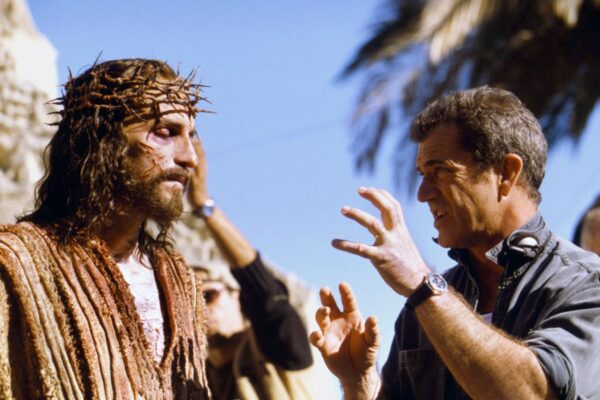
Jim Caviezel’s experience filming The Passion reads like a medical trauma report. He was whipped over 100 times with latex-embedded whips during the scourging scene. His shoulder dislocated twice from carrying a 125-pound cross. He developed hypothermia and pneumonia from 14-hour shoots in sub-zero winds.
The crucifixion scenes left him with permanent nerve damage. He hung on an actual cross for hours, makeup and harnesses cutting into his flesh. He collapsed and required hospitalization. The injuries limited his career afterward—he avoided action films because his body couldn’t handle the physical demands.
Caviezel later said it “mirrored Christ’s suffering spiritually.” He viewed his pain as redemptive, part of a larger purpose.
This raises uncomfortable questions for leaders. How much can you ask of your team? When does dedication become exploitation? Where’s the line between commitment and harm?
Gibson has been both praised and criticized for the conditions. Some call it visionary dedication. Others call it reckless endangerment. The truth likely sits in the uncomfortable middle.
As leaders, we face similar dilemmas at different scales. Launch deadlines that demand 80-hour weeks. Expansion plans that uproot families. Pivots that make entire skill sets obsolete. The question isn’t whether leadership requires sacrifice—it’s whether that sacrifice is shared, consensual, and purposeful.
Caviezel knew what he was signing up for. He could have left. He stayed because he believed in the mission. That’s the crucial distinction. Coerced suffering is abuse. Chosen suffering for a meaningful goal is dedication.
The film’s success validated his sacrifice in his own eyes. He now leads faith retreats and speaks about the experience as transformative. But for leaders, the lesson is clear: if you’re asking people to endure hardship, you’d better be certain the mission warrants it.

Lightning Strikes Twice: When Reality Becomes Stranger Than Fiction
During filming of the Sermon on the Mount scene, lightning struck the set. Twice.
The first bolt hit a generator near Caviezel. He felt the electrical jolt course through him. Minutes later, another strike threw assistant director Jan Michelini 20 feet through the air. Gibson’s stepson, crew member Eli Craig, was also nearby.
Nobody died. Nobody suffered serious injury. The crew shouted, “It’s a miracle!”
Caviezel later described it as “divine protection.” Makeup artist Sue Bohac converted to Catholicism after the incident. Multiple crew members reported spiritual experiences—visions, healings, a sense of “holy presence” that lingered throughout production.
Believe what you will about divine intervention. The business lesson is about managing through chaos.
Gibson had two choices when lightning struck his set: shut down production in fear, or interpret the event as confirmation and push forward. He chose the latter. He reframed a potential disaster as validation.
This is leadership alchemy—transforming setbacks into proof of concept. When your product launch glitches, do you panic or pivot? When a key employee quits, do you despair or see it as evolution? When competitors attack, do you retreat or double down?
The lightning strikes could have ended production. Insurance companies could have pulled coverage. Cast members could have walked off in fear. Instead, Gibson used the moment to deepen his team’s commitment to the project.
Producer Bruce Davey later said the incident unified the crew in ways typical team-building never could. Shared adversity—especially the inexplicable kind—creates bonds that shared success cannot.

The Antisemitism Firestorm: Standing Firm Under Public Attack
Before the film even released, the Anti-Defamation League accused Gibson of antisemitism. Critics claimed the temple scenes blamed Jews collectively for Jesus’ death. The controversy threatened to destroy the film before anyone saw it.
Gibson’s response offers a masterclass in crisis management—though not without controversy. He stood firm on his artistic vision while making strategic adjustments. He softened some dialogue. He met with Jewish leaders. But he refused to fundamentally alter his film.
His public statement was direct: “It happens in the Gospels.” He emphasized Roman responsibility and the concept of universal sin while defending his right to artistic freedom.
This is the tightrope every leader walks during public criticism. Apologize too quickly, and you signal that pressure works—inviting more of it. Refuse to engage, and you appear arrogant and defensive. The middle path requires conviction tempered with strategic flexibility.
Gibson changed what didn’t compromise his vision. He held firm on what mattered most. Whether you agree with his choices or not, the approach demonstrates principled pragmatism.
The Vatican praised the film as theologically sound. Box office success muted the debate—audiences voted with their wallets. The controversy itself generated publicity that money couldn’t buy.
Within business contexts, we see this pattern constantly. Product recalls, workplace allegations, pricing controversies—they all demand this same balance. Acknowledge legitimate concerns. Make adjustments where justified. But don’t abandon your core mission because critics are loud.

The Hand That Hammered the Nails: Gibson’s Hidden Cameo
Here’s a detail Gibson revealed only after release: his left hand appears in the film, hammering nails into Jesus during the crucifixion.
He explained: “I wanted to be the one hammering the nails.” For Gibson, this was theological—a Catholic confession belief that all sinners share responsibility for Christ’s death. By literally placing himself in the scene, he made a statement about personal accountability.
This reveals something crucial about leadership: skin in the game. Gibson didn’t just direct from a monitor. He didn’t just finance from a distance. He literally put himself into the most brutal moment of his film.
How many CEOs would work the warehouse floor during peak season? How many founders would handle customer service complaints personally? How many executives would take the same pay cuts they ask of employees?
Gibson’s symbolic act carries weight because he’d already demonstrated literal commitment—$30 million of personal capital, years of his career, and his reputation all risked on this project.
The hand in the frame represents more than theology. It represents the principle that leaders must be willing to do what they ask of others. Not symbolically. Actually.

The Technical Nightmare: 300 Effect Shots That Kept Breaking
Makeup artist Keith VanderLaan created hyper-realistic wounds using prosthetics, blood pumps, and CGI enhancements. The production required over 300 effects shots—a massive undertaking for 2004 technology.
The challenges were brutal. Prosthetics tore in wind and rain. Blood pumps malfunctioned. Hydraulic platforms for stunt falls risked real actor injuries. VanderLaan’s team worked 16-hour days repairing, adjusting, and improvising solutions.
The violence itself became controversial. A 30-minute scourging scene drew criticism for excessive brutality. Gibson defended it as historically accurate to Roman practices, citing historian Martin Hengel’s research on crucifixion.
For business leaders, this section highlights the gap between vision and execution. Ideas are cheap. Implementation is expensive, messy, and full of unforeseen obstacles.
Gibson’s vision required technical capabilities that barely existed. His team had to invent solutions on the fly. They couldn’t wait for better technology or perfect conditions. They had to deliver with what they had, where they were, under impossible conditions.
This is the reality of innovation. The technology to achieve your vision often doesn’t exist yet. You build it while building your product. You solve problems that have no existing solutions. You make it work because failure isn’t an option.
The 300 effect shots represent thousands of small decisions, countless failures, and relentless problem-solving. They represent the unsexy truth of execution: it’s mostly suffering through logistics until you break through.

The Distribution Battle: When the System Won’t Support You
Even after completion, Gibson faced another wall. Studios that passed on financing now passed on distribution. The violence, the language, the controversy—everything that made the film unique made it “undistributable” by conventional standards.
Icon Productions self-distributed domestically. International deals followed only after grassroots buzz created undeniable momentum. The film opened at #1, setting records for R-rated releases.
This mirrors the pattern of every disruptive product. First, gatekeepers reject it. Then, early adopters create momentum. Finally, the establishment rushes to participate after success becomes obvious.
Gibson didn’t wait for permission. He built his own distribution infrastructure. He leveraged church networks for grassroots marketing. He turned his lack of studio support into a narrative advantage—the authentic underdog story.
For SMEs and enterprise leaders, this is the playbook: when traditional channels close, build your own. When media ignores you, create direct customer relationships. When distributors won’t carry you, sell direct.
The film’s success on Gibson’s terms proved that the gatekeepers were wrong. It validated the entire independent approach. It showed that authentic vision with direct audience connection could bypass the entire traditional system.

What This Means for You: The Transferable Lessons
Gibson’s experience filming The Passion isn’t just entertainment industry gossip. It’s a blueprint for leading through impossible circumstances.
First: Trust your customer insights over institutional wisdom. Gibson knew his audience better than studio research departments. You likely know your customers better than consultants’ spreadsheets suggest.
Second: Sometimes removing convenience creates deeper value. The language barrier forced engagement. What barriers might actually strengthen your customer relationships?
Third: Shared adversity builds teams that shared comfort cannot. The lightning strikes unified Gibson’s crew. What challenges might you stop protecting your team from?
Fourth: Skin in the game isn’t optional for real leadership. Gibson’s $30 million and his hand in the frame both mattered. Where do you need to increase your personal stake?
Fifth: Build your own channels when traditional gatekeepers close doors. Icon’s self-distribution worked. What infrastructure might you need to own directly?
Leading through extreme adversity, trusting your vision, and leveraging isolation or rejection as growth drivers are explored in detail in this actionable leadership playbook: self-reliant leadership can turn isolation into strategic success.

FAQ
-
Q: Why did Mel Gibson finance The Passion of the Christ himself?
He believed so strongly in his vision that he was willing to risk $30 million of his personal funds after every major studio rejected the project. Gibson trusted his own customer insights and sense of market demand over institutional advice. -
Q: Was the decision to film in dead languages risky?
Absolutely. Every marketing advisor warned against it, but Gibson prioritized authenticity. The results showed that the language barrier actually deepened audience immersion, rather than deterring viewers. -
Q: How did Jim Caviezel and the crew cope with the production’s extreme challenges?
Caviezel endured real injuries and lasting nerve damage, viewing his suffering as spiritually meaningful. The rest of the crew bonded through shared adversity, furthered by unexplainable incidents like lightning strikes that many interpreted as “miraculous.” -
Q: How did Gibson handle accusations of antisemitism?
He made some strategic script adjustments and engaged in dialogue with critics, but ultimately stood firm on his artistic vision. Gibson argued that the film followed Gospel accounts and emphasized shared culpability. -
Q: What’s the primary business lesson from the film’s distribution?
When traditional channels close, build your own—Gibson’s independent strategy led to record-breaking box office success and proved the power of direct-to-audience innovation. -
Q: Where can I learn more about self-reliant leadership?
Explore detailed frameworks and real-world case studies of turning rejection into strategic wins in this guide to self-reliant leadership.