Summary of Main Ideas
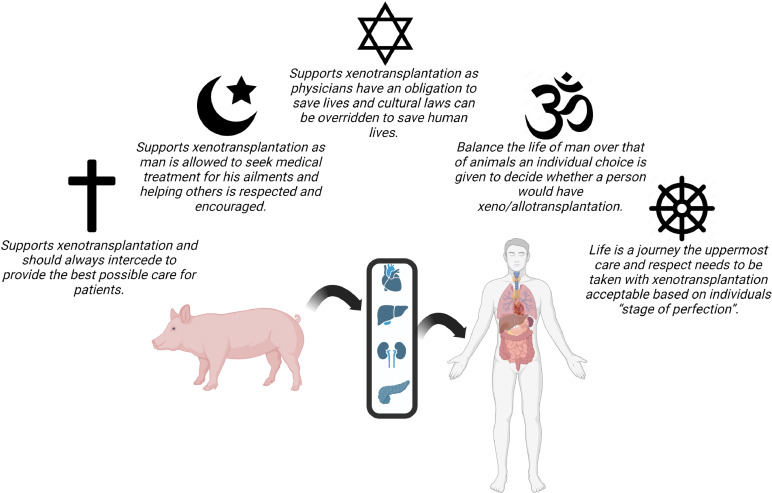
**The pork divide across Abrahamic religions reveals fundamental differences in how faith communities interpret divine law.** Judaism forbids pork through strict Kashrut laws rooted in Torah commandments. Islam reaffirms this prohibition in the Quran as an expression of submission to Allah. Christianity breaks from both traditions through New Testament theology that reclassifies dietary restrictions as ceremonial rather than moral law. For business leaders operating in diverse, global markets, understanding these religious distinctions isn’t just cultural literacy—it’s essential for building trust, avoiding costly mistakes, and creating inclusive workplaces where every employee feels valued.

The Jewish Prohibition: Where Law Meets Identity
Judaism’s pork prohibition isn’t a suggestion—it’s law. The Torah establishes clear biological criteria in Leviticus 11:3 and Deuteronomy 14:8. Any animal you eat must have cloven (divided) hooves and chew its cud. Both conditions must be met.
Pigs fail the test. They have cloven hooves but don’t chew their cud. This makes them treif (not kosher), unfit for consumption by observant Jews.
But here’s where it gets interesting for business leaders. The prohibition extends far beyond simple dietary restriction. Throughout Jewish history, avoiding pork became “a badge of covenant loyalty”—a visible, unmistakable marker of belonging to God’s chosen people.
Think of it like a company’s core values. You can claim certain principles all day long, but your actions reveal your true commitments. For Jewish communities, refusing pork—even under persecution—demonstrated unwavering loyalty to their covenant with God.
The historical stakes were remarkably high. The Maccabean revolt, a defining moment in Jewish history, was partially triggered when the Seleucid ruler attempted to force Jews to eat pork. Communities chose warfare over compromise on this single dietary law. That’s the organizational equivalent of shutting down operations rather than violating your fundamental principles.

The Exception That Proves the Rule
Judaism does recognize one critical exception: pikuach nefesh, the principle of saving a life. If someone faces starvation or a genuine life-threatening situation, they may eat pork to survive.
This exception reveals sophisticated risk management thinking. The same legal system that strictly forbids pork also recognizes that preserving human life supersedes almost every other commandment. It’s prioritization at its finest—knowing which rules are absolute and which must flex when higher values are at stake.
For business leaders, there’s a parallel lesson here. Strong organizational principles matter, but so does knowing when circumstances demand deviation from standard protocols. The key is having clear criteria for exceptions rather than arbitrary decision-making.

Kashrut as Competitive Differentiation
The broader Kashrut (kosher) system functions as comprehensive quality control and identity framework. Kosher certification requires rigorous processes, dedicated equipment, and constant oversight. The kosher food market now exceeds $24 billion globally, demonstrating how religious dietary laws create entire economic ecosystems.
Jewish dietary laws didn’t just prohibit certain foods—they created differentiation. In ancient times, when Jewish communities lived among pagan nations, refusing pork and following Kashrut laws made Jewish identity visible and distinct. This wasn’t accidental; it was strategic identity management.
Modern businesses understand this principle well. Your brand differentiators—the things you absolutely won’t compromise on—define who you are in the marketplace. For Jewish communities, Kashrut laws served this exact function for millennia before “brand positioning” entered the business vocabulary.
For leaders interested in how deep-rooted religious traditions inform resilience and identity in volatile situations, see faith-driven choices in Jerusalem offer contemporary business lessons in scenario planning, risk mitigation, and stakeholder alignment.

The Islamic Prohibition: Divine Reaffirmation and Submission
Islam’s prohibition on pork (haram) reaffirms and extends the Jewish tradition. The Quran explicitly forbids pork consumption multiple times. Surat An-Nahl 16:115 states: “Allah has forbidden you only carrion, and blood, and the flesh of swine; also any animal over which the name of any other than Allah has been pronounced.”
Notice the theological continuity here. When Muhammad received the Quranic revelation in the 7th century CE, it didn’t introduce a new dietary restriction—it reaffirmed the pork prohibition already established in Jewish law. This created theological continuity spanning both faiths and reinforcing shared moral traditions.
For Muslims, avoiding pork demonstrates several core values simultaneously: discipline, submission (Islam literally means submission to Allah), and spiritual cleanliness. It’s both an individual act of worship and a communal practice that connects Muslims to a global ummah (community) and to centuries of shared tradition.

The Business Parallel: Continuity in Standards
Think about ISO certifications or industry standards that multiple companies adopt. When businesses align on shared quality benchmarks, they create interoperability and mutual recognition. They can work together more seamlessly because they’re operating from the same rulebook.
Islamic dietary laws function similarly within the Muslim world. When a Muslim travels from Indonesia to Morocco to the United States, halal dietary laws remain constant. This consistency creates predictability and shared identity across vastly different cultures and geographies.
The Islamic exception mirrors Judaism’s pikuach nefesh: pork consumption is permitted only when facing starvation or genuine survival necessity. The principle remains identical—preserve life above ritual law—though the theological framework differs.

The Global Halal Economy
Like kosher certification, halal dietary requirements have spawned a massive global industry. The halal food market is projected to exceed $2 trillion, encompassing not just meat products but pharmaceuticals, cosmetics, and finance. Companies from Nestle to McDonald’s have invested heavily in halal certification to access Muslim-majority markets.
For business leaders, this represents a critical insight: religious dietary laws aren’t obstacles to overcome—they’re market requirements to understand and meet. Companies that dismiss these requirements as “niche” miss out on serving billions of consumers.

The Christian Divergence: Reinterpreting the Rules
Here’s where the plot thickens. Christianity emerged from Jewish roots, initially adhering to Jewish law. Yet within decades of Jesus’s death, Christian communities were eating pork freely. What happened?
The answer lies in theological reinterpretation. New Testament theology fundamentally reclassified Old Testament dietary laws from moral requirements to ceremonial practices—rules binding on ancient Israelites but not on Christian believers.
Several key scriptural moments drove this transformation, though the theological debates were intense and prolonged:
- Jesus’s Teachings on Purity: In Mark 7:19, Jesus’s teachings suggested that external foods don’t defile a person—rather, internal moral states do. This opened the door to questioning dietary restrictions.
- Peter’s Vision: The Book of Acts describes Peter receiving a vision of unclean animals descending from heaven with a divine command to “kill and eat.” Peter interpreted this as God’s signal that Gentile converts need not follow Jewish dietary laws.
- Paul’s Doctrine: The Apostle Paul wrote extensively about freedom from Jewish ceremonial law for Gentile Christians. In Romans 14, he argued that dietary practices should be matters of personal conscience rather than mandatory requirements.
This Christian reinterpretation of tradition can be compared to other rapid religious and cultural shifts in Jerusalem—see how evolving belief frameworks can impact major institutions and business risk environments.

The Critical Distinction: Ceremonial vs. Moral Law
Christianity’s theological innovation was distinguishing between two categories of Old Testament law:
- Moral laws: Universal, timeless principles binding on all people (don’t murder, don’t steal, etc.)
- Ceremonial laws: Cultural and ritual practices specific to ancient Israelite covenant identity (dietary restrictions, circumcision, specific sacrifices)
Christian theology classified pork prohibition as ceremonial law—important for Jewish covenant identity but not required for Gentile Christians following Jesus. This interpretive framework allowed Christians to view themselves as faithful to Scripture while abandoning practices that Judaism and Islam maintained as essential.

The Organizational Change Management Parallel
From a business perspective, Christianity’s approach resembles comprehensive organizational change management. Early Christian leaders faced a critical strategic question: Should the new movement remain a Jewish sect requiring full Torah observance, or should it become a universal religion accessible to Gentiles without requiring Jewish cultural practices?
The decision to drop dietary restrictions was controversial, producing fierce debates documented in Acts and Paul’s letters. But it ultimately enabled Christianity’s rapid expansion throughout the Roman Empire. Gentile converts could join without adopting the complete lifestyle changes that Jewish law required.
This represents strategic positioning—determining which elements of your tradition are non-negotiable core values versus which are cultural practices that can evolve. Organizations face similar choices constantly: Which principles define us? Which processes are just “how we’ve always done things”?
Modern leaders grappling with these questions may benefit from lessons taught by the nativity story’s inclusive and transformative leadership, discussed at nativity story’s inclusive and transformative leadership.

Why This Matters in Global Business
You might wonder why business leaders should care about ancient dietary laws. Here’s why: in our interconnected global economy, cultural and religious literacy directly impacts your bottom line.
1. International Negotiations and Relationship Building
When you’re negotiating deals in Tel Aviv, Dubai, or Jakarta, understanding dietary restrictions demonstrates respect and builds trust. Serving pork to Jewish or Muslim clients signals either ignorance or disrespect—neither creates a foundation for partnership.
Smart leaders research dietary requirements before hosting international guests. They ask about preferences proactively. They recognize that food isn’t just fuel—it’s a cultural and religious expression of identity.
Greater cultural awareness is also vital amid larger religious trends shaping international business—explore how Messianic expectations are shifting business landscapes in Jerusalem at Messianic expectations are shifting business landscapes in Jerusalem.
2. Building Inclusive Workplaces
Companies with diverse workforces must accommodate various dietary needs. This extends beyond cafeteria menus to team-building events, client dinners, and company celebrations.
An inclusive organization doesn’t just avoid pork—it provides appealing alternatives. It trains team members on religious dietary requirements. It creates environments where employees of all faiths feel their needs are understood and valued.
Research consistently shows that inclusive workplaces outperform homogeneous ones. Employees who feel respected bring their full selves to work, driving creativity and innovation.
Leaders looking for frameworks to empower diverse teams should consider principles from self-reliant leadership, detailed at self-reliant leadership.
3. Market Access and Product Development
If your company serves global markets, understanding religious dietary laws opens opportunities. Pursuing kosher or halal certification can unlock massive consumer markets while demonstrating quality control and ethical sourcing.
Major food companies like Coca-Cola, Kellogg’s, and Unilever have invested in halal and kosher certification not as niche offerings but as mainstream market strategies. These certifications signal quality to consumers beyond religious communities—they indicate rigorous oversight and transparent supply chains.
4. Supply Chain and Sourcing Decisions
Religious dietary laws influence global agricultural and food processing industries. Countries like Brazil, Australia, and New Zealand have built substantial export businesses around halal meat certification, serving Muslim-majority nations.
Understanding these requirements helps businesses navigate international trade, identify partnership opportunities, and avoid supply chain mistakes that could alienate key markets.

The Leadership Lesson: When to Hold Firm, When to Adapt
The pork divide teaches a deeper lesson about organizational principles. Judaism and Islam demonstrate the power of maintaining core practices across centuries, creating strong communal identity and continuity. Christianity shows how strategic adaptation can enable rapid growth and expansion.
Neither approach is inherently superior—both serve different strategic purposes. Strong organizations need leaders who understand when to hold firm on non-negotiable principles and when to adapt practices for changing contexts.
Hold firm when: Core values that define your identity are at stake. These are your organization’s equivalent of fundamental religious laws—compromise them, and you cease to be who you are.
Adapt when: Practices that once served a purpose no longer align with your mission or unnecessarily restrict growth. These are your ceremonial laws—traditions worth examining and potentially evolving.
The challenge lies in distinguishing between the two. Jewish and Muslim communities see pork prohibition as fundamental divine law. Christians see it as ceremonial practice tied to a specific historical context. Same scriptural foundation, radically different interpretations.
In business, similar debates arise constantly. Is that process a core value or just “how we’ve always done it”? Does that policy reflect our fundamental mission or an outdated assumption? These questions demand thoughtful analysis, not knee-jerk reactions.
Insights from ancient spiritual and ethical dilemmas—such as those surrounding the Nephilim narrative and leadership ethics—can further inform how leaders think about boundaries and core values in their organizations. See ancient spiritual and ethical dilemmas for a deep dive on these lessons.

Practical Applications for Business Leaders
Here are concrete steps for applying these insights:
- Before international meetings: Research your guests’ religious and cultural backgrounds. When in doubt, ask about dietary preferences directly. Choose restaurants with diverse menu options.
- For company events: Offer multiple entrée choices that accommodate various dietary restrictions. Clearly label ingredients. Partner with caterers experienced in kosher or halal requirements when serving observant Jewish or Muslim employees.
- In hiring and retention: Train managers on religious accommodation requirements. Create policies that respect diverse observances. Build flexibility into workplace practices.
- For global expansion: Invest in understanding local religious and cultural norms. Consider certifications (kosher, halal) that demonstrate commitment to serving these markets authentically.
- In product development: Engage diverse focus groups early. Design with global markets in mind rather than adapting later. View religious requirements as design opportunities, not constraints.
- For organizational culture: Examine your own “dietary laws”—the non-negotiable principles versus outdated practices. Create explicit criteria for what defines your core versus what’s open to evolution.

The Deeper Truth: Respect Drives Results
The pork divide ultimately reveals that people make different choices from shared foundations. Judaism, Islam, and Christianity all trace their roots to Abraham, yet they’ve developed distinct theological frameworks that produce different practices.
As business leaders, we navigate similar diversity constantly. Team members interpret company values differently. Cultures approach hierarchy, communication, and decision-making through various lenses. Generations bring different expectations to the workplace.
The most successful leaders don’t demand uniformity—they build frameworks that respect diversity while maintaining shared purpose. They recognize that understanding why people make different choices is the foundation for building trust, fostering collaboration, and creating sustainable success.
So the next time you’re planning that business dinner, remember: the menu isn’t just about food. It’s an opportunity to demonstrate that you see your colleagues, clients, and partners as whole human beings whose identities, beliefs, and practices deserve respect.
That’s not political correctness—it’s smart business. And in our interconnected global economy, leaders who understand this thrive while others struggle to understand why their deals fell apart over dinner.

Key Takeaways
- The pork prohibition is rooted in both Jewish and Islamic divine law, while Christianity reclassifies it as a ceremonial practice no longer binding.
- Dietary laws shape group identity, enforce standards, and create sizable global markets such as kosher and halal industries.
- Judaism and Islam include exceptions to pork prohibitions if human life is at risk, demonstrating legal nuance.
- Understanding religious dietary restrictions is crucial for global business success, from negotiations to market entry.
- Leaders must know when to uphold core principles and when to adapt—mirroring the difference between moral and ceremonial law across these faiths.
Frequently Asked Questions (FAQ)
- Why do Jews and Muslims avoid pork but most Christians do not?
Judaism and Islam see pork prohibition as a direct divine commandment. Christianity—guided by New Testament teachings—regards it as a ceremonial law, not a moral one, and therefore believes it’s no longer required for Gentile Christians. - Are there exceptions to these dietary laws?
Yes. Both Judaism (via pikuach nefesh) and Islam permit breaking dietary laws if it’s necessary to save a life. - What is the impact of kosher and halal laws on modern business?
Kosher and halal markets drive multi-billion dollar global industries. Understanding and respecting these requirements enables companies to access large, diverse markets and avoid costly cultural missteps. - How should global business leaders handle religious dietary requirements?
- Proactively inquire about dietary needs.
- Offer accommodations and alternatives during events.
- Consider kosher/halal certification if serving Jewish or Muslim consumers.
- Promote inclusivity to retain top multicultural talent.
- What can leaders learn from the pork divide?
That group identity, values, and practices vary even among people sharing common origins. The lessons are: hold firm on your true non-negotiables, adapt when needed for growth, and always approach difference with respect.
See more at this link: https://youtu.be/qTDvFb4BTWM?si=UENIJ7VhZGR48E2d