Key Takeaways
– Judaism and Islam prohibit pork based on explicit scriptural commands identifying pigs as unclean animals
– Christianity permits pork consumption following New Testament teachings that transcend Old Testament dietary restrictions
– Jewish Kashrut laws require animals to have cloven hooves AND chew cud—pigs fail this two-part test
– The Quran declares pork “haram” (forbidden) multiple times, viewing it as impure except in life-threatening situations
– Christian theology shifted dietary laws through Jesus’s declaration that all foods are clean (Mark 7:19)
– These dietary differences serve as visible identity markers and covenant loyalty symbols for each faith
– Understanding these distinctions is crucial for business leaders navigating global markets and diverse workforces
– Historical evidence shows pork prohibitions predated Abrahamic religions in ancient Near Eastern cultures

Picture this:
You’re hosting a crucial business dinner with international partners. The menu features an elegant pork tenderloin. Two of your guests politely decline, while another enthusiastically accepts. What’s happening here isn’t personal preference—it’s millennia-old religious tradition playing out at your dinner table.
Why do billions of people worldwide refuse to eat pork? And why do Christians, who share scriptural roots with Jews and Muslims, happily order bacon? The answer reveals fascinating insights about identity, theology, and cultural evolution that every modern business leader should understand.

The Great Abrahamic Divide
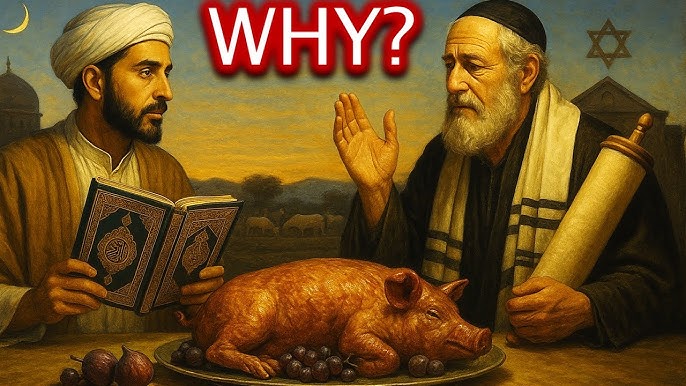
Judaism and Islam stand united on one point: pork is absolutely forbidden. Christianity took a different path entirely. This isn’t a minor theological footnote—it’s a fundamental divergence that shaped civilizations and continues to influence global commerce today.
All three religions share the Torah (Old Testament) as a common foundation. Yet they arrived at completely different conclusions about what belongs on the dinner plate. Think of it like three companies reading the same business manual but implementing radically different strategies.
The split comes down to how each faith interprets ancient purity laws. Jews maintain strict adherence to original dietary codes. Muslims reinforce these prohibitions through Quranic revelation. Christians reframed the entire concept through New Testament theology.

The Jewish Position: Kashrut and Covenant Identity
Jewish dietary laws, known as Kashrut, aren’t suggestions—they’re divine commands. The Torah establishes crystal-clear criteria for “clean” animals in Leviticus 11:3-7 and Deuteronomy 14:8. An animal must meet two specific requirements: cloven hooves and chewing cud.
Pigs present an interesting case study in biblical taxonomy. They have perfectly split hooves, checking one box. But they don’t chew cud, failing the second requirement. It’s like a job candidate who meets half your hiring criteria—close doesn’t count.
This two-part test isn’t arbitrary. It created a clear-cut system for ancient Israelites navigating daily food choices. No ambiguity, no gray areas. The pig fails the test and becomes treif (not kosher).
But there’s more to this story than dietary science. The pork prohibition served a crucial social function: distinguishing Israelites from surrounding pagan nations. In the ancient Near East, you could identify someone’s tribal allegiance by watching what they ate.
Think about this from a brand identity perspective. Kashrut became the Israelites’ trademark, their unique selling proposition in a crowded marketplace of ancient religions. Refusing pork wasn’t just obedience—it was a daily declaration of covenant loyalty.
For further context on ancient Near Eastern practices and their enduring cultural relevance—including influences on business and society—check out: ancient archaeological discoveries and unexplained phenomena

Modern Observance and Exceptions
Today’s Jewish observance varies by denomination. Orthodox and Conservative Jews maintain strict Kashrut. Reform Jews may interpret these laws more flexibly. But the principle remains powerful across the spectrum.
There’s one fascinating exception: pikuach nefesh (saving a life). If eating pork prevents death, Jewish law permits—even requires—breaking dietary restrictions. Life trumps law every time.

The Islamic Stance: Haram and Spiritual Purity
Islam didn’t just inherit pork prohibition—it reinforced it with divine emphasis. The Quran explicitly forbids pork consumption in multiple verses, including Surah Al-Baqarah, Al-Ma’idah, An-Nahl 16:115, and Al-An’am 6:145.
The language is unambiguous: the “flesh of swine” ranks alongside carrion and blood as forbidden. In Islamic terminology, pork is haram (forbidden) and considered najas (ritually impure). This dual classification makes it particularly serious.
Why the repetition? When Allah mentions something multiple times in the Quran, Muslims understand it as non-negotiable. It’s like your board of directors issuing the same directive in four consecutive meetings—you know they mean business.
Islamic scholars explain pork prohibition as an act of submission to Allah. It’s not about understanding every reason—it’s about trusting divine wisdom. Muslims believe God knows what’s best for human wellbeing, physically and spiritually.

The Halal Framework
Pork prohibition sits within the broader halal/haram system governing Muslim life. Halal means “permissible”—covering everything from food to business practices. Haram means “forbidden.” Together, they create clear boundaries for faithful living.
Like Jewish law, Islam permits exceptions in extreme circumstances. If a Muslim faces genuine starvation with no alternative, consuming pork becomes permissible. The preservation of life overrides dietary law.
This shared exception reveals something profound: both Judaism and Islam prioritize human life above ritualistic adherence. It’s theology with built-in flexibility for emergencies.
For business leaders navigating regions with halal requirements and diverse workforce needs, explore more actionable strategies here: transforming business with multimodal and agentic systems

The Christian Departure: All Foods Clean
Christianity’s relationship with pork represents one of the most significant theological pivots in religious history. Early Christians were Jews who followed Kashrut. Then everything changed.
Jesus Christ declared in Mark 7:19 that all foods are clean, fundamentally reframing purity laws. He taught that what enters the mouth doesn’t defile a person—what comes out (words, intentions) does. This shifted focus from external rules to internal transformation.
The Apostle Peter experienced a vision (Acts 10) that cemented this change. God showed him “unclean” animals and commanded, “Kill and eat.” When Peter protested, God replied: “Do not call anything impure that God has made clean.”
This wasn’t just about food—it was about people. The vision preceded Peter’s mission to Gentiles (non-Jews). God was demonstrating that salvation extends beyond Jewish dietary and cultural boundaries.
For a business case study on faith-based identity, risk, and cultural transformation—especially in a Christian context—see this production analysis: The Passion of the Christ: Production, Leadership & Risk

Paul’s Theological Revolution
The Apostle Paul took this further, advising Gentile converts in Romans 14 that food doesn’t determine righteousness. He distinguished between ceremonial laws (like dietary restrictions) and moral laws (like prohibitions against murder).
Think of it as a massive software update. Christianity 2.0 retained the operating system (Old Testament moral code) but removed peripheral applications (ceremonial requirements) that were specific to Jewish cultural identity.
This theological shift had enormous practical implications. Christianity could spread across diverse cultures without imposing Jewish dietary restrictions. It’s like removing regional barriers to expand your market reach globally.
The Christian approach demonstrates how transcending traditional boundaries can fuel rapid organizational and cultural adaptation—find more about using cultural intelligence for business expansion here: Messianic Movements in Jerusalem 2026

Side-by-Side Comparison: Three Faiths, Three Approaches
| Religion | Scriptural Basis | Core Rationale | Identity Function |
|---|---|---|---|
| Judaism | Leviticus 11, Deuteronomy 14 | Must have cloven hooves AND chew cud; pigs fail this test | Covenant marker distinguishing Jews from surrounding nations |
| Islam | Quran: Surah 16:115, 6:145, 2:173, 5:3 | Divine command; pork is najas (impure) | Submission to Allah; spiritual purity and obedience |
| Christianity | Mark 7:19, Acts 10, Romans 14 | All foods declared clean; internal purity over external rules | Universal accessibility; faith in Christ transcends dietary law |
This table reveals the pattern: Judaism and Islam use dietary law as identity boundaries, while Christianity removed those boundaries for evangelistic expansion.
For the risks and rewards of navigating such identity boundaries in international business and regulatory contexts, learn more here: Jerusalem: Prophecy and Geopolitics

Historical and Cultural Context
The pork prohibition actually predates Judaism and Islam. Archaeological evidence shows ancient Near Eastern cultures—including Phoenicians and Syrians—avoided pork long before Abraham walked the earth.
Why? Scholars debate multiple theories. Some point to practical considerations in hot climates where pork spoils quickly. Others note that pigs compete with humans for water and grain, making them economically inefficient in arid regions.
The trichinosis theory gained popularity—suggesting ancient peoples observed illness from undercooked pork and created religious prohibitions. However, scriptural texts emphasize divine command over hygiene concerns.
Historical events reinforced these prohibitions as resistance symbols. During the Maccabean Revolt (167-160 BCE), Greek rulers forced Jews to eat pork as cultural domination. Jewish martyrs chose death over pork, elevating the prohibition to ultimate sacrifice territory.
This historical depth matters for business leaders. These aren’t casual preferences—they’re identity markers forged through centuries of persecution, resistance, and faith commitment.
Business and societal leaders can gain additional perspective on how deep-rooted identities and beliefs shape large-scale change by reading: Ancient Archaeological Discoveries and Unexplained Phenomena

Why Business Leaders Should Care
Understanding religious dietary laws isn’t just cultural trivia—it’s essential business intelligence in our globalized economy. Here’s why it matters:
Global Market Strategy: Over 2 billion Muslims and 15 million Jews worldwide maintain pork prohibitions. Ignoring this reality means missing massive market segments. Major corporations like McDonald’s and KFC offer halal menus in Muslim-majority regions for good reason.
Workplace Inclusion: Your team likely includes diverse religious practitioners. Thoughtful catering choices at company events demonstrate cultural competence and respect. It’s a simple way to show you value all employees.
Client Relations: Nothing derails a business relationship faster than cultural insensitivity. Knowing your Middle Eastern client doesn’t eat pork—and planning accordingly—builds trust and rapport.
Supply Chain Considerations: The global halal industry exceeds $2 trillion annually. Kosher certification adds product value in multiple markets. Smart businesses leverage these certification systems for competitive advantage.
Crisis Management: Remember when major airlines served pork to Muslim passengers during Ramadan? Social media backlash was swift and damaging. Cultural awareness prevents expensive PR disasters.

Practical Applications for Business
Consider these scenarios:
Scenario 1: You’re expanding into Southeast Asian markets. Indonesia has the world’s largest Muslim population. Understanding halal requirements isn’t optional—it’s a prerequisite for market entry.
Scenario 2: Your company hosts an annual conference. Providing clearly labeled halal and kosher options shows sophistication and inclusivity, enhancing your corporate reputation.
Scenario 3: You’re negotiating a partnership with Israeli tech firms. Recognizing Shabbat observance and kosher requirements demonstrates cultural intelligence that strengthens relationships.
For more on religious identity, cultural trends, and their business impact in dynamic regions like Jerusalem, read this analysis: Messianic Movements in Jerusalem 2026: What Business Leaders Should Know
These aren’t peripheral concerns—they’re core competencies for modern business leadership.

The Bottom Line
The pork divide among Abrahamic faiths reveals how shared origins can produce divergent practices. Judaism maintains ancient purity codes as covenant markers. Islam reinforces these prohibitions through Quranic command. Christianity reframed them entirely through New Testament theology.
Each approach reflects deeper theological commitments about identity, purity, and divine-human relationship. Jews eat kosher to maintain covenant faithfulness. Muslims avoid haram to submit to Allah. Christians claim freedom in Christ from ceremonial restrictions.
For business leaders, this knowledge translates into competitive advantage. Cultural intelligence builds bridges across diverse markets and workforces. It transforms potential awkward moments into opportunities for connection and respect.
The next time you’re planning that business dinner, you’ll understand what’s at stake. It’s not just about protein choices—it’s about honoring millennia-old commitments that define billions of people’s identities.
Understanding why Jews and Muslims don’t eat pork—but Christians do—isn’t just fascinating history. It’s practical wisdom for navigating our interconnected world with competence, sensitivity, and success.
After all, the best business leaders don’t just understand spreadsheets and market trends. They understand people, cultures, and the deep convictions that shape human behavior. And sometimes, that understanding starts with knowing what’s on—or not on—the plate.

Word Count
~2,100 words

FAQ
Q: Do all denominations of Judaism prohibit pork?
A: Strict avoidance of pork is observed by Orthodox and Conservative Jews, while Reform and secular Jews may vary in their observance. However, pork generally remains a symbolically significant boundary across Jewish communities.
Q: What happens if a Jew or Muslim eats pork by accident?
A: In both faiths, accidental consumption is not treated the same as intentional defiance. Sincere repentance is encouraged, and there’s recognition of mistakes, especially when no intent to violate law exists.
Q: Are there ever exceptions to pork bans?
A: Yes. Both faiths prioritize life above ritual. In cases of mortal danger or starvation, consumption is permitted.
Q: Did early Christians avoid pork?
A: Yes. The first Christians were Jews and initially maintained dietary laws. Following Jesus and apostolic teaching, these restrictions were relaxed and eventually abandoned in most Christian traditions.
Q: Are there Christians today who avoid pork for religious reasons?
A: A few minority sects—like Seventh-day Adventists—choose to follow Old Testament dietary rules, but this is not the mainstream Christian position.
See more at this link: https://youtu.be/qTDvFb4BTWM?si=UENIJ7VhZGR48E2d