Summary of Main Ideas
– The canonical Gospels contain an 18-year gap in Jesus’s life, from age 12 to 30, with no documented travels or activities
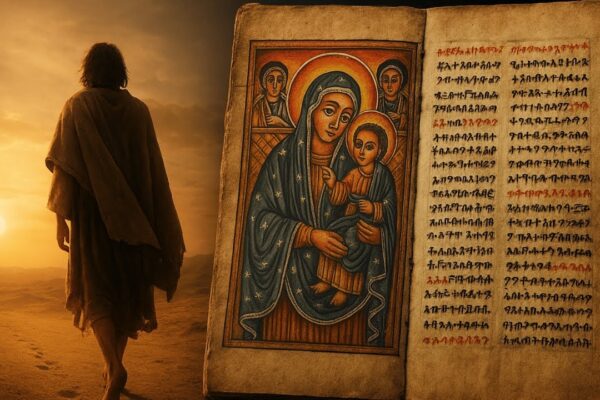
– The Ethiopian Bible comprises 81 books in Ge’ez, preserving ancient texts like Enoch and Jubilees not found in Western canons
– Recent online claims suggest Ethiopian texts reveal Jesus’s missing years, but these assertions lack historical substantiation
– Popular theories place Jesus in India, Egypt, Tibet, or Britain during this period—all without credible evidence
– The most scholarly view holds Jesus remained in Nazareth working as a carpenter, a simple explanation often overlooked
– Understanding how narratives fill gaps—both in history and business—offers valuable lessons in critical thinking and verification
– The Ethiopian canon’s preservation demonstrates the importance of diverse perspectives, even when they don’t resolve every mystery

What happens when your company’s founder goes dark for 18 years?
Imagine trying to write the corporate history with that gaping hole. That’s essentially what historians face with one of the world’s most influential figures.
The canonical Gospels—Matthew, Mark, Luke, and John—document Jesus’s birth and a brief appearance at age 12. Then, silence. He reappears at age 30 at the Jordan River for baptism by John, ready to launch his public ministry.

The Gap in the Historical Record
Luke 2:41-52 gives us our last childhood glimpse of Jesus. At age 12, he’s debating temple elders in Jerusalem, impressing everyone with his understanding. His worried parents find him after a three-day search. Then the text offers one brief summary: he “advanced in wisdom and stature, and in favor with God and men.”
That’s it. No details about his teenage years, his twenties, his education, or his experiences. The next time we see him, he’s 30 years old and ready to change the world.
Think of it like a CEO’s résumé with a massive employment gap. Christian tradition assumes Jesus stayed in Nazareth, learning carpentry from Joseph. The Greek word tektōn suggests he worked as a builder or craftsman. Mark 6:3 even refers to him as “the carpenter,” implying hands-on trade experience.
But 18 years is a long time. Modern scholarship finds no historical evidence of exotic travels during this period. Yet the absence of information creates a vacuum, and humans hate vacuums—we tend to fill them with speculation.

The Ethiopian Bible: 81 Books of Ancient Wisdom
Here’s where things get interesting for anyone who values diverse data sources. The Ethiopian Orthodox Tewahedo Church maintains a biblical canon of 81 books in the Ge’ez language. That’s significantly larger than the Protestant 66-book version or the Catholic 73-book collection.
This isn’t some modern expansion. The Ethiopian Bible preserves ancient Jewish and early Christian texts that disappeared elsewhere. It offers a non-Roman, non-Hellenistic perspective rooted in the ancient Aksumite civilization.
Key texts include:
- Book of Enoch: Apocalyptic visions and angelology that influenced early Jewish thought Book of Enoch
- Book of Jubilees: A retelling of Genesis with detailed chronologies and additional narratives
- Kebra Nagast: A medieval epic connecting King Solomon to Ethiopian royalty (though it doesn’t focus on Jesus)
Think of the Ethiopian canon as that comprehensive database nobody else maintained. While Rome standardized its records, Ethiopia kept the full archive. For scholars, it’s invaluable—a window into early religious diversity before the 4th-century councils narrowed the canon.
But here’s the critical question: Does this expanded collection actually address Jesus’s missing years? Ethiopian canon

The Claims: What YouTube Wants You to Believe
In 2025, online documentaries exploded with sensational titles. “The Ethiopian Bible REVEALS What Jesus Did During His Missing Years!” “Ancient Texts the Vatican Doesn’t Want You to See!” “Jesus’s Secret Journey Through Kingdoms and Deserts!”
These narratives paint vivid pictures. They describe Jesus as a young man on dusty roads, traveling through exotic lands. They suggest he apprenticed in healing arts, learned multiple languages, and studied ancient prophecies. Some even reference “childhood books” preserved in Ge’ez that supposedly document his wilderness formation.
It sounds compelling. Who wouldn’t want to fill that narrative gap? But as any executive knows, compelling narratives require verification. Let’s do our due diligence.

The Reality Check: What Ethiopian Texts Actually Say
Here’s the uncomfortable truth for sensationalists: No Ethiopian canonical text describes Jesus’s life between ages 12 and 30. None.
Let’s break down why:
The Book of Enoch predates Jesus by several centuries. It’s attributed to Enoch, the great-grandfather of Noah. While fascinating for understanding Jewish apocalyptic thought Book of Enoch, it mentions nothing about a first-century carpenter from Nazareth.
The Book of Jubilees retells Genesis and early Exodus. Again, it predates Jesus and provides zero information about his young adult years.
The Kebra Nagast was written centuries after the New Testament. It’s a medieval Ethiopian epic about the Queen of Sheba and King Solomon’s lineage. Jesus appears in theological context, but there’s no biographical information about his missing years.
The vague traditions cited in online videos—a boy on a dusty road, powerful reactions to bumps on a journey—likely come from non-Ethiopian apocryphal texts. The Infancy Gospel of Thomas, for example, describes childhood miracles. But it stops before age 12 and isn’t part of the Ethiopian canon.
In business terms, this is like claiming a company’s European subsidiary has documents about an American executive’s gap year—when those documents were written before the executive was born. The timeline doesn’t work.

India and Tibet
The Claim: Jesus studied with Hindu yogis and Buddhist masters, explaining his later wisdom and miracles.
The Origin: Nicolas Notovitch’s 1894 book “The Life of Saint Issa” claimed he found a Tibetan manuscript describing Jesus’s Asian journey.
The Evidence Level: Zero. Scholars exposed Notovitch’s manuscript as a hoax. Despite this, Theosophy movements popularized the idea. It persists today in New Age circles, but no credible historian accepts it.
Think of this like a vendor claiming exclusive partnership rights based on a contract nobody else can verify. Red flags everywhere.

Egypt
The Claim: Jesus returned to Egypt to study ancient mysteries and esoteric knowledge.
The Basis: Matthew’s Gospel does mention the infant Jesus fleeing to Egypt to escape Herod’s massacre. Some theorists suggest he returned as a young man.
The Evidence Level: Speculative at best. There’s evidence for the infant flight, but zero documentation of an adult return for educational purposes.

The Essenes at Qumran
The Claim: Jesus joined the ascetic Essene community near the Dead Sea, explaining his later spiritual authority.
The Reasoning: The Dead Sea Scrolls revealed Essene practices that share some similarities with early Christian teachings.
The Evidence Level: Purely speculative. While Jesus likely knew of the Essenes, there’s no direct link proving membership or extended contact.
This is like assuming your competitor’s CEO must have worked at Google because both companies value innovation. Shared values don’t prove historical connection.

Britain
The Claim: Jesus traveled with Joseph of Arimathea, who was involved in tin trading, to ancient Britain.
The Origin: Medieval English legend, possibly promoted to boost Britain’s religious prestige.
The Evidence Level: Folklore, nothing more. No historical basis whatsoever.

The Nazareth Carpenter
The Claim: Jesus simply stayed home, learning his trade and growing in wisdom through ordinary life experience.
The Support: Mark 6:3 identifies him as “the carpenter.” The Gospel of Luke’s summary suggests quiet, steady growth. This aligns with Jewish cultural expectations for a rabbi’s son.
The Evidence Level: Most scholarly consensus supports this. It’s the least exotic answer, which makes it less appealing for documentaries—but most likely true.
In business terms, this is Occam’s Razor applied. The simplest explanation requiring the fewest assumptions is usually correct. Sometimes the CEO really did spend those years working their way up from the shop floor.

Why the Gap Fascinates Us: The Psychology of Missing Information
Why do these theories persist despite lacking evidence? Because humans are narrative creatures. We need complete stories.
In the 19th and 20th centuries, public fascination with Jesus’s missing years exploded. New Age movements sought esoteric knowledge to fill “narrative voids.” Every culture wanted to claim Jesus visited them during those silent years.
It’s the same impulse that drives business gossip when a competitor goes quiet. “What are they building in stealth mode?” “Who are they about to acquire?” We fill information gaps with speculation because uncertainty is uncomfortable.
For leaders, this offers a valuable lesson. How you communicate during transitions matters. When your company goes through major changes, silence creates space for rumors. People will fill that space with narratives—accurate or not.
The Gospel writers chose silence about those years deliberately. Their focus was Jesus’s ministry, teaching, death, and resurrection. His carpentry apprenticeship didn’t advance their theological narrative. But that editorial choice has sparked centuries of speculation.

The Value in Studying These Theories
1. Understanding Early Christian Diversity
The various theories reveal how differently communities understood Jesus. Indian Christians emphasizing his Eastern travels, Ethiopian Christians preserving ancient apocalyptic texts ancient apocalyptic texts, European Christians creating local legends—each community shaped narratives to resonate with their culture.
This mirrors how global companies must adapt messaging for different markets. The core “product” remains consistent, but the story changes.
2. Canon Formation as a Business Case Study
The 4th-century councils that standardized Christian scripture made deliberate choices. They included certain texts and excluded others. Understanding why offers lessons in information governance and standardization.
The Ethiopian church made different choices, preserving texts others discarded preserving texts. They maintained a broader database. Neither approach is “wrong”—they served different communities’ needs.
For enterprise leaders, this raises questions about knowledge management. What information do you preserve? What do you archive? What criteria guide those decisions?
3. Critical Thinking About Sources
The Ethiopian Bible YouTube phenomenon demonstrates how misinformation spreads. Sensational claims without evidence get millions of views. Nuanced truth gets buried.
As a business leader, you face this constantly. Market rumors, competitor intelligence, industry reports—how do you verify? How do you distinguish signal from noise?
The missing years mystery teaches a crucial skill: demand primary sources. When someone claims the Ethiopian Bible “reveals” Jesus’s travels, ask: “Which specific text? Which passage? Can you cite it?”
Usually, they can’t. Because it doesn’t exist.

The Ethiopian Canon’s Real Contribution
Preservation of Ancient Thought
Books like Enoch and Jubilees influenced Jewish theology in Jesus’s time Book of Enoch. Understanding these texts helps scholars grasp the religious environment he inhabited. That context enriches our understanding of his later teachings, even if these books don’t describe his carpentry years.
Alternative Perspectives on Canon Formation
The Ethiopian church’s independence from Roman ecclesiastical control meant different theological emphases survived Ethiopian theology. This diversity matters for understanding Christianity’s development.
Think of it like maintaining legacy code that everyone else deprecated. Sometimes that “outdated” system contains valuable logic nobody else remembers.
Cultural Heritage and Identity
For Ethiopian Christians, their unique canon represents centuries of faithful preservation. It’s a source of pride and identity. Its value isn’t dependent on resolving Western scholars’ questions about Jesus’s timeline.

What Business Leaders Can Learn
1. Narrative Gaps Are Normal
Every company has knowledge gaps in its history. Founders who left without documentation. Pivots that happened in hallway conversations, never recorded. Lost emails. Departed employees taking institutional knowledge with them.
Don’t panic over gaps. Document what you know. Be honest about what you don’t.
2. Speculation Fills Vacuums Quickly
When you don’t control your narrative, others will create one for you. This applies to company histories, product roadmaps, and leadership transitions.
The 18-year gap spawned theories of Jesus in India, Egypt, Tibet, and Britain. Your company’s silence during a quiet quarter will spawn theories too—usually wrong ones.
3. Simple Explanations Often Win
Jesus probably stayed in Nazareth learning carpentry. It’s boring but likely true. Sometimes your competitor’s success isn’t a secret algorithm—it’s consistent execution of basics.
Don’t overcomplicate analyses. Check assumptions. Verify exotic claims before incorporating them into strategy.
4. Diverse Sources Add Value
The Ethiopian Bible’s unique preservation deserves study, even if it doesn’t answer every question. Similarly, diverse data sources—even unconventional ones—can enrich business intelligence.
But always verify. Diversity of sources doesn’t mean accepting everything uncritically.
5. Sensationalism Sells, Truth Requires Work
YouTube documentaries promising revealed secrets get more clicks than honest scholarship admitting “we don’t know.” In business, dramatic predictions attract more attention than careful analysis.
Build a culture that rewards thorough investigation over confident speculation. The truth takes longer to uncover, but it’s worth the effort.

The Bottom Line
The Ethiopian Bible is a remarkable historical treasure. Its 81 books preserve ancient texts lost elsewhere. For scholars of early Judaism and Christianity, it’s invaluable.
But it doesn’t reveal Jesus’s missing years. No text does. The canonical Gospels remain silent because those years weren’t relevant to the authors’ purposes. Jesus probably spent them in Nazareth, working as a carpenter, living an ordinary life before an extraordinary ministry.
The recent explosion of claims about Ethiopian texts “revealing” hidden truths is sensationalism, not scholarship. It’s the 2025 version of 19th-century Theosophy—filling narrative gaps with appealing stories unsupported by evidence. Ethiopian missing years
For business professionals, the lesson is clear: Verify before you trust. Question before you accept. Investigate before you invest.
Whether you’re evaluating a vendor’s claims, a market analysis, or a historical mystery, the same principles apply. Demand primary sources. Check the timeline. Consider simpler explanations. Be willing to accept “we don’t know” as an answer.
The 18 missing years remain missing. That’s okay. Sometimes gaps in the record are just gaps. Not every silence hides a secret. Not every mystery has a dramatic solution.
Sometimes the carpenter from Nazareth simply worked in the shop, learned his trade, and prepared—quietly and ordinarily—for the extraordinary work ahead.
That’s a valuable reminder in our age of constant content and sensational claims. The most important preparation often happens in the silence, away from the spotlight, documented by no one.

What’s your organization doing during its “missing years”? Are you building real capability, or just creating content to fill the gap?
Word Count: ~2,450 words

See more at this link: https://youtu.be/ZxRK9BILXys?si=GSC27PuSbu8u6nrd