Summary of Main Ideas
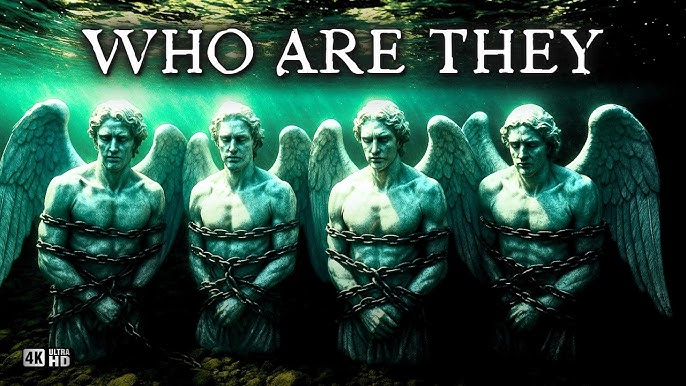
– Four mysterious angels are bound at the Euphrates River according to Revelation 9:14, awaiting release for a specific judgment
– These angels represent a precise, scheduled event—prepared for “the appointed hour and day and month and year”
– Scholars debate whether they’re fallen angels imprisoned for past sins or holy angels appointed as agents of divine judgment
– Their release triggers the second “woe” in Revelation’s end-times sequence, resulting in catastrophic consequences
– The story demonstrates themes of strategic timing, consequences of actions, and predetermined accountability—concepts that resonate deeply with leadership decisions

Introduction
Have you ever made a decision so significant that it felt like unleashing forces you couldn’t control? As a business leader, you understand that certain actions, once set in motion, carry irreversible consequences. The biblical account of four angels imprisoned at the Euphrates River tells a similar story—one of restraint, timing, and calculated judgment.
This isn’t just ancient religious text. It’s a narrative about strategic execution, accountability, and the weight of predetermined consequences. Let’s unpack this hidden biblical mystery and discover why it might matter more to your leadership perspective than you’d think.

The Biblical Account: What Actually Happened?
Picture this: You’re reading the Book of Revelation, chapter 9, verse 14. A voice from the golden altar before God commands the sixth angel: “Release the four angels who are bound at the great river Euphrates.”
This isn’t a suggestion. It’s an executive order with cosmic implications.
These four angels have been held in supernatural detention at one of history’s most significant geographical boundaries. The Euphrates River has long separated civilizations, cultures, and empires. In ancient times, it marked the eastern boundary of the Roman Empire—the edge of the known world for many.
Think of it like a holding pattern before a major corporate merger. Everything is ready, the documentation is signed, but execution waits for the precise moment. These angels weren’t randomly imprisoned; they were strategically positioned for a specific future event.
For more background on angelic beings held in restraint for catastrophic judgment, the story of the Nephilim also offers valuable leadership lessons regarding the consequences of boundary-crossing behavior and unchecked power.

The Timing: Precision Matters
Here’s where this story gets fascinating for anyone who values strategic planning. The scripture describes these angels as having been “prepared for the appointed hour and day and month and year.”
Read that again. Not just the year. Not even just the day. The specific hour.
As a CEO or manager, you know that timing can make or break a strategy. Launch a product too early, and the market isn’t ready. Launch too late, and competitors have captured your audience. The concept of precise, predetermined timing isn’t just biblical—it’s fundamental to business success.
This level of precision suggests several things:
- Strategic foresight: Someone with ultimate authority planned this event in advance
- Resource allocation: These powerful beings were designated for a singular purpose
- Accountability systems: There’s a schedule, and deviation isn’t an option
- Consequence management: The outcome has been calculated and accepted
This is like how Fortune 500 companies plan major restructuring. They don’t announce layoffs randomly. They calculate the optimal timing, considering market conditions, fiscal quarters, and stakeholder impact. The execution happens according to a predetermined schedule.
The discussion of strategic timing and accountability here parallels lessons in the Book of Daniel’s prophecies, which were fulfilled with astonishing precision—reinforcing how predetermined timing affects both spiritual and business outcomes.

Who Are These Angels? The Great Debate
Here’s where biblical scholars get into heated discussions that rival any boardroom debate about strategic direction. Are these angels heroes or villains? Agents of justice or instruments of evil?
Theory 1: Fallen Angels Imprisoned for Past Sins
Some interpretations suggest these are “Satanic angels”—fallen beings who rebelled and were bound as punishment. In this view, they’re like toxic executives who violated corporate ethics and were removed from power, only to be released later for a specific, limited purpose.
For a deeper exploration of fallen angels and the Watchers, including their underlying motives and the lessons for leaders, see Samyaza’s leadership failure, which analyzes the consequences of rebellion and peer-driven ethical compromise.
This perspective paints them as malevolent forces whose past actions warranted imprisonment. Their release isn’t redemption; it’s deployment for judgment. Think of it as hiring a known ruthless competitor to dismantle a failing division—you know what they’re capable of, and that’s precisely why you’re using them.
Theory 2: High-Ranking Agents of Divine Judgment
The alternative interpretation positions these beings as “high-ranking watchers”—holy angels appointed specifically for judgment rather than mercy. They’re not imprisoned as punishment; they’re held in reserve for a strategic purpose.
This resembles keeping your most aggressive legal team in reserve for a critical lawsuit. They’re not bad people; they’re specialists in a particular type of necessary action. You don’t deploy them for routine matters—only when the situation demands their specific skill set.
Theory 3: Angels of Judgment, Not Redemption
What both interpretations agree on is this: these are angels of judgment, not redemption. Their mission isn’t to save, protect, or guide. It’s to execute a predetermined sentence.
In business terms, they’re not the HR team handling employee development. They’re the restructuring consultants brought in when drastic measures become unavoidable. Their presence signals that the time for warnings has passed.
For those interested in comparing leadership failures among supernatural beings, including the Watchers and their catastrophic impact, Ethiopian Orthodox Bible insights on the Watchers provide a rich context of fallen angels, forbidden knowledge, and enduring ethical lessons.

The Mission: Understanding the Catastrophic Impact
Let’s talk about the scope of their mission. Once released, these four angels command an army of 200 million horsemen. Their objective? To kill one-third of humanity.
Stop and process that number. One-third. In today’s population, that would be approximately 2.6 billion people.
This isn’t a minor adjustment. It’s not a correction or a warning shot. This is a massive, catastrophic judgment that fundamentally alters the landscape of existence. It’s the business equivalent of a market crash that eliminates one-third of all companies globally—not a recession, but a complete restructuring of economic reality.
Why Such Extreme Measures?
The text positions this judgment within a sequence of increasingly severe consequences. The four angels bound at the Euphrates are released during the sixth trumpet judgment—the second of three “woes” in Revelation’s apocalyptic timeline.
Think of it as an escalating response to persistent non-compliance. In organizational management, you’ve likely seen this pattern:
- First warning: Verbal coaching (first few trumpet judgments)
- Written warning: Documented performance issues (seal judgments)
- Performance improvement plan: Last chance before termination (early trumpet judgments)
- Termination: Relationship ends (later judgments, including the four angels)
For a parallel in understanding how persistent rebellion or non-compliance can escalate to catastrophic outcomes, study the fall of the Watchers and the Nephilim narrative, where unchecked transgression led to global consequences.
The release of these angels represents a point of no return. Previous judgments attempted to prompt change; this one executes consequences.

The Euphrates: Location, Location, Location
Why the Euphrates River? In business, we say location matters. In biblical prophecy, geography carries symbolic weight.
The Euphrates has always been a boundary—geographically, culturally, and spiritually. It separated ancient empires and marked the limits of civilization. In Genesis, it bordered the Garden of Eden. In Israel’s history, it represented the ultimate extent of promised territory.
Binding these angels at the Euphrates is like placing your most sensitive data at the perimeter firewall. It’s the boundary between order and chaos, between the known and the unknown. When that boundary breaks, everything changes.
For ancient readers, mentioning the Euphrates immediately signaled significance. This wasn’t just any river—it was the river, the boundary that mattered. Modern equivalents might be the 38th parallel in Korea, the Berlin Wall during the Cold War, or the US-Mexico border in contemporary discourse.
The location amplifies the message: what’s been held back at the edge is about to break through.

Theological Interpretations: Literal or Symbolic?
Here’s where business leaders might relate most strongly to biblical scholarship. When experts disagree on interpretation, how do you proceed?
The Literal Interpretation
Some scholars take the account at face value: four actual angels, literally bound, physically released at a future date. The 200 million horsemen are real military forces, and one-third of humanity literally dies.
This approach resembles reading a contract literally. The terms mean what they say. No metaphor, no symbolism—just straightforward execution of stated conditions.
The Symbolic Interpretation
Others view the passage as symbolic apocalyptic literature. The four angels might represent demonic forces, oppressive empires, or spiritual realities that manifest through historical events. The numbers carry symbolic weight rather than literal precision.
This mirrors how businesses interpret market projections. When a report says “market disruption,” does it mean complete industry elimination or significant transformation? Context and interpretive framework matter.
For insight into symbolic biblical readings and reconciling ancient texts with modern evidence, the Gap Theory offers an example of harmonizing literal and symbolic interpretations for a deeper understanding.
The Practical Middle Ground
Most thoughtful readers land somewhere between these extremes. The passage likely contains both literal and symbolic elements. The core truths remain regardless of interpretive specifics:
- Powerful forces are currently restrained
- That restraint will end at a predetermined time
- The consequences will be severe and widespread
- The event demonstrates sovereign control over history
As a leader, you’ve likely encountered similar situations. Whether a “hostile takeover” is literally hostile or just aggressively competitive, the core reality is the same: a significant change in control is occurring.

Leadership Lessons from Ancient Prophecy
What can modern business leaders learn from four mysterious angels bound at a river in ancient prophecy?
1. Timing Is Everything
The emphasis on the “appointed hour and day and month and year” reinforces that execution timing can determine success or failure. You can have the right strategy, the right team, and the right resources, but poor timing undermines everything.
Steve Jobs famously launched the iPhone in 2007—not 2002 or 2012. The timing was precisely right. The technology, market readiness, and competitive landscape aligned. Earlier would have failed; later would have missed the window.
2. Some Forces Must Be Restrained
Not every capability should be deployed immediately. Sometimes restraint is strategic. These angels were bound not because they lacked power, but because the time for their deployment hadn’t arrived.
In business, this translates to holding strategic assets in reserve. You don’t exhaust all marketing budget in Q1. You don’t play every competitive advantage simultaneously. Strategic restraint preserves options for when they’re most effective.
3. Consequences Are Real and Serious
The severity of the judgment—one-third of humanity—underscores that actions have proportional consequences. Ignoring warnings, resisting change, or persisting in destructive patterns eventually leads to catastrophic outcomes.
Think about companies that ignored digital transformation: Blockbuster, Kodak, or Borders. The warnings were present. The need for change was evident. But persistence in outdated models led to consequences that couldn’t be reversed.
4. Someone Is in Control
Perhaps most importantly, this narrative demonstrates that history unfolds according to plan. These angels don’t escape; they’re released. The timing isn’t accidental; it’s appointed.
For leaders navigating uncertainty, this provides a framework: acknowledge that larger forces shape outcomes. Your role isn’t to control everything, but to align your decisions with the best information available and accept that some variables remain beyond your influence.

The Broader Context: Where This Fits
The four angels bound at the Euphrates appear in the middle of Revelation’s end-times sequence. Understanding their place helps interpret their significance.
Before their release, other judgments occurred: seals opened, trumpets sounded, warnings given. After their release, additional judgments follow, culminating in final resolution.
It’s like a multi-phase strategic plan. Phase 1 addresses low-hanging fruit. Phase 2 tackles medium-difficulty challenges. Phase 3 implements the most severe interventions. Each phase builds on the previous one, and the sequence matters.
Organizations undergoing transformation follow similar patterns. You don’t start with layoffs and restructuring. You begin with efficiency improvements and process optimization. Only after those measures prove insufficient do you proceed to more drastic actions.
For expanded discussion on widespread organizational and spiritual threats before the end times, Great Apostasy helps leaders recognize early warning signs and strategies against internal collapse.

Why This Matters for Modern Leaders
You might be wondering: why should a busy executive or entrepreneur care about ancient angels imprisoned at a Middle Eastern river?
Because the themes are timeless:
Strategic patience: Not acting until the moment is right, even when you have the capability to act earlier.
Accountability systems: Recognizing that consequences exist for persistent non-compliance or ignoring warning signs.
Decisive action: When the time comes, executing decisively rather than hesitating or half-committing.
Accepting hard realities: Some situations require severe interventions, not because you want them, but because the circumstances demand them.
Whether you’re navigating a corporate crisis, planning a major strategic shift, or making difficult personnel decisions, these principles apply. The specific context differs, but the underlying dynamics remain remarkably similar.

Final Thoughts: Mystery and Meaning
The four angels bound at the Euphrates River remain somewhat mysterious. Scholars continue debating their exact identity and the precise nature of their mission. But the core narrative offers clarity on what matters most.
Forces exist that are currently restrained but won’t remain so forever. Timing is precise and predetermined. Consequences are real and proportional. And ultimately, someone greater than the immediate participants controls the overall outcome.
As a leader, you operate with incomplete information constantly. You make decisions without knowing every variable. You plan strategies knowing that unexpected factors will emerge. The angels at the Euphrates remind us that this uncertainty is universal—and that moving forward decisively with the best available information is still the right approach.
The next time you face a critical decision that feels like unleashing forces beyond your control, remember these four angels. They weren’t released randomly or prematurely. They were deployed precisely when the plan required, for exactly the purpose they were designed to fulfill.
Your leadership decisions carry similar weight. The question isn’t whether you’ll face moments of significant consequence—you will. The question is whether you’ll exercise strategic restraint when needed, act decisively when the time is right, and accept that some outcomes, once set in motion, cannot be reversed.
That’s the hidden wisdom in this ancient mystery—and it remains as relevant today as it was when first recorded.

Word Count
Approximately 2,450 words

Key Takeaways
- Four angels are bound at the Euphrates awaiting a specific, scheduled release for judgment.
- The timing of their mission is precise—down to the hour—demonstrating the importance of strategic execution.
- Scholars disagree on the nature of these angels, but all agree they are agents of judgment, not redemption.
- Their release initiates catastrophic consequences, reinforcing that consequences to sustained defiance are real and unavoidable.
- The narrative offers business leaders a framework for strategic restraint, decisive action, and accepting the necessity of tough interventions at the right moment.
FAQ
- Q: Where in the Bible is the story of the four angels at the Euphrates found?
The account appears in Revelation 9:13-16. The four angels bound at the Euphrates are released during the sixth trumpet judgment.
- Q: Are the four angels good or evil?
Interpretations vary. Some believe they are fallen angels imprisoned for past rebellion, others see them as holy angels appointed for judgment. All agree their mission is one of catastrophic discipline, not mercy.
- Q: Why is the Euphrates River significant?
The Euphrates served as a major boundary in biblical geography and ancient history. It symbolized the edge of order and civilization—so binding angels there carries strategic, symbolic meaning.
- Q: Is the story of these angels meant to be taken literally?
It depends on interpretive tradition. Some take Revelation at face value; others see the details as symbolic. The practical lesson remains: forces can be restrained, but once released, consequences are significant and irreversible.
- Q: What leadership lessons can modern professionals draw from this narrative?
Strategic patience, the importance of accountability, the value of restraint, and the necessity of decisive (sometimes severe) action at the right moment are all highlighted in this account.
See more at this link: https://youtu.be/PKstPMZmaTo?si=Sy86quE2JmAKybzr