Summary of Main Ideas
Summary of Main Ideas
- The Ethiopian Orthodox Tewahedo Church teaches that Jesus died primarily to destroy sin and death, not as punishment for humanity’s sins—a fundamental difference from Western Christian theology.
- Ethiopian theology follows the Christus Victor model: Christ triumphed as a conqueror over evil forces, defeating Satan and breaking Adam’s curse through victory.
- This contrasts sharply with Western penal substitution, where God punishes Jesus to satisfy divine justice—a concept largely absent in Ethiopian Orthodox doctrine.
- The crucifixion serves as ransom and liberation, freeing humanity from bondage rather than appeasing an angry deity.
- Ethiopian Christology emphasizes the undivided union of Christ’s divinity and humanity (miaphysite), with resurrection as the ultimate proof of victory over corruption.
- Understanding these theological differences matters for global business leaders managing diverse teams and building cross-cultural intelligence.
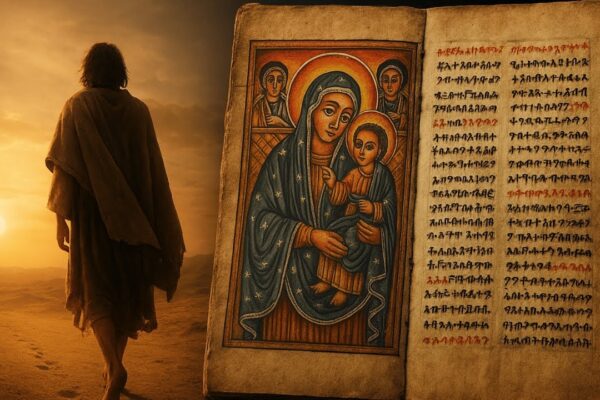
- The Ethiopian Bible’s 81-book canon (including Enoch and Jubilees) provides unique scriptural context, though core crucifixion doctrine aligns with canonical Gospels.

What if everything you thought you knew about Jesus’s death was actually just one perspective?
For most Western Christians, the answer seems straightforward: Jesus died to pay for our sins. God demanded justice, and someone had to take the punishment. But travel to Ethiopia, and you’ll encounter a radically different story—one that’s been preserved for over 1,600 years in one of Christianity’s oldest traditions.

What Most Western Christians Believe About the Cross
Let’s start with the familiar narrative. In most Western churches—whether Protestant, Catholic, or Evangelical—you’ll hear a specific explanation. God is holy and just. Humanity sinned and deserves punishment. Someone needs to pay the penalty. Jesus steps in as the substitute, taking the punishment we deserve.
This is called penal substitution. Think of it like a courtroom drama. You’re guilty, the judge demands the death penalty, but Jesus volunteers to die in your place. The legal debt is satisfied. Justice is served. You walk free.
It’s a powerful metaphor that resonates with Western legal frameworks. We understand contracts, penalties, and substitutions. Our entire business world runs on similar principles. Break a contract? Pay damages. Default on a loan? Foreclosure. The logic feels intuitive.
But here’s what’s fascinating: this wasn’t the dominant view for the first thousand years of Christianity. And it’s still not the view in Ethiopian Orthodox theology, which traces its roots directly to the apostles through the Ethiopian eunuch in Acts 8.

The Ethiopian Orthodox Perspective: Victory, Not Payment
Walk into an Ethiopian Orthodox church, and you’ll hear a completely different story. Jesus didn’t die to satisfy an angry God. He died to destroy sin and death itself.
According to official Ethiopian Orthodox doctrine, Jesus “was crucified on the tree to destroy sin… He died to destroy death, He died to give life to the dead; He was buried to raise those who were buried.” Notice the language? It’s not transactional. It’s confrontational.
This is the Christus Victor model—Christ as conquering king. Imagine a military campaign rather than a legal proceeding. Humanity was held captive by sin, death, and Satan. Jesus invaded enemy territory, defeated the forces holding us prisoner, and liberated us through His death and resurrection.
The cross isn’t where God punishes Jesus. It’s where Jesus defeats evil. Through His suffering and death, He “scored a victory over the forces of evil,” maintaining sinless communion with God while entering humanity’s battle against sin.
Think of it like a CEO going undercover in a hostile takeover. Jesus took on human nature, entered the kingdom of death as a human, but because He was sinless, death couldn’t hold Him. He broke death’s power from the inside out, rose victorious, and freed everyone held captive.

The Key Theological Shift: Liberation vs. Punishment
This isn’t just semantics. The difference fundamentally reshapes how you understand salvation, God’s character, and human purpose. Let’s break down the comparison:
Western Penal Substitution:
- The Problem: Legal guilt before a holy judge
- The Solution: Jesus pays the penalty to satisfy divine wrath
- The Result: Forensic justification—you’re declared “not guilty”
- Focus: Justice, righteousness imputed to believers
- Metaphor: Courtroom, transaction, payment
Ethiopian Christus Victor:
- The Problem: Bondage to sin, death, and Satan
- The Solution: Jesus defeats evil forces and destroys death’s power
- The Result: Liberation and participation in Christ’s victory
- Focus: Triumph, resurrection, life-giving freedom
- Metaphor: Battlefield, conquest, ransom from captivity
For business leaders, think about how this mirrors different management philosophies. The first is compliance-based: rules, penalties, and consequences. The second is empowerment-based: removing obstacles, defeating competition, and enabling freedom to succeed.
Neither is wrong, but they create entirely different organizational cultures.

Tewahedo Christology: The Undivided Union
The Ethiopian Orthodox Church is called “Tewahedo,” which means “being made one” in Ge’ez (ancient Ethiopian language). This refers to their Christology—their understanding of who Jesus is.
They teach miaphysite theology: Christ’s divine and human natures are united in one nature without separation, confusion, or mixture. It’s not two natures side-by-side. It’s a complete, undivided union.
Why does this matter for the crucifixion? Because in Ethiopian theology, when Jesus died, it wasn’t just a human dying. It was God Himself entering death, descending to Hades, and conquering it from within. “He descended to Hades from the cross to save those in bondage therein,” acting as the just for the unjust to bring people to God.
The resurrection proves the victory. Ethiopian doctrine emphasizes that Jesus rose “absolutely without corruption,” triumphing over decay and justifying sinners. Death wasn’t the end—it was the battlefield where Jesus won.
This is why Holy Communion is so central in Ethiopian Orthodox worship. As the “Lamb of God,” Christ’s self-offering on the cross institutes the communion mystery, providing eternal life through His true flesh and blood. It’s participation in His victory, not just remembrance of His sacrifice.

The Scriptural and Traditional Foundation
You might wonder: where does this theology come from? Is it just Ethiopian innovation? Not at all. Ethiopian Orthodox theology draws from deep scriptural and patristic roots.
Scriptural Sources:
- Ge’ez Scriptures: The Ethiopian Bible contains 81 books, including texts like Enoch and Jubilees not found in Western canons (see Ethiopian Orthodox Bible insights on the Watchers and Sons of God)
- New Testament: John 6:53-57 (eating Christ’s flesh), Hebrews 7:19 (bringing us to God)
- Old Testament Typology: The Passover lamb (Exodus), Isaiah 53’s suffering servant
- Canonical Gospels: All four Gospel accounts of crucifixion and resurrection
Traditional Sources:
- Early Church Fathers: Patristic writers portrayed crucifixion as ransom defeating Satan and death
- Breaking Adam’s Curse: Christ’s victory reverses the fall, restoring humanity to communion with God (explore lessons from the Lost Book of Adam and Eve)
- Ge’ez Liturgical Texts: Deggua hymns and other worship texts reinforce the victory theme
Interestingly, while the Ethiopian Bible includes unique books like Enoch and Jubilees, the core crucifixion doctrine focuses on the canonical Gospels. These extracanonical texts inform the broader cosmology of salvation but don’t radically alter the crucifixion narrative.
The Ethiopian Orthodox Church claims direct apostolic succession through the Ethiopian eunuch converted by Philip in Acts 8. This gives their tradition enormous historical weight—it’s not a late development but one of Christianity’s oldest continuous expressions.

Why This Matters for Global Leaders
You might be thinking: “Fascinating theological debate, but what does this have to do with running my business?” More than you’d expect.
1. Understanding Worldview Shapes Communication
If you’re managing Ethiopian employees or partnering with Ethiopian companies, recognizing this theological framework helps you understand cultural values. Ethiopian culture, deeply influenced by Orthodox Christianity, emphasizes community liberation over individual guilt, collective victory over personal debt payment.
This affects how people process failure, approach redemption, and understand leadership. A leader in this framework isn’t primarily a judge enforcing rules—they’re a liberator removing obstacles.
2. Multiple Frameworks, Same Reality
Both theological models—penal substitution and Christus Victor—address real human problems. Western frameworks excel at addressing guilt and justice. Ethiopian frameworks excel at addressing bondage and oppression.
In business, you need both. Sometimes you need legal clarity and accountability (penal substitution thinking). Other times you need to break down systemic barriers and empower people (Christus Victor thinking).
The best leaders don’t assume their framework is the only valid one. They learn to code-switch between perspectives.
3. Ancient Wisdom in Modern Context
Ethiopian Orthodox theology has preserved perspectives that predate many Western theological developments. In our globalized world, these ancient voices offer fresh insights.
Consider the Ethiopian emphasis on mystical participation in Christ’s victory rather than forensic declaration of innocence. This mirrors modern leadership trends toward engagement and empowerment rather than mere compliance.
4. The Value of Intellectual Humility
Encountering radically different but equally ancient theological traditions should humble us. For 1,600 years, Ethiopian Christians have read the same Bible and reached different conclusions. This doesn’t mean truth is relative—it means truth is bigger than any single cultural expression.
That’s a valuable lesson for any leader. Your framework isn’t necessarily wrong, but it’s incomplete. There are always other perspectives worth considering.

Addressing Misconceptions and Fringe Claims
Before we close, let’s address a common misconception. Some internet sources claim Ethiopian Christians deny the crucifixion entirely, portraying Jesus as a “living teacher” spared by divine intervention. This allegedly was suppressed by the Council of Nicaea.
This is false. Official Ethiopian Orthodox doctrine fully affirms Jesus’s historical death on the cross. The Ethiopian Bible’s 81-book canon upholds all four Gospel narratives of death and resurrection (see Ethiopian Bible Canon Explained). Modern scholarship—including Greek and Roman historical records—confirms the crucifixion.
These fringe claims confuse Ethiopian theology with other traditions (possibly Islamic influences, since the Quran teaches Jesus didn’t actually die). But mainstream Ethiopian Orthodox Christianity has always taught Jesus truly died, was buried, descended to Hades, and rose victorious.
The difference isn’t whether Jesus died, but why and how His death accomplishes salvation. That’s a crucial distinction.

The Bigger Picture: Two Models, One Story
Here’s what’s remarkable: both Western penal substitution and Ethiopian Christus Victor are trying to explain the same historical events. Jesus of Nazareth was crucified under Pontius Pilate. He died. He was buried. On the third day, witnesses claimed He rose from the dead.
These are the facts all Christians affirm. The difference is interpretive framework.
Western Christianity asks: “How does Jesus’s death solve the legal problem of sin?” Answer: substitutionary payment.
Ethiopian Christianity asks: “How does Jesus’s death break the power holding humanity captive?” Answer: victorious conquest.
Both frameworks appear in Scripture. Paul uses legal language (justification, righteousness, propitiation). He also uses liberation language (redemption, ransom, triumph over powers). The New Testament is rich enough to support multiple valid interpretations.
For business leaders, this demonstrates an important principle: complex realities require multiple mental models. Financial statements alone don’t capture organizational health. You also need culture metrics, employee engagement, and market positioning.
Similarly, the cross is too profound for any single metaphor. It’s simultaneously sacrifice, victory, ransom, substitution, example, and more. Ethiopian theology reminds us not to flatten the mystery into only legal categories.

What We Can Learn From Ethiopian Orthodoxy
As we close, consider what Ethiopian Orthodox theology offers the broader Christian conversation and even secular leadership thinking:
Victory Over Victimhood: The Christus Victor model emphasizes triumph rather than only addressing guilt. This resonates with movements emphasizing empowerment over mere charity.
Holistic Salvation: Ethiopian theology doesn’t separate soul from body or individual from community. Salvation is cosmic restoration, not just individual soul-saving (explore more in the Lost Book of Adam and Eve: Ancient Wisdom for Leadership Resilience). This mirrors modern systems thinking.
Mystery and Participation: Rather than reducing faith to legal transactions, Ethiopian tradition embraces mystery and emphasizes participation in divine life through communion (see Ethiopian Bible and Book of Enoch on the Watchers and Origin of Evil). This parallels modern emphasis on experience over mere information.
Ancient Continuity: The Ethiopian Orthodox Church has preserved traditions predating many Western developments. Sometimes the newest thinking requires recovering the oldest wisdom.
Cultural Humility: Recognizing that one of Christianity’s oldest traditions reads Scripture differently than you do should inspire humility. Your perspective, while valid, isn’t universal.

Final Thoughts
The next time someone confidently explains “why Jesus died,” remember there’s an ancient church in Ethiopia with a different answer. Not a wrong answer—a different framework answering different questions.
Jesus didn’t die primarily to be punished by an angry Father, according to Ethiopian Orthodox theology. He died to destroy death, liberate captives, and triumph over evil. He descended into death’s domain not as a victim but as a victorious king.
Whether you’re a person of faith or simply someone interested in how different cultures frame problems and solutions, the Ethiopian perspective offers invaluable insights. It reminds us that the same historical events can support multiple interpretive frameworks, each highlighting different aspects of truth.
For leaders navigating our complex, globalized world, this isn’t just theological trivia. It’s essential cross-cultural intelligence. Understanding how the Ethiopian Orthodox Church views salvation helps you understand how millions of people frame reality, process suffering, and understand redemption.
And in a world desperately needing both justice and liberation, both accountability and empowerment, perhaps we need both theological frameworks. Not one or the other—but both, held in creative tension.
That’s the kind of wisdom that’s been preserved in Ethiopian Christianity for over 1,600 years. Maybe it’s time the rest of us started listening.

Key Takeaways
- The Ethiopian Orthodox Church sees Jesus’s death as victory over evil—not purely as legal payment.
- Christ’s undivided divinity and humanity are crucial to this understanding.
- This framework shapes Ethiopian culture and leadership values.
- Extra-biblical books add cosmological context, but core theology follows the canonical Gospels.
- For cross-cultural competence, leaders must understand and respect different theological models.
FAQ
-
Q: Does the Ethiopian Orthodox Church deny Jesus’s crucifixion?
A: No. The Church fully affirms Jesus’s death, burial, and resurrection, as told in all four Gospels. Claims to the contrary are based on confusion with non-Christian sources. -
Q: What is the main theological difference from Western Christianity?
A: Western churches tend toward penal substitution (justice/payment), while Ethiopian tradition teaches Christus Victor (triumph/liberation). -
Q: Is the Ethiopian Bible’s larger canon a factor?
A: Unique books provide context, but the crucifixion and resurrection story comes from the canonical Gospels. -
Q: Why does this matter for leadership and business?
A: Understanding deep cultural frameworks (like Ethiopian Christology) improves international communication, collaboration, and respect—essential for global leaders. -
Q: How ancient is Ethiopian Orthodox theology?
A: It traces directly to the apostolic era and represents one of Christianity’s oldest continuous traditions.
See more at this link: https://youtu.be/o0fYesDvk_4?si=akE0HXhz13qxMPqC