Key Takeaways
– The Ethiopian Orthodox Bible contains 81-90 books, making it one of the broadest biblical canons in Christianity—but it doesn’t reveal Jesus’s missing years (ages 12-30)
– Despite sensational headlines, no Ethiopian texts provide canonical accounts of where Jesus traveled or what he did during his “lost years”
– The Ethiopian canon preserves ancient apocryphal works like the Book of Enoch and Jubilees, but these focus on pre-Christian history, not Jesus’s biography
– The “shocking” truth is that media hype often amplifies unverified claims, ignoring scholarly consensus—a critical lesson for business leaders in information verification
– Understanding the difference between preservation and innovation helps leaders distinguish between legitimate historical sources and sensational narratives

The Promise That Captured Millions
Let’s start with what everyone wants to know. The canonical Gospels cover Jesus’s birth and early childhood (up to age 12 in Luke’s Gospel), then jump directly to his ministry around age 30. That leaves approximately 18 years completely unaccounted for.
Where was Jesus during this time? What was he doing? These questions have tantalized believers and skeptics alike for centuries.
Enter the Ethiopian Orthodox Tewahedo Church, which maintains one of the most extensive biblical canons in all of Christianity. With 81-90 books compared to the Protestant 66 or Catholic 73, surely these additional texts must contain the missing pieces, right?
Wrong. And understanding why reveals crucial insights about information verification that every CEO, manager, and entrepreneur needs to grasp.

What Ethiopia’s Bible Actually Contains
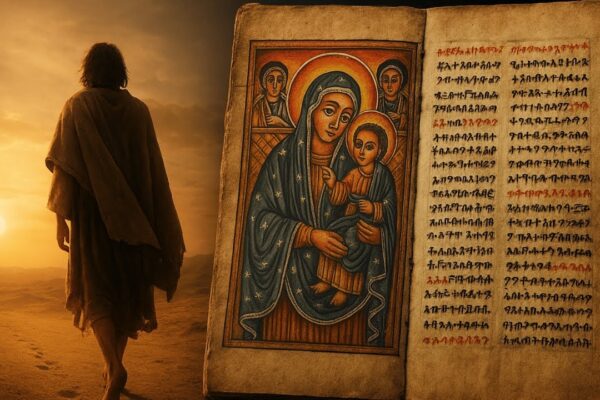
The Ethiopian Orthodox canon is genuinely remarkable—just not for the reasons clickbait headlines suggest. Preserved in Ge’ez (an ancient Semitic language), this tradition includes texts lost or rejected by Western Christianity.
Here’s what makes it special:
Unique Preservation, Not Secret Innovation
The Ethiopian Bible includes complete versions of the Book of Enoch and the Book of Jubilees—texts that exist only in fragmentary forms elsewhere (like the Dead Sea Scrolls). These aren’t “secret gospels” hidden by Western churches. They’re ancient Jewish apocalyptic writings focusing on cosmology, angels, and pre-Christian history.
Think of it like this: if Western biblical tradition is like having the director’s cut of a film, the Ethiopian tradition is like having the director’s cut plus the original screenplay and concept art. More material, yes—but not a different story.
The Ethiopian Extras
- 1-3 Meqabyan: Ethiopian-originated histories similar to the Maccabean narratives
- Kebra Nagast: A venerated text expanding the Queen of Sheba’s story and establishing Ethiopian royal lineage through Menelik I (source)
- Josippon: Jewish chronicles extending to 70 CE
- Ascension of Isaiah, Apocalypse of Peter, Letter of the Apostles: Post-resurrection visions and martyrdom accounts
Notice what’s missing? Any biographical details about Jesus between ages 12 and 30.

The Missing Years Remain Missing
Here’s where we separate fact from fiction. Despite having access to significantly more texts than Western traditions, Ethiopian sources provide zero additional canonical information about Jesus’s “lost years.”
The Book of Enoch? Pre-Christian cosmology. No Jesus.
Jubilees? Jewish history and calendar details. No Jesus.
Kebra Nagast? Solomon and the Queen of Sheba’s romance. No Jesus (chronologically impossible anyway).
The other preserved texts? Post-resurrection visions or Jewish histories. No missing years filled in.
What About Egypt?
Some sources claim Ethiopian traditions describe Jesus performing miracles in Egypt during his youth. Let’s unpack this carefully.
The canonical Gospel of Matthew (accepted by all Christian traditions) does mention the Holy Family fleeing to Egypt when Jesus was an infant. That’s biblical fact. But this is infancy, not the missing teenage years.
Later apocryphal texts like the Infancy Gospel of Thomas or Arabic Infancy Gospel do depict child Jesus performing miracles in Egypt. These texts were translated into Ge’ez and are known in Ethiopian tradition—but they’re not canonical there either. Scholars universally date these to the 2nd-6th centuries and classify them as pseudepigraphal (falsely attributed) works.
Ethiopian tradition preserves these texts; it doesn’t endorse them as historical biography.

The Business Lesson: Verify Before You Amplify
If you’re a business leader, this should sound familiar. How often have you encountered “revolutionary” market research that turned out to be repackaged conventional wisdom? Or “exclusive insider information” that was actually publicly available data with sensational framing?
The Ethiopian Bible situation teaches us three critical lessons:
1. Preservation Doesn’t Equal Innovation
Just because Ethiopia preserved more ancient texts doesn’t mean those texts contain different information. Similarly, just because a consultant has more slides doesn’t mean they have better insights.
2. Context Matters Enormously
Western audiences are shocked by Ethiopia’s 81-90 book canon primarily because Protestant tradition uses only 66 books. But Catholic and Orthodox traditions include more—73 for Catholics. The “shock” comes from incomplete context, not revolutionary content.
In business, this translates directly: understanding industry context prevents you from treating normal variation as groundbreaking trends.
3. Scholarly Consensus Exists for a Reason
Historians and theologians across traditions—Ethiopian, Catholic, Protestant, Orthodox—all agree: the missing years remain missing. No credible sources fill this gap. Period.
When every expert in a field reaches the same conclusion, contrarian “insider knowledge” is usually just misinformation wearing a confident disguise.

Where the Jesus-in-Tibet Stories Come From
You may have heard claims that Jesus traveled to India, studied with Buddhist monks, or visited Britain. These theories emerged primarily in the 19th century, most notably with Nicolas Notovitch’s The Unknown Life of Jesus Christ (1894), which claimed to document Jesus’s travels to India.
Scholars have thoroughly debunked these accounts. They contain anachronisms, geographical impossibilities, and zero corroborating evidence. Ethiopian sources don’t support them either (source).
Yet these stories persist because they’re compelling. They offer certainty where uncertainty exists, narrative where gaps appear, and the thrill of “forbidden knowledge.”
Sound familiar? In business, these are the same psychological triggers that make people fall for Ponzi schemes, invest in vaporware, or commit to strategies based on wishful thinking rather than evidence.

What Makes Ethiopian Biblical Tradition Actually Important
Strip away the sensationalism, and Ethiopia’s biblical tradition offers genuinely significant contributions:
Cultural Preservation Through Isolation
Ethiopia’s geographic and political isolation allowed it to preserve texts that disappeared elsewhere—like the full Book of Enoch. This is historically invaluable—like finding a backup drive containing software everyone thought was lost.
Theological Distinctiveness
Ethiopian Christianity maintains unique theological positions, particularly its miaphysite Christology (the Tewahedo “one nature” doctrine). This demonstrates how different Christian communities developed sophisticated theological frameworks independently.
Textual Diversity
Having multiple manuscript traditions helps scholars understand how ancient texts were transmitted, translated, and interpreted across different cultures and time periods.
Living Tradition
Unlike many ancient manuscripts locked in museums, Ethiopia’s biblical tradition remains alive in active worship communities. This provides insights into how sacred texts function in living religious practice.

The Real “Shock”: Media Literacy Matters
The truly shocking element of the “Ethiopian Bible reveals Jesus’s missing years” narrative isn’t what it reveals about ancient texts. It’s what it reveals about modern information consumption.
We’re drawn to sensational claims. We share headlines without reading articles. We amplify provocative content without verifying sources. We mistake novelty for truth and confidence for credibility.
For business leaders, this creates both challenges and opportunities:
The Challenge: Your team, your customers, and your stakeholders all navigate this same information environment. Misinformation doesn’t stay confined to social media—it infiltrates market analysis, competitive intelligence, and strategic planning.
The Opportunity: Organizations that build robust information verification processes gain competitive advantages. Due diligence isn’t just about legal compliance; it’s about epistemological hygiene—keeping your knowledge base clean.

Practical Applications for Leaders
How can you apply lessons from the Ethiopian Bible narrative to your organization?
1. Institute Source Verification Protocols
Before major decisions, require multiple independent sources. The Ethiopian Bible example shows how single-source claims, no matter how authoritative they sound, need corroboration.
2. Distinguish Between Primary and Secondary Sources
Ethiopian tradition preserves primary ancient texts. Media articles about those texts are secondary sources—and often tertiary when they’re summarizing someone else’s summary. Always trace claims to primary sources when stakes are high.
3. Build Institutional Skepticism (The Healthy Kind)
Create cultures where questioning sensational claims is rewarded, not punished. The most dangerous information environments are those where contrarian thinking earns social penalties.
4. Understand Contextual Literacy
Train your team to ask: “Compared to what?” Ethiopia’s 81-book canon seems shocking compared to 66, less so compared to 73, and contextually appropriate when you understand its historical development (source).
5. Recognize Psychological Triggers
We all want secret knowledge, insider information, and competitive advantages. These desires make us vulnerable to misinformation. Acknowledge these biases; don’t pretend you’re immune.

The Comparison That Matters
Let’s put this in perspective with a clear comparison:
| Aspect | Ethiopian Tradition | Western Protestant | Western Catholic |
|---|---|---|---|
| Total Books | 81-90 | 66 | 73 |
| New Testament | 27 (same) | 27 (same) | 27 (same) |
| Jesus’s Missing Years Covered | No | No | No |
| Unique Texts | Enoch, Jubilees, Meqabyan, Kebra Nagast | None | Deuterocanonicals |
| Historical Approach | Preservation focus | Selective canon | Middle ground |
Notice how the New Testament—which contains the Gospels covering Jesus’s life—is identical across all three traditions? That’s because the “missing years” remain missing in all canonical Christian sources.

Why This Matters Beyond Religion
Whether you’re personally religious or not, the Ethiopian Bible narrative offers a masterclass in critical thinking that transcends theology.
It demonstrates how:
- Sensational framing can transform mundane facts into viral content
- Partial information creates space for speculation to masquerade as knowledge
- Cultural differences get misrepresented as hidden secrets
- Ancient preservation efforts get rebranded as modern revelations (source)
These same dynamics play out in market forecasts, competitive analysis, trend reports, and strategic planning. The tools for evaluating biblical scholarship are the same tools for evaluating business intelligence.

The Bottom Line
So what does Ethiopia’s Bible actually say about Jesus’s missing years? Nothing. Absolutely nothing beyond what canonical Gospels already tell us (which is essentially: he existed, but we don’t know details).
The shock isn’t what’s revealed—it’s what isn’t. Despite having one of the most extensive biblical canons in Christianity, Ethiopian tradition provides zero additional biographical information about Jesus’s life between ages 12 and 30.
This absence is itself instructive. It shows that ancient communities, even those preserving texts rejected elsewhere, didn’t fabricate biographical details to fill narrative gaps. They lived with uncertainty rather than inventing false certainty.
There’s profound wisdom there for modern leaders. Not every gap in knowledge needs filling. Not every uncertainty requires resolution. Sometimes the most honest answer is “we don’t know”—and building strategies on acknowledged uncertainty is far wiser than building on comforting fictions.
Ethiopia’s biblical tradition deserves recognition for what it actually is: a remarkable preservation of ancient texts offering unique insights into early Jewish and Christian literature (source, source). It doesn’t need sensational misrepresentation to be valuable.
Neither does your business. Build on verified facts, maintain rigorous standards for evidence, and cultivate healthy skepticism toward claims that seem too provocative to be true.
Because usually, they are.

FAQ
- Does the Ethiopian Orthodox Bible reveal Jesus’s missing years?
No. Despite containing more books than the Western canon, no Ethiopian text provides canonical details about Jesus’s life between ages 12 and 30. - Which special books are found only in the Ethiopian canon?
Ethiopia’s canon uniquely preserves the full Book of Enoch, Jubilees, 1-3 Meqabyan, Kebra Nagast, and rare apocrypha—but none fill the “lost years.” - Why do people think Ethiopia’s Bible contains secret knowledge?
Media hype, cultural unfamiliarity, and the broad canon lead to assumptions of “hidden gospels.” In reality, preservation doesn’t mean innovation; ancient texts are preserved, not invented. - Did Jesus visit Egypt or India according to Ethiopian scripture?
No canonical account claims Jesus traveled or lived in India or Tibet, and Ethiopian canonical texts do not describe Jesus’s activities in Egypt beyond infancy. - Is there value in the Ethiopian biblical tradition?
Absolutely. Its preservation of rare literature is invaluable for scholars and offers a unique perspective on ancient Christianity, but it doesn’t alter Jesus’s biography. - What can business leaders learn from the Ethiopian Bible myth?
To verify sensational claims, focus on context and consensus, and never mistake elaborate documentation for new information. Build your strategy on facts, not viral myths.
See more at this link: https://youtu.be/0_mxa9-L0Q0?si=uxysvUsaJl3Wc2nT