Summary of Main Ideas
– The Ethiopian Orthodox Tewahedo Church maintains Christianity’s broadest biblical canon, with 81-88 books compared to 66 in Protestant Bibles.
– Their canon includes the complete Book of Enoch, Jubilees, and unique texts like the Meqabyan—books considered apocryphal in Western traditions.
– Despite preserving these ancient texts, Ethiopian traditions provide no secret details about Jesus’s missing years between ages 12 and 30.
– The real shock isn’t what Ethiopia’s Bible reveals, but what it confirms: even the most comprehensive Christian canon respects the same historical silence.
– This case study offers business leaders a powerful lesson in due diligence, critical thinking, and the dangers of assumption-driven decision-making.

Introduction
You’ve probably heard the speculation. Where was Jesus between age 12 and 30? Did he travel to India to study with mystics? Journey to Britain with Joseph of Arimathea? Learn ancient wisdom in Tibet?
The canonical New Testament goes silent after describing 12-year-old Jesus debating scholars in the temple. The next mention shows him beginning his ministry around age 30. That’s 18 years of complete mystery.
Here’s where it gets interesting for business leaders and decision-makers.
When faced with a knowledge gap, what do we do? We search for data. We look for alternative sources. We hunt for competitive intelligence that others might have missed.
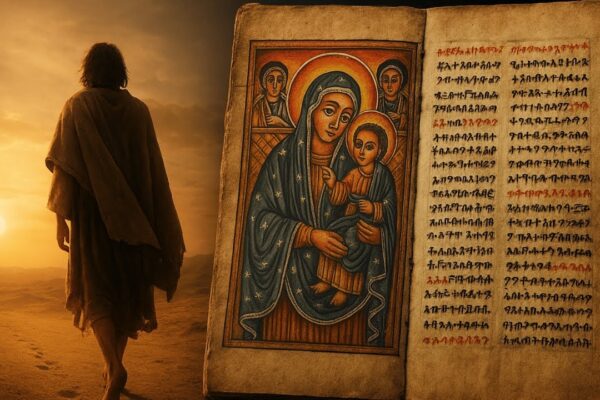
So let’s apply that same rigor to one of history’s most intriguing information gaps. If anyone has the missing pieces, it should be the Ethiopian Orthodox Tewahedo Church. They’ve preserved the most extensive biblical canon in Christianity—a treasure trove of ancient texts that Western traditions rejected or lost (Ethiopian Orthodox Bible insights, Book of Enoch and Watchers, Ethiopian Bible and Book of Enoch).
But what they reveal about Jesus’s missing years will genuinely shock you.

The Ethiopian Bible: Christianity’s Most Comprehensive Archive
Think of the Ethiopian Bible as the complete archive versus everyone else’s curated highlights.
The Protestant Bible contains 66 books. Catholics expanded this to 73. But Ethiopia? They maintain between 81 and 88 books, depending on which canonical list you’re consulting.
This isn’t just padding with minor additions. We’re talking about substantial works that survived in Ge’ez (classical Ethiopic) when they disappeared everywhere else.
The complete Book of Enoch (more info)? Western Christianity only had fragments until Ethiopian manuscripts provided the full text. This apocalyptic work details heavenly visions, fallen angels, and end-times prophecy—content that deeply influenced early Judaism and Christianity.
Jubilees? This retelling of Genesis through Exodus with precise dating systems exists fully only in Ethiopian tradition.
Then there are texts completely unique to Ethiopia: the three books of Meqabyan (not the same as the Western Maccabees), Josippon, four books of Sinodos, two Books of Covenant, and Ethiopic Clement.
Add to this the Ascension of Isaiah, Letter of the Apostles, Apocalypse of Peter, and expanded versions of Old Testament books like Jeremiah and Baruch.

Why Ethiopia Preserved What Others Lost
Here’s a business parallel: geographic isolation can be a preservation strategy.
After Ethiopia adopted Christianity in the 4th century, its location shielded it from the standardization pressures that swept through Europe and the Mediterranean. No Council of Carthage forcing canonical decisions. No Protestant Reformation stripping away “suspect” books. No centralized authority dictating what counts as scripture.
Ethiopia’s isolation meant their traditions developed independently, preserving texts that councils from Hippo (393 AD) to Trullo (692 AD) debated or excluded elsewhere.
The Ge’ez language itself became a vault. When texts disappeared in Greek, Hebrew, or Aramaic, Ethiopian Christians had already translated and preserved them (see source). They didn’t just maintain these books—they considered them divinely inspired, essential reading for understanding God’s complete revelation.
Think of it like maintaining legacy systems that everyone else deprecated. Sometimes what looks outdated elsewhere contains irreplaceable institutional knowledge.

The Kebra Nagast: Ethiopia’s National Epic
Before we get to the shocking revelation, there’s one more text worth understanding: the Kebra Nagast.
This 14th-century narrative isn’t formally canonical, but it’s deeply venerated in Ethiopian culture. It tells the story of Solomon’s relationship with the Queen of Sheba, their son Menelik I, and how the Ark of the Covenant allegedly came to Ethiopia.
The Kebra Nagast establishes Ethiopia’s spiritual legitimacy by connecting it directly to Israel’s sacred history. It’s nation-building through narrative—a powerful example of how stories shape identity and authority.
But here’s what matters for our investigation: even this expansive text focused on Solomon’s era, not Jesus’s life.

The 18-Year Gap: What Every Tradition Shares
Now we arrive at the core question. What does Ethiopia’s comprehensive biblical archive reveal about Jesus’s missing years?
Let’s break down what we know across all Christian traditions:
Age 0-2: Jesus is born in Bethlehem. Matthew’s Gospel describes the family fleeing to Egypt to escape Herod’s massacre of infants. They return to Nazareth after Herod’s death.
Age 12: Luke’s Gospel provides one snapshot—Jesus at the temple in Jerusalem, astounding teachers with his understanding. When his worried parents find him, he asks, “Didn’t you know I had to be in my Father’s house?”
Age 30: Jesus begins his public ministry with baptism by John. The Gospels then document his teaching, miracles, crucifixion, and resurrection in detail.
Ages 13-29: Complete silence across all four canonical Gospels.
This gap has spawned countless theories. Some claim Jesus studied with the Essenes at Qumran. Others suggest he trained with Druids in Britain. New Age literature places him everywhere from India to Tibet, learning mystical practices before his ministry.
These theories share one thing: zero historical evidence. They’re speculation filling a vacuum.

The Shocking Truth: Ethiopia Has Nothing Either
Here’s what will genuinely surprise people expecting secret revelations.
Despite maintaining Christianity’s most extensive canon—despite preserving texts that disappeared everywhere else—Ethiopian traditions provide absolutely no additional information about Jesus’s missing years.
None.
The extracanonical texts in Ethiopia’s Bible cover different ground entirely:
Enoch: Pre-Christian apocalyptic visions and cosmology (read here, more here)
Jubilees: Retelling of Genesis and Exodus with legal interpretations
Meqabyan: Wisdom literature and exhortations
Sinodos and Clement: Church order and ecclesiastical law
Ascension of Isaiah: Martyrdom narrative and heavenly visions
Letter of the Apostles: Post-resurrection dialogue
Apocalypse of Peter: Visions of heaven and hell
Not one of these texts narrates Jesus’s adolescence, his travels, or his activities between ages 12 and 30.
Ethiopian tradition aligns exactly with the canonical account: the flight to Egypt as an infant, return to Nazareth, then silence until his ministry begins.
No secret journeys. No hidden training. No lost gospels revealing his teenage years or young adulthood.

Why This Silence Matters More Than Speculation
For business leaders accustomed to data-driven decisions, this absence tells us something crucial.
When multiple independent sources—even comprehensive archives preserved in isolation—all share the same gap, that gap likely reflects historical reality rather than suppression.
If there were credible accounts of Jesus’s activities during those years, Ethiopian Christianity had every reason to preserve them. They kept everything else (Lost Book of Adam and Eve, Ancient Wisdom and Leadership). They valued completeness. They weren’t subject to Western councils that might have suppressed uncomfortable truths.
Yet they preserved the same silence.
This suggests the early Christian communities genuinely didn’t have this information. It wasn’t hidden—it simply wasn’t known or wasn’t considered significant enough to record.
Think about your own organization’s history. What gets documented? Typically, the significant events, the transformative moments, the public-facing activities. The routine, the preparatory, the mundane often goes unrecorded.
Jesus’s missing years likely represent exactly that: ordinary life in Nazareth, learning carpentry from Joseph, studying Torah, living as a typical Jewish man in first-century Galilee.
Not everything worth living is worth recording for posterity.

What Ethiopia’s Bible Actually Emphasizes
Rather than revealing Jesus’s missing years, Ethiopia’s extracanonical texts do something different: they reinforce theological continuity.
Enoch connects ancient Jewish apocalyptic thought to Christian eschatology, showing how early Christians understood their faith as fulfilling rather than replacing Hebrew scripture (see analysis).
Jubilees emphasizes law and covenant, important for Ethiopian Christianity’s integration of Old and New Testament observances.
The Sinodos and Ethiopic Clement establish church order and governance—practical guides for maintaining community structure.
These texts support the Tewahedo Church’s distinctive miaphysite Christology (Christ as one united nature from divinity and humanity) without altering the basic narrative of Jesus’s life and mission.
They add theological depth, not biographical expansion.

The Business Lesson: Question Your Assumptions
Here’s where this historical investigation becomes a case study in critical thinking.
How many YouTube videos, blog posts, and documentary specials promise to reveal “what the Church doesn’t want you to know” about Jesus’s missing years?
They rely on a seductive narrative: there’s secret knowledge, suppressed by authorities, waiting to be discovered by brave truth-seekers.
This same pattern appears in business constantly:
- The “secret” marketing strategy competitors don’t want you to know
- The “hidden” investment opportunity mainstream analysts ignore
- The “banned” business tactic that guarantees success
Sometimes these claims have merit. More often, they’re selling certainty where only ambiguity exists.
Ethiopia’s Bible provides a perfect test case. If anywhere held suppressed secrets about Jesus’s life, this independent tradition preserving texts lost everywhere else should be it.
But the evidence shows continuity, not conspiracy. Preservation, not suppression. (Ethiopian Orthodox Bible insights, Ethiopian Bible and Book of Enoch, Lost Book of Adam and Eve)

Due Diligence Beats Dramatic Claims
The Ethiopian biblical canon teaches us something every CEO and manager needs to remember: extraordinary claims require extraordinary evidence.
Before you invest resources chasing a supposedly revolutionary insight, apply the same rigor we’ve used here:
- Check multiple independent sources: Do different traditions separated by geography and authority structures agree or diverge?
- Examine what’s preserved, not just what’s claimed: Ethiopia preserved Enoch, Jubilees, and unique texts (Enoch and Watchers). That proves their willingness to maintain controversial material. Their silence on Jesus’s missing years therefore means something.
- Consider institutional incentives: Ethiopian Christianity had every incentive to preserve complete information about Jesus. Their comprehensive canon shows they acted on that incentive—everywhere except where information apparently didn’t exist.
- Distinguish between absence of evidence and evidence of absence: Sometimes gaps reflect lost information. Sometimes they reflect information that never existed. Context determines which.
- Be skeptical of narratives that claim secret knowledge: Real discoveries come with documentation, scholarly consensus, and verifiable sources—not just dramatic claims.

What We Can Confidently Say
After examining the Ethiopian biblical tradition, here’s what the evidence supports:
Ethiopia maintains Christianity’s most comprehensive biblical canon, including texts considered apocryphal in Western traditions (Ethiopian Orthodox Bible insights, Book of Enoch and Watchers, Ethiopian Bible and Book of Enoch).
These texts provide valuable theological, legal, and eschatological content that enriches understanding of early Christianity’s development.
Ethiopian traditions align with canonical Gospels on Jesus’s biography, including the same 18-year gap between childhood and ministry.
No credible extracanonical sources in any tradition provide detailed accounts of Jesus’s activities between ages 12 and 30.
This shared silence across independent Christian traditions suggests the information was never recorded rather than later suppressed.
The Ethiopian canon’s value lies in theological depth, not biographical expansion of Jesus’s life story.

The Real Revelation
The shocking truth isn’t what Ethiopia’s Bible reveals about Jesus’s missing years.
It’s what this comprehensive archive confirms: even the most extensive preservation of ancient Christian texts respects the same historical boundaries as everyone else.
There are no secret gospels hidden in Ge’ez manuscripts. No lost accounts of teenage Jesus traveling to distant lands. No suppressed revelations that church councils banned but Ethiopia preserved.
Just the same gap, the same transition from childhood to ministry, the same focus on what early Christians considered important: Jesus’s teachings, his mission, his death, and his resurrection.
For business leaders, this is actually the more valuable lesson.
Sometimes the most important insight isn’t discovering hidden information. It’s recognizing when apparent knowledge gaps reflect actual limitations of available data.
Making decisions based on that honest assessment beats chasing speculation disguised as secret wisdom.
The next time someone promises you’ve been missing crucial information that will transform your understanding, remember Ethiopia’s Bible. Sometimes the most comprehensive archive confirms that what everyone else doesn’t know, nobody actually knows.
And that’s okay. You can still make sound decisions with incomplete information—as long as you’re honest about what you don’t know.
That might be the most shocking revelation of all.
Word Count: ~2,350 words

FAQ
-
Does the Ethiopian Bible contain any unique life details about Jesus that aren’t found elsewhere?
No. While the Ethiopian canon preserves unique and ancient texts not present in Western Bibles, none of them provide additional information about Jesus’s life between ages 12 and 30. This silence matches all other Christian traditions. -
Are any of the so-called “lost gospels” (like Thomas or Judas) in the Ethiopian canon?
No. The “lost gospels” are not part of the Ethiopian biblical canon. The Ethiopian canon is distinctive for including works like Enoch and Jubilees, but the Gnostic gospels are not included as scripture by any major Christian branch. -
Why didn’t early Christians record what Jesus did during his “missing years”?
The most likely reasons: the early community either never knew about these years in detail, or they viewed his public ministry as the only period relevant to faith and salvation—not his private upbringing. -
Is it possible secret documents about Jesus’s youth are still hidden somewhere in Ethiopia?
Unlikely. Ethiopian monastic libraries have been heavily studied by scholars for over a century. No credible new accounts of Jesus’s missing years have surfaced despite deep exploration and documentation of these archives. -
What’s the main lesson for business and leadership from this case study?
Assumptions are dangerous—whether in spiritual inquiry or decision-making. The Ethiopian case shows that even the most independent and comprehensive data set may confirm rather than overturn existing knowledge. True leadership means making clear-eyed decisions—even with gaps in the data.
See more at this link: https://youtu.be/0_mxa9-L0Q0?si=uxysvUsaJl3Wc2nT