Key Takeaways
- The Boeing 777X folding wingtips are a result of ambitious engineering, blending efficiency with airport compatibility.
- Addressing gate size restrictions through folding tips enables a longer wingspan for enhanced performance—without sacrificing operational flexibility.
- The design demonstrates how aerospace innovation can be driven by infrastructure realities as much as by pure aerodynamics.
- Business strategy, market needs, and regulatory safety are all tightly interwoven in the 777X’s rollout.
Body
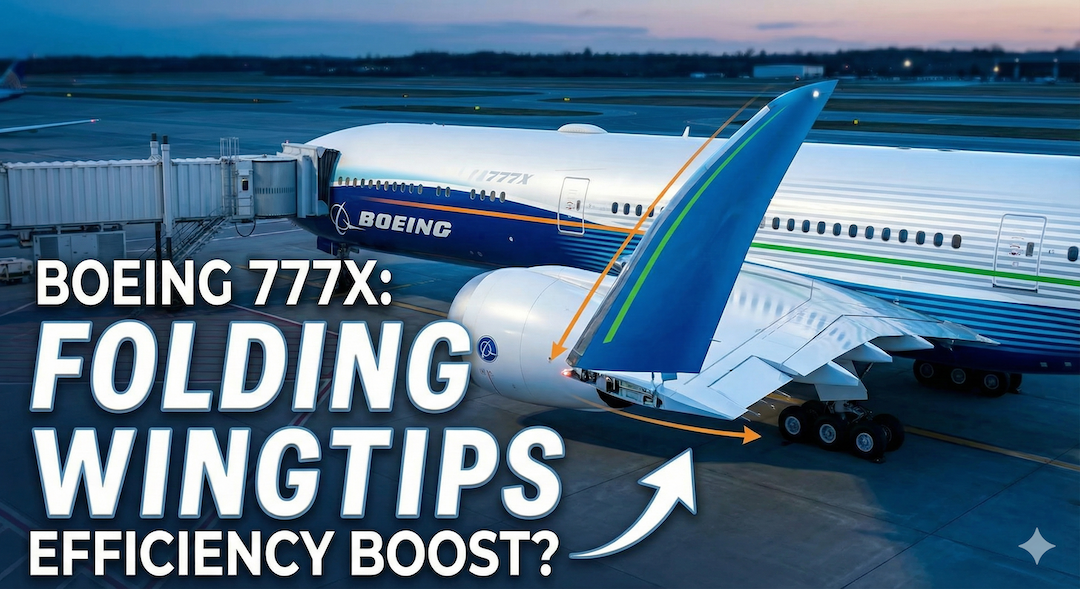
*Imagine a commercial jet with wingtips that fold up after landing.* It’s not science fiction—it’s the real solution Boeing adopted for its flagship 777X. The 777X folding wingtips are a rare example of a structural innovation driven by the intersection of engineering and business strategy.
The core challenge was simple but daunting: Next-generation airline customers craved the aerodynamic perks of an extended wingspan, but airport infrastructure was designed around much shorter wings. Had Boeing simply stretched the 777’s wings without modification, the aircraft would have been locked out of most major gates—an unthinkable outcome for airlines who demand *maximum fleet flexibility*.
Boeing’s folding tip system provides a clever workaround. Each wing extends to a span of 235 feet in flight (for fuel savings and better lift), but shrinks back to 212 feet on the ground to conform to airport “Code E” gates. Hydraulic actuators reliably raise each tip after landing, making space for neighboring planes at crowded terminals.
This is more than a neat party trick. It’s a calculated bet: that the performance and range benefits of a bigger wing would outweigh the cost, weight, and regulatory scrutiny of introducing moving parts at the wingtip. Boeing and its airline customers believe the answer is yes. Airlines get:
- *Significantly lower fuel burn*
- Enhanced takeoff performance, even on shorter runways
- The ability to operate at thousands of existing gates worldwide—critical for route flexibility
*Regulators set strict safety protocols for these novel wingtips.* For instance, the 777X cannot taxi unless wing locks confirm both tips are securely down, with clear cockpit and ground crew indicators. This ensures that while Boeing pushes technical boundaries, the margin for error remains vanishingly small.
What does this tell us about the future of aerospace and business innovation? When legacy infrastructure holds genuine value, even radical new designs must bend—sometimes literally—to fit. The 777X folding wingtip strikes that balance: advancing aerodynamic frontiers while keeping airlines’ current investments viable.
“We needed to design an airplane for tomorrow, but it had to fit into today’s world.” – Boeing 777X Program Engineer
The story of the 777X’s folding wingtips is less about a rare technology and more about the relentless, nuanced negotiation between engineering aspiration, business pragmatism, and regulatory oversight. It’s a masterclass in how big bets in aviation must always keep one wing folded toward reality.
FAQ
-
- Q: Are folding wingtips entirely new to aviation?
No—folding wings have been common on naval aircraft for decades, but this is the first time the technology enters mainstream commercial aviation for regular passenger flights.
- Q: Are folding wingtips entirely new to aviation?
-
- Q: Do airlines or airports need special equipment for the 777X wingtip?
No special ground equipment is needed. Typical ground crews manage normal operations, aided by cockpit and ground indicators unique to the 777X.
- Q: Do airlines or airports need special equipment for the 777X wingtip?
-
- Q: How reliable are the folding mechanisms?
The folding system is designed with multiple redundancies and is tested far beyond normal operating cycles. It only operates on the ground and features robust physical and electronic lockouts during takeoff, landing, and flight.
- Q: How reliable are the folding mechanisms?
- Q: Is the 777X’s longer span only about fuel efficiency?
No. The longer wingspan also improves range, reduces takeoff distances, and increases payload capacity, all while keeping the plane compatible with current airport infrastructure.