Quick Summary: AI-generated deepfake videos of real political candidates are already running as paid campaign ads ahead of the 2026 midterm elections. With no federal regulation, 28 states scrambling to pass disclosure laws, and research showing voters genuinely can’t tell the difference, American democracy faces its most sophisticated disinformation threat yet.
A video of a Texas congressional candidate appears to show him making inflammatory statements about immigration. He never filmed it. His mouth never said those words. But the video is polished, convincing — and it’s running as a paid political ad.
Welcome to the 2026 U.S. midterm elections, where AI deepfakes are no longer a theoretical threat. They’re here, they’re live, and they’re targeting voters right now.
What’s Already Happening: Real Cases in 2026

The National Republican Senatorial Committee (NRSC) made history in March 2026 by releasing what Reuters identified as the first long-form deepfake video of a political candidate — a fabricated clip of Texas Democratic Senate nominee James Talarico appearing to make statements he never made, presented in a convincing, lifelike format.
But Talarico isn’t alone. Documented deepfake ads in the 2026 midterm cycle include:
- A fabricated video of Georgia Democratic Senator Jon Ossoff claiming to have voted for a government shutdown — a vote that never happened
- Virginia Republican ads targeting Governor Abigail Spanberger with AI-generated statements she never made
- At least three major Senate race deepfake ads confirmed by CNN and Reuters as of late March 2026
According to a Reuters review of publicly available political advertising, Republicans appear to be utilizing the technology more frequently than Democrats this election cycle. Democrats have not been entirely absent from the practice, but the volume and sophistication gap is notable.
Why Deepfakes Are So Dangerous in Politics
The effectiveness of deepfakes as a political weapon comes down to a fundamental problem: humans are very bad at detecting them.
A peer-reviewed 2025 study published in the Journal of Creative Communications found that research subjects consistently struggled to identify deepfake videos even when shown high-quality examples. More critically, their political opinions were measurably affected by deepfake content — even when those subjects were generally media-literate and politically engaged.
“Disclaimers don’t work,” warns Daniel Schiff, a Purdue University professor who has studied thousands of deepfakes. The standard solution — labeling AI content as “AI-generated” — is insufficient because most voters either miss the disclosure, don’t understand what it means, or have already formed an impression before reading it.
The Speed Problem
Political deepfakes spread at the speed of social media. A fabricated video can reach millions of viewers in 24 hours — long before a candidate’s campaign can mount an effective rebuttal, before fact-checkers can weigh in, and before journalists can fully investigate. By the time a debunking story publishes, the emotional damage is done.
Research on misinformation correction consistently shows that corrections rarely fully undo initial impressions. The psychological phenomenon called “belief echoing” means that even people who learn a story is false often retain some residual belief in its content.
The Regulatory Void: No Federal Law, Patchwork State Rules
Here is the most alarming fact about AI deepfakes in American politics: there is no federal law regulating their use in political advertising.
Congress has debated AI regulation for years but has failed to pass comprehensive legislation governing AI in political campaigns. The Federal Election Commission has limited authority over ad content. Section 230 of the Communications Decency Act largely immunizes social media platforms from liability for hosting deepfake political ads.
State Laws: Better Than Nothing, But Far From Enough
As of March 2026, 28 states have passed legislation addressing AI use in political advertising. However, most of this legislation is focused on disclosure requirements rather than outright prohibition. A typical state law might require that AI-generated content carry a disclosure label — but as research shows, these labels do little to prevent voter persuasion.
State laws also have critical limitations:
- Most apply only to paid advertising, not organic social media sharing
- Enforcement mechanisms are weak or untested
- Laws vary dramatically by state, creating a patchwork that sophisticated campaigns can navigate
- Federal races (Senate, House) often fall outside the scope of state election laws
- Platform policies on AI political ads differ by company and are unevenly enforced
The AI Arms Race: Detection vs. Generation
Technology companies are investing heavily in deepfake detection tools. Content authentication standards — like the C2PA (Coalition for Content Provenance and Authenticity) protocol — aim to embed invisible metadata into images and videos that can verify their origin. Major camera manufacturers and some AI platforms have begun adopting these standards.
But detection is currently losing the race against generation. AI video generation tools like Sora, Runway, and open-source alternatives are improving faster than detection methods. The cost of creating a convincing deepfake has dropped from tens of thousands of dollars (circa 2020) to less than $100 using commercially available tools — and the price is still falling.
Platform Responsibility: Where Tech Giants Stand
- Meta (Facebook/Instagram): Requires disclosure on AI-generated political ads; enforcement is inconsistent
- YouTube/Google: Has policies against misleading election content; AI disclosure requirements for election ads added in 2024
- X (formerly Twitter): Community Notes system allows crowd-sourced fact-checking but cannot act fast enough during rapid viral spread
- TikTok: Faces the most scrutiny for algorithm-driven viral spread of political deepfakes to young voters
The Partisan Trust Collapse
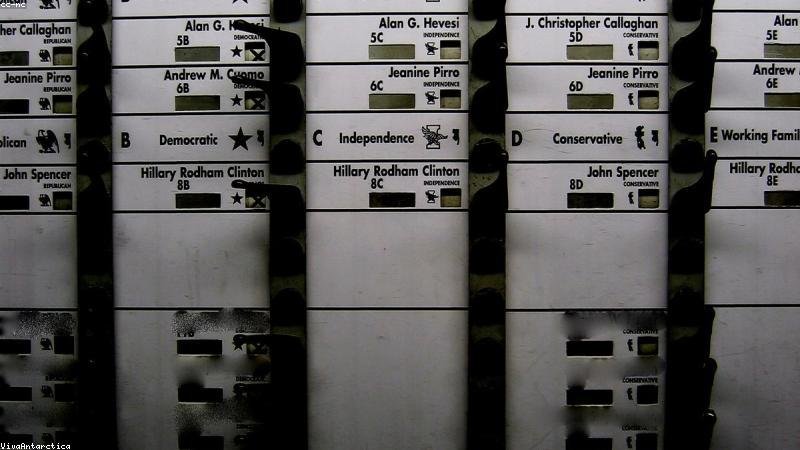
The deepfake crisis is accelerating an existing crisis: Americans’ catastrophically low trust in political information. Gallup polling shows trust in news media and political institutions at or near historic lows. Deepfakes exploit and deepen this problem in a pernicious way: as deepfakes proliferate, voters begin to distrust authentic content as well.
This is what Schiff calls the “liar’s dividend” — the ability of bad actors to dismiss genuine incriminating evidence as a deepfake. Ironically, the existence of deepfake technology gives politicians a new tool to escape accountability: “That real video? Must be AI-generated.”
What Voters Can Do to Protect Themselves
In the absence of strong federal regulation, voter self-defense is essential:
- Check the source first. Did this video come from a candidate’s official channel or a third-party PAC? Third-party ads are far more likely to use manipulated content.
- Look for artifacts. Blurred edges around faces, inconsistent lip-syncing, unnatural eye blinking patterns, and awkward hand gestures are still telltale signs of lower-quality deepfakes.
- Find the original. If a video shows a politician saying something shocking, search for the original context. Has any major news outlet reported this statement?
- Use fact-checking resources. PolitiFact, FactCheck.org, and Snopes have dedicated teams monitoring election-related deepfakes in 2026.
- Slow down. Deepfakes are designed to trigger emotional reactions that override critical thinking. Before sharing, pause 30 seconds and question what you’re seeing.
What Needs to Happen at the Federal Level
Experts across the political spectrum agree that voluntary disclosure and state patchwork regulation are inadequate. The recommendations gaining consensus among election integrity advocates:
- Federal legislation requiring clear disclosure on all AI-generated political advertising
- FEC authority to regulate AI content in political ads similarly to how it regulates disclaimers
- Platform liability for failing to remove provably false deepfake political content within defined timeframes
- Mandatory C2PA content authentication for political ads distributed on major platforms
- Criminal penalties for malicious use of deepfakes to misrepresent candidates’ positions
The 2026 midterms will be a stress test for American democracy in the AI age. The technology exists to undermine electoral integrity at scale, costs almost nothing to deploy, and is currently operating in a near-total regulatory vacuum. Whether voters, platforms, and legislators rise to the challenge will shape the credibility of U.S. elections for decades to come.
Sources
- CNN Politics — Republicans Release AI Deepfake of James Talarico
- Honolulu Star-Advertiser — AI Deepfakes Blur Reality in 2026 US Midterm Campaigns
- News-Articles.net — AI Deepfakes Threaten 2026 US Midterms
- Detroit News — AI Deepfakes Blur Reality in 2026 US Midterm Campaigns
- Reuters via Investing.com — AI Deepfakes Blur Reality in 2026 US Midterm Campaigns