Summary of Main Ideas
– The Ethiopian Orthodox Tewahedo Church interprets Jesus’s death fundamentally differently from Western Christianity—not as punishment for sin, but as a cosmic victory over evil forces.
– Ethiopian theology emphasizes the “Christus Victor” model: Jesus died to destroy sin, defeat Satan, and liberate humanity from bondage rather than to satisfy God’s wrath.
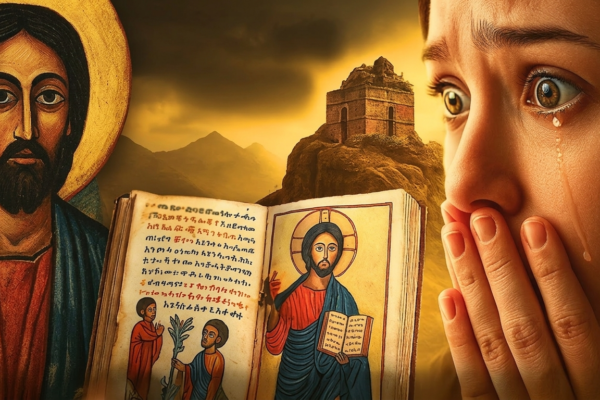
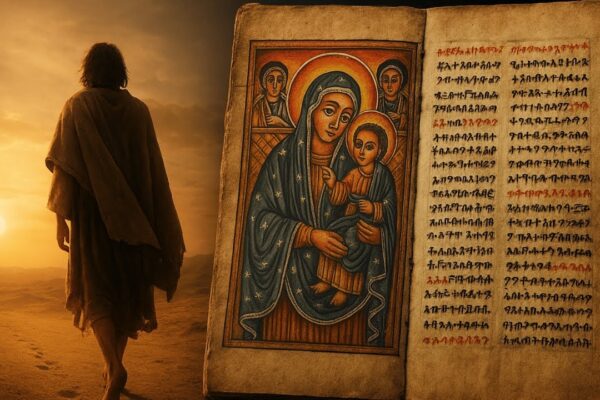
– The Ethiopian Bible (81+ books including Enoch and Jubilees) supports this view through its broader scriptural canon and Ge’ez interpretations.
– This ancient perspective offers business leaders valuable lessons about leadership strategy: victory through voluntary sacrifice, liberation over punishment, and transformational change versus transactional fixes.
– Understanding diverse theological frameworks can reshape how we approach organizational culture, crisis management, and stakeholder relationships.

The Ethiopian Bible: Not Your Average Scripture Collection
Let’s start with the basics. When we talk about “the Bible,” most people think of 66 books. The Ethiopian Orthodox canon contains 81 books. That’s not a typo—they’ve got 15 additional texts that never made it into Western versions.
Among these are the Books of Enoch and Jubilees, ancient Jewish texts that Western churches largely rejected. These aren’t minor footnotes; they’re central to understanding Ethiopian theology. Think of it like having access to your company’s full archives versus just the quarterly reports.
The Ethiopian church has preserved these texts in Ge’ez, an ancient Semitic language still used in liturgy today. This isn’t just about translation differences—it’s about maintaining an unbroken interpretive tradition spanning nearly 2,000 years. That’s older than most of the institutions we consider “established” in the business world.

The Plot Twist: Victory, Not Punishment
Here’s where the Ethiopian perspective fundamentally diverges from what you might have learned in Sunday school. According to Tewahedo doctrine, Jesus didn’t die primarily to absorb God’s punishment for sin. Instead, he died to destroy sin and death themselves.
1. Destruction of Sin and Death
Ethiopian sources state that Jesus “was crucified on the tree to destroy sin” and “died to destroy death, [and] to give life to the dead.” Notice the active verbs here. This isn’t passive substitution—it’s aggressive demolition.
Think of it like this: Western theology often portrays the crucifixion as Jesus standing between an angry creditor (God) and bankrupt debtors (humanity), taking the payment himself. Ethiopian theology sees it more like a hostile takeover—Jesus infiltrated the system of sin and death as a human, then destroyed it from within through his resurrection (source).
2. Victory Over Evil Forces
The Ethiopian view emphasizes that Jesus “scored a victory over the forces of evil.” He entered humanity’s battlefield with sin as a sinless champion and won through suffering, death, and ultimately, resurrection.
For business leaders, this is the difference between defensive and offensive strategy. It’s not about avoiding penalties—it’s about conquering new territory. Jesus didn’t just settle accounts; he changed the entire game board.
3. Ransom and Liberation
Ethiopian theology frames Christ’s death as a ransom that frees humanity from bondage to sin. But here’s the crucial distinction: the ransom isn’t paid to God to satisfy divine justice. Instead, it’s paid to break the “hereditary curse of Adam”—to liberate humanity from the cosmic powers that held them captive (source).
This is liberation theology at its ancient root. The focus isn’t on individual guilt transactions but on collective freedom from systemic bondage.

The Christus Victor Model vs. Penal Substitution
To understand why this matters, we need to look at the theological frameworks involved. Scholars call the Ethiopian view “Christus Victor“—Christ the Victor. This contrasts sharply with “penal substitutionary atonement,” the dominant Western Protestant model.
Let’s compare them side by side:
| Aspect | Ethiopian (Christus Victor) | Western (Penal Substitution) |
|---|---|---|
| Primary Focus | Cosmic victory over sin, death, and Satan | God punishing Jesus instead of sinners |
| Mechanism | Ransom paid to evil powers; voluntary death destroys bondage | Legal debt paid to satisfy God’s justice |
| Main Outcome | Resurrection triumph; eternal life through union with Christ | Forensic justification; imputed righteousness |
| Emphasis | Mystical participation (e.g., Eucharist); holistic salvation | Individual forgiveness of legal guilt |
Notice how the Ethiopian model emphasizes systemic victory over individual transactions? This isn’t just theological hair-splitting—it represents fundamentally different worldviews.
The Western model treats salvation like a courtroom drama. You’re guilty, Jesus takes your sentence, case dismissed. It’s clean, legal, individualistic. Very Western, actually.
The Ethiopian model treats salvation like a liberation movement. Humanity is enslaved by cosmic powers—sin, death, Satan. Jesus launches a rescue operation that culminates in breaking those chains forever (source).

The Scriptural Foundation: Same Texts, Different Lens
Both traditions read texts like Isaiah 53, John 1:29, and Hebrews. But Ethiopian interpreters approach them through their unique Christological lens called “Tewahedo”—meaning “unified.”
Tewahedo Christology holds that Christ has one unified nature, fully divine and fully human, without separation or mixture. This isn’t just theological abstraction. It’s essential to understanding how Jesus could defeat sin and death.
Here’s the logic: Only a fully human being could legitimately enter humanity’s battle against sin. Only a fully divine being could have the power to win that battle decisively. The unified nature makes the victory possible.
For business analogies, think of it like needing both insider knowledge and external resources to transform a failing company. You need someone who truly understands the internal culture (fully human) with the authority and capital to make radical changes (fully divine).

Why Business Leaders Should Care About Ancient Theology
You might be wondering: “This is fascinating history, but what does it have to do with running my organization?”
Fair question. Here’s why this matters beyond religious curiosity.

Leadership Through Voluntary Sacrifice vs. Forced Penalty
The Ethiopian model emphasizes that Jesus’s crucifixion was voluntary. He chose to enter the battle, chose to suffer, chose to die—all as strategic moves toward victory. This wasn’t penalty extracted from him; it was sacrifice offered by him.
For leaders, the distinction is crucial. Penalty-based thinking creates cultures of fear and compliance. People avoid mistakes to escape punishment. Sacrifice-based thinking creates cultures of purpose and ownership. People take risks because they’re committed to a larger victory.

Transformation vs. Transaction
The Western penal substitution model is inherently transactional: sin debt incurred, payment made, balance cleared. The Ethiopian Christus Victor model is inherently transformational: old powers defeated, new reality established, entire system changed.
When you face organizational crises, do you think transactionally or transformationally? Are you making payments to settle immediate problems, or are you fighting to fundamentally change the conditions that created those problems?
Consider a company dealing with systemic diversity issues. A transactional approach might settle lawsuits and implement compliance training. A transformational approach would dismantle the underlying power structures that enabled discrimination in the first place.

Collective Liberation vs. Individual Absolution
Ethiopian theology focuses on breaking humanity’s collective bondage, not just absolving individual guilt. The goal isn’t merely personal forgiveness—it’s cosmic restoration that affects everyone.
This has profound implications for stakeholder capitalism and ESG initiatives. Are you optimizing for individual shareholders’ returns (individual absolution), or are you working toward systemic solutions that liberate entire communities from economic, social, or environmental bondage (collective liberation)?
The companies making the biggest impact today often think more like Christus Victor theologians than penal substitution accountants.

The Books That Didn’t Make the Cut (But Should Matter)
Remember those extra 15 books in the Ethiopian canon? They’re not incidental to this discussion. The Books of Enoch, for instance, contain detailed accounts of angelic rebellion and the fall of cosmic powers—narratives that deeply inform the Ethiopian understanding of Christ’s victory (source).
Jubilees presents salvation history as covenant renewal and restoration of Edenic life. These themes reinforce the idea that Jesus’s death wasn’t about satisfying legal requirements but about defeating principalities and restoring what was lost.
Western Christianity excluded these texts partly because they didn’t fit emerging theological frameworks. The Ethiopian church kept them because they aligned with their inherited understanding of Christ’s work.
Here’s a business parallel: How often do we exclude data or perspectives that don’t fit our preferred narratives? What might we be missing by narrowing our “canon” of acceptable information?

The Early Church Fathers’ Influence
The Ethiopian perspective isn’t invented from whole cloth. It reflects the dominant view of early Church Fathers before Western theology took different turns in the medieval period.
Figures like Irenaeus, Athanasius, and Gregory of Nyssa emphasized Christ’s victory over death and the devil. The famous phrase “He became what we are so that we might become what He is” captures this transformational, participatory salvation—not just legal acquittal.
Ethiopian theology preserved this ancient emphasis while Western theology innovated in different directions. Neither is “wrong,” but they represent genuinely different interpretative traditions with different practical implications.
For organizational learning, this raises important questions: Are we preserving institutional wisdom or just repeating recent innovations as if they were eternal truths? Do we know the difference?

Practical Takeaways for Modern Leaders
-
- 1. Reframe Crisis as Opportunity for Victory
When your organization faces existential threats, the Christus Victor model suggests entering the crisis voluntarily and strategically to defeat it from within. Don’t just weather the storm—use it to break old bondage patterns.
- 1. Reframe Crisis as Opportunity for Victory
-
- 2. Emphasize Liberation Over Compliance
Build cultures where people are liberated to excel, not just compliant enough to avoid punishment. The energy difference is extraordinary.
- 2. Emphasize Liberation Over Compliance
-
- 3. Think Cosmically, Act Locally
Connect individual decisions to systemic impacts. How does your quarterly decision affect the larger ecosystem you operate within?
- 3. Think Cosmically, Act Locally
-
- 4. Value Ancient Wisdom
The Ethiopian church maintained interpretative traditions for two millennia. What ancient wisdom are you ignoring in favor of the latest management fad?
- 4. Value Ancient Wisdom
- 5. Embrace Unified Solutions
Integrate conflicting priorities (profit and purpose, efficiency and humanity, innovation and stability) without compromising either.

The Broader Implication: Multiple Valid Frameworks
Perhaps the most important lesson here isn’t about which theological framework is “right.” It’s the recognition that multiple sophisticated, internally consistent frameworks can interpret the same events very differently.
The Ethiopian Orthodox Tewahedo Church has maintained its Christus Victor theology for nearly 2,000 years. It’s produced rich spiritual traditions, sustained communities through unimaginable hardships, and shaped one of Africa’s most enduring civilizations. By any empirical measure, it “works.”
Western penal substitutionary theology has also sustained communities, inspired movements, and produced valuable fruits. It also “works.”
What if business strategy is similar? What if there are multiple valid frameworks for understanding markets, organizations, and human behavior—each internally consistent, each producing real results, each with different blind spots?
The leader who can hold multiple frameworks simultaneously, applying each where appropriate, has a distinct advantage over the leader who knows only one way to interpret reality.

Closing Thoughts: What Victory Looks Like
The Ethiopian Bible doesn’t say Jesus didn’t die for sin. It says He died to destroy sin—a subtle but profound difference. One is passive absorption; the other is active demolition.
For business leaders navigating increasingly complex challenges, this distinction matters. Are you absorbing problems or destroying their root causes? Are you making payments or winning victories? Are you settling accounts or transforming systems?
The ancient wisdom preserved in Ge’ez manuscripts offers no simple answers to modern organizational challenges. But it does offer a powerful alternative lens—one that emphasizes liberation over punishment, transformation over transaction, and cosmic victory over individual settlement.
The next time you face a crisis that demands sacrifice, ask yourself: Am I just taking a hit to settle accounts, or am I entering this battle to win a larger victory? The Ethiopian church’s ancient answer might just illuminate your path forward.

Key Takeaways
- The Ethiopian church’s interpretation of Jesus’s death is cosmic, liberative, and collective, emphasizing victory rather than legal transaction.
- The expanded Ethiopian canon radically shapes its theology of leadership, crisis, and transformation.
- Ancient frameworks like Christus Victor may offer fresh ways to think about organizational change, stakeholder relations, and crisis management.
- Multiple frameworks—and “canons”—can be valid, as long as we know their strengths and blind spots.
FAQ
What does “Christus Victor” mean?
It refers to the view of Christ’s work as an active, cosmic victory over sin, death, and evil powers—not just payment for human guilt. The Ethiopian Orthodox Tewahedo Church emphasizes this model over legalistic, transactional frameworks.
Why does the Ethiopian Bible have more books?
The Ethiopian canon contains 81 books, including Enoch and Jubilees, which enrich and shape its theology (see explanation).
How can a business leader apply Ethiopian theological ideas?
Leaders can use this framework to focus on systemic transformation, voluntary sacrifice for the greater good, and collective liberation, rather than mere compliance or transaction.
Is the Christus Victor view unique to Ethiopia?
No—aspects of this model are also present in the writings of early Church Fathers. Ethiopia, however, has fiercely maintained this framework while much of Western Christianity shifted to penal substitution models.
Which framework is “better”—Christus Victor or penal substitution?
Each has strengths and blind spots. The key is to understand what your framework emphasizes, what it leaves out, and what situations it best helps you interpret or solve.
See more at this link: https://youtu.be/o0fYesDvk_4?si=akE0HXhz13qxMPqC