Summary of Main Ideas
Four ancient prophecies from the Book of Daniel are interpreted by many theologians as pointing to imminent fulfillment during what’s called the “70th week”—a future seven-year period of global upheaval. These prophecies include: (1) the emergence of a final world empire resembling a revived Roman system, (2) the rise of a singular authoritative global leader, (3) a seven-year peace covenant with Israel that gets broken midway, and (4) a final military invasion of Israel triggering divine intervention. For business leaders navigating geopolitical uncertainty, understanding these interpretations provides valuable context for emerging global trends in governance, leadership dynamics, and Middle Eastern affairs. While interpretations vary among theological schools, the convergence of current global events with these ancient predictions offers fascinating insights into potential future scenarios that could impact international markets, supply chains, and strategic planning horizons. For more on the intersection of prophecy and geopolitics in Jerusalem, see prophecy and geopolitics in Jerusalem.

As a business leader, you’re constantly scanning the horizon for trends that could disrupt your industry.
You analyze market shifts, technological innovations, and geopolitical developments. But have you considered that some of the most significant upcoming global changes might have been predicted thousands of years ago? For a detailed discussion on how messianic movements in Jerusalem are affecting business outlooks, see messianic movements in Jerusalem.
The Book of Daniel, written around 530 BC, contains four specific prophecies that biblical scholars increasingly believe are approaching fulfillment. Whether you approach this from a faith perspective or purely as strategic intelligence, these predictions align remarkably with current global developments. They deserve your attention as a decision-maker operating in an increasingly interconnected world.

Prophecy 1: The Final World Empire (A Global Governance Structure)
What Daniel Predicted
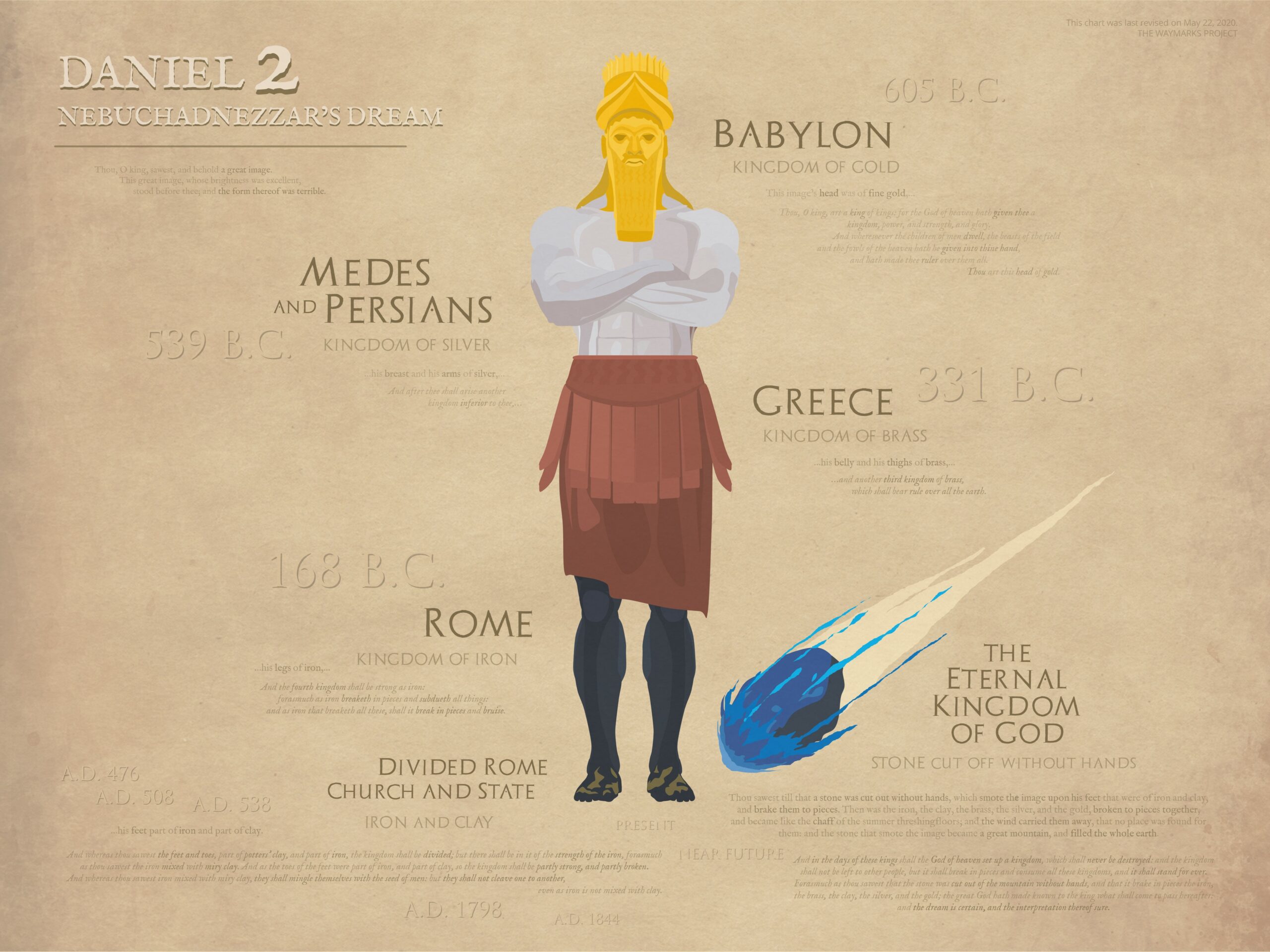
Daniel described a vision of a massive statue with feet made of iron mixed with clay. This symbolizes a final kingdom that blends strong elements with weak ones—powerful yet inherently unstable. In Daniel 7, this same empire appears as the fourth and final beast, from which emerges a “little horn” that subdues three other powers.
Think of it like a massive corporate merger where incompatible systems attempt integration. The infrastructure is impressive, but the foundation is fractured.
The Modern Interpretation
Many theologians interpret this as a future one-world government or revived Roman-style empire. This system would emerge from global crises—economic collapse, wars, natural disasters, or pandemics. Sound familiar? The international response to recent global challenges has accelerated conversations about unified governance structures.
Why Business Leaders Should Pay Attention
For CEOs and managers, this prophecy points to potential massive geopolitical restructuring. Consider these implications:
- Regulatory Harmonization: A move toward unified global regulations could dramatically alter compliance requirements overnight.
- Currency Shifts: The traditional financial system might undergo fundamental transformation, affecting everything from treasury management to international transactions.
- Supply Chain Realignment: Political realignments could force rapid restructuring of supplier networks and market access strategies.
Current indicators include the growth of supranational organizations, cross-border digital currency initiatives, and increasing calls for coordinated global responses to shared challenges. Some analysts point to dates around 2026 as potential inflection points based on converging trends. For context on how global trade hubs are evolving in this shifting landscape, read how global trade hubs are evolving.
The Business Analogy
Imagine your industry’s top ten competitors suddenly announcing a merger. The landscape you’ve navigated for years transforms overnight. New rules, new power dynamics, new competitive realities. That’s the scale of change this prophecy suggests.

Prophecy 2: The Rise of the Antichrist (The Ultimate Authoritarian Leader)
What Daniel Predicted
Daniel 7:8 and 11:36-45 describe a charismatic but boastful ruler emerging from the fourth kingdom. This figure speaks against traditional authorities, controls nations, and demands absolute allegiance. He rises to power by uprooting three opposing leaders.
The Modern Interpretation
Biblical scholars identify this as the Antichrist—a global leader who emerges during crisis to offer solutions. He consolidates power through charisma rather than traditional legitimacy. He implements unprecedented control mechanisms linked to economic participation.
This isn’t about identifying a specific individual. It’s about recognizing a pattern of leadership that could emerge.
What This Means for Organizations
As someone who studies leadership, you know that crisis creates opportunities for strongmen. History repeatedly shows that uncertainty drives populations toward authoritarian figures promising stability. Consider:
- Corporate Governance Parallels: Just as boards sometimes surrender authority to turnaround CEOs during crisis, nations might cede sovereignty to a unifying figure.
- Control Technology: The infrastructure for unprecedented monitoring and control already exists—from digital IDs to social credit systems to blockchain-tracked transactions.
- Market Access Conditions: Revelation 13 mentions that economic participation will require a specific “mark.” Today’s technology makes universal digital identity systems entirely feasible.
Current Indicators
We’re witnessing simultaneous government failures, multiplying regional conflicts, and economic instability. These conditions historically create demand for “strongman” leadership. The technology for centralized control scales exponentially faster than democratic accountability mechanisms.
Leadership Lesson
This prophecy warns against charismatic leaders who promise simple solutions to complex problems. It’s a reminder that crisis reveals character. When evaluating leadership—whether political candidates or potential business partners—look beyond the presentation to the principles. On this topic, the biblical narrative of the Nephilim also provides lessons in leadership ethics and the consequences of unchecked authority—explore leadership ethics and the consequences of unchecked authority for a deep dive.

Prophecy 3: The Seven-Year Covenant (The Peace Deal That Breaks)
What Daniel Predicted
Daniel 9:27 describes a future prince who confirms a covenant “with many for one week.” In prophetic language, this “week” represents seven years. Midway through—at the 3.5-year mark—this leader breaks the agreement, ends religious sacrifices, and commits an act called the “Abomination of Desolation.”
The Historical Context
Daniel’s “70 weeks” prophecy is remarkably precise. The first 69 weeks (483 years) predicted the exact timeline from the decree to rebuild Jerusalem (445 BC) to Jesus’s triumphal entry (32 AD). This mathematical accuracy gives credibility to the final unfulfilled week.
The Modern Interpretation
Theologians interpret this as a future peace treaty involving Israel, likely brokered by the global leader from Prophecy 2. The agreement would allow Israel to rebuild the temple and resume ancient practices. At the halfway point, the leader betrays the covenant and desecrates the holy site, triggering the most intense period of the seven-year tribulation.
Strategic Implications for Business
Middle East stability directly impacts global energy markets, shipping routes, and supply chains. A comprehensive Israeli peace agreement would be economically transformative:
- Energy Market Disruption: Peace could unlock massive infrastructure projects and resource development across the region.
- Trade Route Security: Stabilized Middle East means predictable access to Suez Canal routes and regional markets.
- Investment Opportunities: Peace agreements historically trigger investment booms in previously restricted markets.
However, the prophecy warns this peace is temporary. The midpoint collapse would trigger worse instability than before.
Timeline Considerations
Some theological interpretations, based on converging prophetic calculations, suggest a timeframe spanning 2026-2032 for this seven-year period. While such date-setting is speculative, the acceleration of Middle East peace initiatives warrants attention. For additional analysis on Jerusalem’s 2026 disruptions and their broader impact, refer to Jerusalem’s 2026 disruptions and broader impact.
Risk Management Perspective
Smart leaders plan for multiple scenarios. If a major Middle East peace deal emerges, consider both the opportunities and the potential for sudden reversal. Build flexibility into long-term contracts and expansion plans in affected regions.

Prophecy 4: The Final Invasion of Israel (The King of the North)
What Daniel Predicted
Daniel 11:40-45 describes a “king of the North” leading a coalition invasion into the “glorious land” (Israel) with chariots, cavalry, and ships. This triggers divine intervention and climactic confrontation.
The Modern Interpretation
This prophecy connects with Ezekiel 38-39 and Zechariah 12-14, which describe a massive coalition attack on Israel late in the tribulation period. The prophecy suggests two-thirds of Israel’s population perishes before supernatural deliverance occurs. Many scholars link this to the Battle of Armageddon, ending with Christ’s return to Jerusalem.
Geopolitical Context
The “king of the North” in Daniel’s context historically referred to powers in Syria, Turkey, and beyond. Today, we see:
- Regional Alliance Shifts: Traditional Middle Eastern alliances are reconfiguring in unexpected ways.
- Iranian Influence: Iran’s growing regional influence and its stated positions regarding Israel.
- Russian Involvement: Russia’s increasing Middle Eastern military presence and alliances with northern nations.
- Resource Competition: Water scarcity, energy resources, and strategic positioning drive regional tensions.
Business Continuity Considerations
A major Middle Eastern conflict would have cascading global effects:
- Energy Price Volatility: Oil and gas markets would experience immediate disruption.
- Supply Chain Bottlenecks: Mediterranean shipping and air routes could face restrictions or rerouting.
- Financial Market Instability: Safe-haven asset demands would surge; risk assets would face pressure.
- Cyber Warfare Escalation: Modern conflicts increasingly include digital infrastructure attacks with global reach.
Preparedness Questions
Ask your team: How resilient are our operations to Middle East supply chain disruption? Do we have alternative sourcing strategies? What’s our exposure to energy price spikes? How quickly could we pivot if key trade routes become compromised?

Theological Context: Understanding Different Perspectives
Before you write this off as religious speculation, understand that these interpretations come from a specific theological framework called dispensational premillennialism. This view reads Daniel’s prophecies as literal future events during a seven-year tribulation period.
Comparing Interpretive Frameworks
| Theological View | Key Belief | Implications |
|---|---|---|
| Dispensational Premillennial | Literal seven-year future tribulation; events yet to unfold | Prophecies are predictive warnings about actual coming events |
| Historicist | Prophecies fulfilled throughout church history | Many events already occurred (like the temple destruction in 70 AD) |
| Preterist | Most prophecies fulfilled in the first century | Primarily historical, not predictive |
| Idealist | Prophecies are symbolic of ongoing spiritual realities | Cyclical patterns rather than specific events |
Why Multiple Views Matter
As a leader, you understand that smart strategy considers multiple scenarios. While this article presents the dispensational premillennial view because it treats these prophecies as imminent, recognize that theological consensus doesn’t exist on timing or interpretation. Broader Messianic expectations and their influence on national and business culture are further explored at influence on national and business culture.
What’s undeniable is that the patterns described—global governance consolidation, authoritarian leadership emergence, Middle East peace efforts, and regional conflict escalation—are observable trends regardless of your theological position.

Limitations and Intellectual Honesty
Let’s be clear about what we don’t know. These interpretations, while grounded in serious biblical scholarship, remain matters of faith-based analysis rather than empirical certainty. Date-setting has a poor historical track record, with numerous failed predictions throughout church history.
The sources discussing 2026-related timelines offer intriguing correlations but not definitive proof. Global instability could arise from entirely different causes than ancient prophecy. Correlation doesn’t equal causation.
However, dismissing these perspectives entirely would be equally unwise. Strategic intelligence gathering means considering unconventional information sources. Throughout history, religious texts have provided frameworks that helped societies navigate crisis and change. For more on spiritual and organizational threats to stability and discernment, see spiritual and organizational threats to stability and discernment.

What Should Business Leaders Do With This Information?
1. Enhance Scenario Planning
Incorporate geopolitical instability scenarios into your strategic planning. Whether these specific prophecies fulfill or not, global volatility is increasing. Build resilience into your operations.
2. Monitor Middle East Developments
Watch for significant Israeli peace initiatives. Whether divinely predicted or not, such agreements would fundamentally reshape global economics and trade.
3. Diversify Dependencies
Reduce reliance on any single supply chain, market, currency, or regulatory environment. The prophecies point to rapid, dramatic change—good advice regardless of theological views.
4. Invest in Adaptability
Organizations that navigate disruption best are those built for rapid pivoting. Foster organizational agility, maintain strong balance sheets, and cultivate flexible leadership teams.
5. Understand Your Team’s Perspectives
Many of your employees, customers, and partners hold these theological views. Understanding their framework helps you lead more effectively and communicate more persuasively during uncertain times.
6. Develop Principle-Based Leadership
The Antichrist prophecy warns about charismatic figures who lack principled foundations. Commit to values-based decision-making that transcends short-term crisis responses. The importance of principle-driven leadership is analyzed in the context of isolation and self-reliance at principle-driven leadership in the context of isolation and self-reliance.

The Bigger Picture
Whether you view these prophecies as divine revelation, ancient wisdom, or interesting historical documents, they offer a framework for understanding large-scale change. They remind us that empires rise and fall, that peace is often temporary, and that leadership reveals its true nature during crisis.
For centuries, Daniel’s earlier prophecies accurately predicted the succession of Babylonian, Persian, Greek, and Roman empires. His track record gives his final predictions credibility worth considering.
The convergence of current events—globalization pressures, leadership crises, Middle East tensions, and technological control capabilities—with these ancient predictions is, at minimum, thought-provoking. At maximum, it’s a wake-up call to prepare for unprecedented change.

Final Thoughts
As business leaders, we’re trained to identify patterns, anticipate disruption, and position our organizations for multiple futures. These four prophecies from Daniel offer one framework for understanding potential global trajectories.
You don’t need to accept them as divine certainty to recognize their strategic value. They highlight vulnerabilities in global systems, warn about dangerous leadership patterns, and remind us that geopolitical stability is fragile.
The question isn’t whether you believe these specific prophecies will fulfill exactly as interpreted. The question is whether you’re preparing your organization for the kind of fundamental disruption they describe—disruption that could emerge from these or entirely different sources.
Smart leaders don’t wait for certainty before acting. They prepare for multiple scenarios, build resilient systems, and position their organizations to navigate whatever comes next.
Whether these prophecies fulfill in our lifetime or not, the wisdom they contain about power, leadership, crisis, and human nature remains timelessly relevant. And in our current moment of global uncertainty, that ancient wisdom might be exactly what modern leaders need.

Key Takeaways
- Daniel’s four final prophecies are taken seriously by many business-minded theologians for their real-world global implications.
- They highlight patterns of global governance, leadership, temporary peace initiatives, and regional conflict that reflect current events.
- Smart leaders embed scenario planning and adaptability into their organizations in response to such possible disruptions—regardless of personal beliefs.
- Limiting assumptions to conventional sources risks missing critical emerging patterns and signals.
- Being prepared for multiple futures is the essence of leadership resilience in an age of uncertainty.
FAQ
- Q: Are these prophecies guaranteed to happen soon?
A: No, even proponents warn against date-setting. The patterns are useful for scenario planning, but there are no certainties about timing or details. - Q: Why should business leaders care about religious prophecies?
A: These frameworks shape millions of worldviews, including customers, employees, regulators, and adversaries. World events often follow psychological and cultural narratives as much as rational forecasts. - Q: How can I use these insights without accepting their theology?
A: Treat them as scenario triggers—early warning signals that suggest when to double down on strategic flexibility and resilience measures. - Q: Is it ethical to factor religion-based scenarios into business planning?
A: Yes—if done with cultural literacy and respect. It’s about risk awareness and preparedness, not proselytizing or exclusion.
See more at this link: https://youtu.be/sChiINgMoWU?si=3jerJ3Y-8sfW-3KI