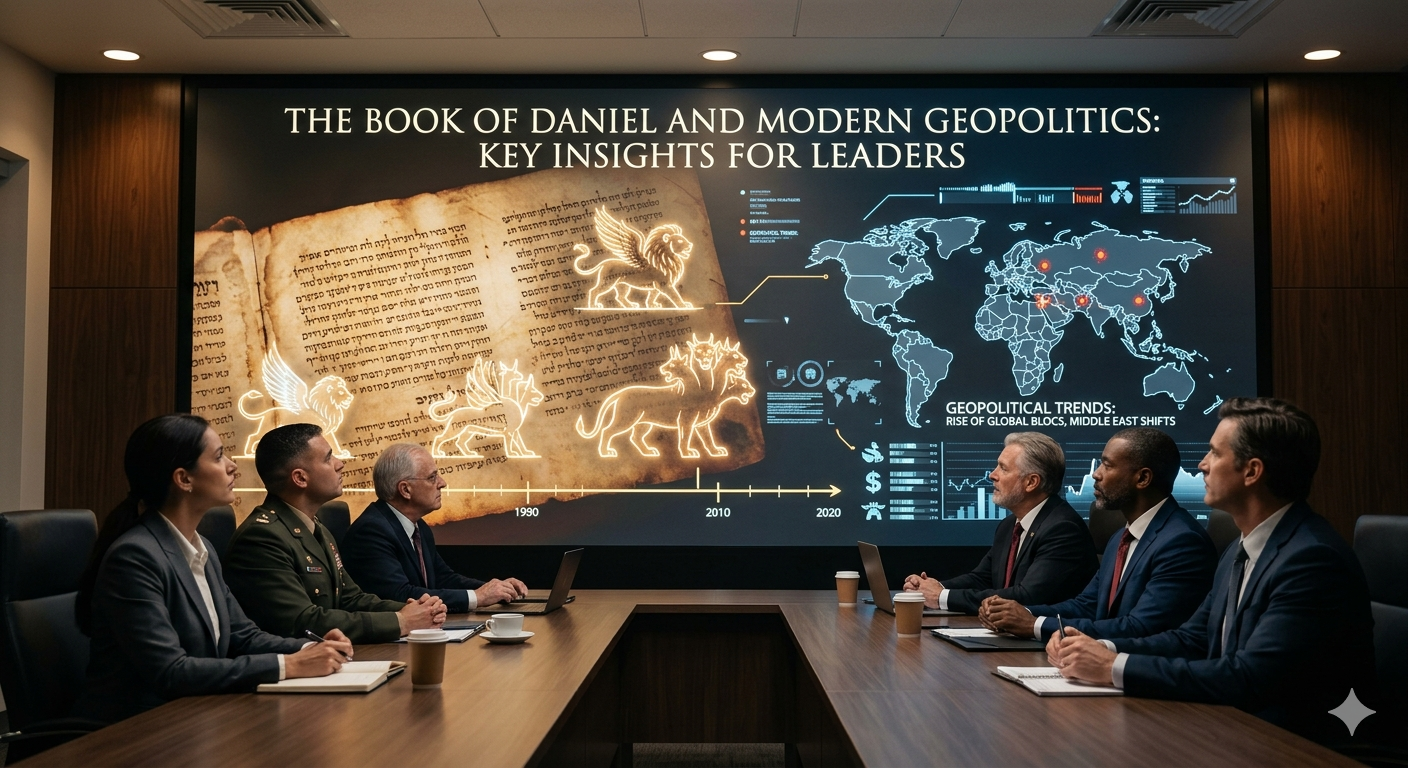
Four ancient prophecies from the Book of Daniel
are interpreted by some scholars as poised for imminent fulfillment, with potential timelines pointing to 2026-2032.

The Revived Roman Empire prophecy
describes a 10-region global system emerging from a divided final kingdom—possibly reflecting today’s geopolitical restructuring.

The Rise of the Antichrist
foretells a charismatic global leader consolidating power through a one-world governance system with unprecedented control mechanisms.

The Seven-Year Covenant
predicts a peace agreement enabling Israel to rebuild the Temple, broken midway by desecration—current Middle East peace talks may be setting the stage (source).

The Final Invasion prophecy
warns of a northern power attacking Israel, triggering end-times conflict before divine intervention.

Historical accuracy matters
Daniel’s prophecies precisely predicted four empires (Babylon, Persia, Greece, Rome) and pinpointed Jesus’ arrival to April 6, 32 AD.

Modern geopolitical indicators
—Israel’s Temple Mount control, regional peace frameworks, and emerging global governance structures—align with prophetic patterns.

Key Takeaways
- Daniel’s prophecies have demonstrated historical precision, suggesting future predictions should not be dismissed.
- Current events in global and Middle Eastern politics echo ancient prophetic themes.
- Expectations of a revived global order, charismatic leaders, and peace processes may indicate shifting times.
- Interpretive timelines point to 2026-2032 as critical years for potential fulfillment.
Body
*Few biblical texts have fascinated historians, scholars, and futurists alike as much as the Book of Daniel. With centuries of corroborated fulfillment and prophecies that speak directly to the modern world, Daniel is often called the “blueprint” of end-times events.*
The “Revived Roman Empire” prophecy conjures visions of a fractured global order reorganizing into 10 regions—an idea echoed in current discussions about the future of international governance. The possibility that our rapidly globalizing world could resemble Daniel’s prediction keeps analysts watching for signs of realignment.
*The prophecy about the rise of the Antichrist is perhaps the most chilling: a gifted and persuasive leader emerging in a moment of global crisis, uniting disparate nations under one authority. With technology enabling unprecedented surveillance and influence, even skeptics watch as governments debate digital currencies, identity, and control.*
“Now when these things begin to happen, look up and lift up your heads, because your redemption draws near.” — Luke 21:28
The Seven-Year Covenant prophecy focuses on a peace deal central to both regional stability and religious aspirations. As world leaders push for frameworks in the Middle East, and as Temple Mount remains globally contested (see
Jerusalem Prophecy and Geopolitics),
the potential for an historic accord remains very real in strategic discussions.
The Final Invasion echoes the volatile climate in parts of the world today, warning of a northern coalition moving against Israel. Observers note increased military activity and shifting alliances to the north, feeding speculation about possible prophetic alignment.
Importantly, Daniel’s reputation rests in past accuracy: the book predicted successive empires—Babylon, Persia, Greece, Rome—and a specific timeline for the appearance of the Messiah, fulfilled on April 6, 32 AD. This track record makes current forecasts even more compelling.
Today, as Israel reasserts Temple Mount control, and as peace deals and globalist trends continue, observers watch closely. *Are we watching prophecy unfold, or are we merely reading patterns into history?* The next decade may provide the answer.
FAQ
-
- Q: Are the prophecies of Daniel meant to be interpreted literally?
Many scholars believe that Daniel’s prophecies are a blend of literal events and symbolic visions. Historically, the empires were literal, while other elements are seen as metaphors for systems or leaders yet to arise.
- Q: Are the prophecies of Daniel meant to be interpreted literally?
-
- Q: Did Daniel’s predictions come true in the past?
Yes—many historians agree that Daniel’s visions accurately outlined the rise and fall of major ancient empires and the timing of Jesus’ life.
- Q: Did Daniel’s predictions come true in the past?
-
- Q: How do current events align with these ancient prophecies?
Events like major peace negotiations, Israel’s growing influence over Jerusalem, and global governance debates often mirror the frameworks Daniel predicted.
- Q: How do current events align with these ancient prophecies?
- Q: Does this mean end times are guaranteed within 2026–2032?
No specific dates can be confirmed. Timelines are based on interpretations, with some scholars highlighting 2026–2032 as a window of heightened relevance.
See more at this link: https://youtu.be/sChiINgMoWU?si=3jerJ3Y-8sfW-3KI