Key Takeaways
- Judaism and Islam maintain strict bans on pork, while Christianity permits it due to differing religious interpretations.
- These dietary laws have influenced thousands of years of culture, identity, and even shaped historic acts of resistance (e.g., the Maccabean revolt).
- Business leaders must understand pork prohibitions for workplace inclusion, international negotiations, and accessing large global markets.
- The rationale behind the pork ban is a blend of divine command, public health, environmental factors, and symbolism—but scholars agree scripture prioritizes the divine reason.
- Halal certification and religious dietary requirements create both barriers and opportunities in trillion-dollar industries.
- This ancient rule remains deeply relevant for modern business, politics, and global food supply chains.
Body
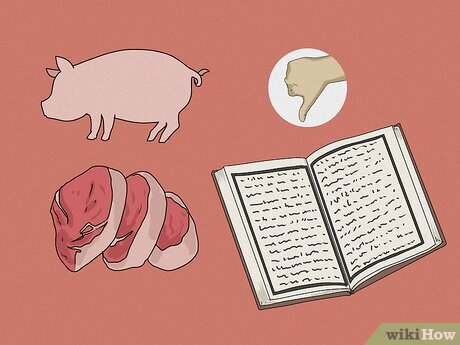
Three major world religions share common roots, yet they diverge dramatically on a single dietary question: pork. Judaism and Islam maintain strict prohibitions against consuming pork, viewing it as fundamentally unclean under Kashrut and Halal laws. Christianity, however, permits pork consumption freely. This divide stems from different interpretations of ancient scriptures—the Torah establishes the original ban based on animals that don’t meet specific cleanliness criteria, the Quran reinforces this prohibition as divine law, while the New Testament shifts focus from ceremonial dietary rules to internal spiritual purity. For business leaders navigating global markets, understanding these religious dietary laws isn’t just academic—it’s essential for cultural competence, inclusive workplace policies, and international commerce. This article explores the theological, historical, and practical reasons behind one of humanity’s most enduring dietary divisions.

The Ancient Rule That Changed Everything
Picture ancient Israel, around 1,400 BCE. Moses descends from Mount Sinai with more than the Ten Commandments. He carries detailed instructions about what his people can and cannot eat. Among the prohibited foods: pork.
The rules were specific and unambiguous. Leviticus 11:7 and Deuteronomy 14:8 lay out clear criteria for “clean” animals. To make the list, an animal must have cloven hooves AND chew the cud.
Pigs failed the test. They have split hooves but don’t chew cud. One criterion satisfied, one failed—making them ceremonially unclean. This wasn’t a suggestion or guideline; it became fundamental religious law.
But here’s what’s fascinating: this same rule would be embraced by Islam 2,000 years later and largely abandoned by Christianity. How did three religions reading the same source material reach such different conclusions?

Judaism: Where Dietary Law Meets Identity
For Jewish people, avoiding pork isn’t just about following rules. It’s about maintaining identity, holiness, and covenant with God. The Hebrew dietary laws, known as Kashrut, define what makes food kosher (fit or proper).
Think of Kashrut as ancient Israel’s operating system. These laws distinguished Jews from surrounding pagan nations. They created boundaries, marked identity, and demonstrated covenant loyalty.
The Biblical Foundation
The Torah provides explicit instructions without much explanation. Pigs are out because they don’t meet the biological criteria. No debate, no discussion—just divine command.
- Leviticus 11:7: “And the pig, though it has a divided hoof, does not chew the cud; it is unclean for you.”
- Deuteronomy 14:8: “The pig is also unclean; although it has a divided hoof, it does not chew the cud.”
These verses became non-negotiable for observant Jews. They represented more than health advice—they symbolized obedience and separation from surrounding cultures.
When Pork Became a Badge of Honor
During the Maccabean revolt (167-160 BCE), Greek rulers tried forcing Jews to eat pork. It was a test of loyalty—abandon your God or abandon your life. Many chose martyrdom rather than consume forbidden meat.
This historical moment transformed pork avoidance from dietary preference to identity marker. Refusing pork meant refusing assimilation. It became a visible, powerful statement of faith under persecution.
Today, Orthodox and Conservative Jews maintain these restrictions strictly. Reform Jews may interpret them more liberally, but the prohibition remains culturally significant across the spectrum.
The Exception That Proves the Rule
Jewish law recognizes one important exception: pikuach nefesh, or saving a life. If someone faces death by starvation with only pork available, they must eat it. Preserving life trumps dietary law.
This exception reveals something crucial: Jewish dietary law is serious but not absolutist. Life and human welfare remain paramount values.

Islam: Reinforcing the Ancient Prohibition
When Islam emerged in the 7th century CE, it didn’t reject Judaic dietary laws—it reinforced them. The Quran explicitly prohibits pork multiple times, using clear, unambiguous language.
Muslims view the pork prohibition as continued divine guidance. It’s not a new rule but an affirmation of what God commanded through Moses and subsequent prophets.
Quranic Commands
The Quran addresses pork prohibition directly in several verses:
- Surah Al-Baqarah (2:173): “He has only forbidden to you dead animals, blood, the flesh of swine…”
- Surah Al-Ma’idah (5:3): “Prohibited to you are dead animals, blood, the flesh of swine…”
The language is straightforward. Pork is haram (forbidden) and najas (impure). There’s no room for interpretation or gradual adoption.
Why Muslims Maintain the Ban
Islamic teaching emphasizes submission to Allah’s will. If God forbids something, believers obey—even without fully understanding the reason. This represents discipline, faith, and spiritual cleanliness.
The prohibition connects Muslims to the broader Abrahamic tradition. It acknowledges the continuity from Moses through Jesus to Muhammad. Avoiding pork becomes an act of historical and spiritual solidarity.
Modern Muslims maintain this prohibition universally. Whether in Jakarta, Istanbul, or New York, observant Muslims refuse pork products completely. It’s one of Islam’s most visible and consistently observed practices.
Halal Certification’s Business Impact
The global Halal market exceeds $2 trillion annually. That’s larger than many national economies. For food companies, Halal certification opens massive markets across Muslim-majority countries.
Smart businesses recognize this. Major corporations reformulate products, adjust supply chains, and pursue Halal certification to access billions of potential customers.
If you’re interested in how regulatory and certification landscapes can create major business opportunities or barriers in new markets, especially in industries like food production or advanced manufacturing, you may find this article on CHINAPLAS 2026 and innovations in global supply chain strategies insightful.

Christianity: The Great Theological Pivot
Here’s where things get interesting. Christians read the same Hebrew Bible (Old Testament) as Jews. They acknowledge the Levitical laws. Yet most Christians eat pork without hesitation.
What changed? The New Testament introduced a theological revolution that redefined “clean” and “unclean.”
Jesus Redefines Purity
In Mark 7:19, Jesus makes a statement that would echo through centuries: “In saying this, Jesus declared all foods clean.” He shifts focus from external dietary rules to internal spiritual condition.
Jesus taught that what defiles a person comes from within—evil thoughts, greed, malice—not from food entering the body. This represented radical reinterpretation of ancient law.
Think of it as moving from hardware restrictions to software upgrades. External compliance mattered less than internal transformation.
For further reflection on Christian narratives and how reinterpretation and symbolism can drive not only religious life but also cultural impact and leadership, you might appreciate this deep dive into the production and symbolic lessons of “The Passion of the Christ”.
Peter’s Vision: Breaking the Kosher Barrier
Acts 10 recounts Peter’s vision of unclean animals descending from heaven. A voice commands him: “Kill and eat.” When Peter objects, citing kosher laws, the voice responds: “Do not call anything impure that God has made clean.”
This vision wasn’t really about food. It symbolized welcoming Gentiles (non-Jews) into the Christian community. But it had immediate dietary implications.
If God declared previously unclean things clean, dietary restrictions no longer applied. The kosher laws served their purpose but weren’t eternal requirements.
Paul’s Theological Framework
The Apostle Paul provided theological framework for this shift. In Romans 14, he teaches freedom from ceremonial laws. Dietary restrictions belonged to the “old covenant”—fulfilled and superseded by Jesus.
Paul distinguished between ceremonial law (dietary rules, circumcision, festivals) and moral law (ethics, justice, love). The ceremonial laws were temporary markers for ancient Israel. Moral laws remained eternally binding.
This distinction freed Gentile Christians from Jewish dietary practices. They could follow Jesus without adopting kosher restrictions. Pork became permissible as Christianity spread beyond Jewish communities.
The Practical Effect
As Christianity expanded across the Roman Empire and beyond, pork consumption became normal. What Jews and Muslims considered forbidden became staple protein for Christians.
This dietary difference became one of the most visible distinctions between Abrahamic religions. It remains so today.
For leaders interested in how religious interpretation, identity, and symbolism intersect with real-world organizational or geopolitical change, see modern lessons from events in Jerusalem and Messianic movements.

Comparing Three Theological Approaches
| Religion | Key Scriptures | Core Rationale | Identity Role |
|————–|——————-|——————-|——————|
| Judaism | Leviticus 11, Deuteronomy 14 | Holiness, separation from pagan practices | Covenant badge, obedience marker |
| Islam | Quran: Surah Al-Ma’idah, Al-Baqarah | Divine command, spiritual discipline | Submission to Allah’s will |
| Christianity | Mark 7:19, Acts 10, Romans 14 | Internal purity over external rules | Freedom from ceremonial law |
Notice the pattern? Same original source, three different applications. Judaism maintains the original prohibition as covenant identity. Islam reinforces it as divine submission. Christianity reinterprets it as fulfilled ceremonial law.

The Theories Behind the Original Ban
Why did the prohibition exist in the first place? Scholars have debated this for centuries. While scripture emphasizes divine command, several practical theories exist.
Public Health Hypothesis
Pork carries health risks, especially in hot climates without refrigeration. Trichinosis, a parasitic disease from undercooked pork, caused serious illness historically. Ancient Egyptians and Israelites might have recognized this danger empirically.
Pigs also eat carrion and waste, potentially concentrating pathogens. This scavenger behavior could have marked them as hygienically suspect in ancient thinking.
However, this theory has limitations. Other permitted animals also carry diseases. If health alone motivated the ban, why single out pigs?
For an agricultural perspective on how technology shifts and food safety affect global business operations, you might be interested in innovations like agricultural drones and their influence in the food industry.
Environmental and Cultural Factors
Pigs compete with humans for resources. In water-scarce regions like the ancient Near East, pigs require more water than sheep or goats. They don’t provide milk, wool, or labor—only meat.
From an ecological perspective, pigs were inefficient. Sheep and goats thrived in arid conditions. Pigs did not.
Additionally, surrounding pagan cultures used pigs in fertility rituals that biblical religion opposed. Avoiding pork separated Israelites from these practices symbolically and practically.
Ethical Considerations
Some scholars suggest the ban rejected practices associated with carrion-eating animals. Pigs consume dead flesh, creating symbolic associations with death and impurity.
Ancient purity systems often categorized animals by behavior and habitat. Pigs didn’t fit clean categories—they weren’t pure grazers or pure carnivores.
The Scholarly Consensus
Most religious scholars emphasize that primary sources stress divine command over practical explanations. The Bible and Quran say “God forbids it”—not “pork is unhealthy.”
Searching for rational explanations might miss the point. These were religious laws defining community identity and demonstrating faithfulness, not ancient public health codes.

What This Means in Today’s World
Fast forward to the 21st century. Do these ancient prohibitions still matter? Absolutely.
Orthodox Jews and observant Muslims worldwide maintain strict pork avoidance. It remains a fundamental identity marker. Walk into a kosher or Halal restaurant anywhere—you won’t find pork.
Meanwhile, Christians consume pork freely. Bacon, ham, sausage—these are dietary staples across Christian-majority countries.
The Demographic Reality
Approximately 2.4 billion Christians, 1.9 billion Muslims, and 15 million Jews live worldwide. That means nearly 2 billion people avoid pork for religious reasons—roughly 25% of humanity.
These aren’t fringe practices. They’re mainstream religious observances affecting global food systems, agriculture, and commerce.

Why Business Leaders Should Care
You might be thinking: “Interesting history, but what does this mean for my business?” More than you might expect.
Workplace Inclusion
Creating inclusive work environments means accommodating diverse dietary needs. Company cafeterias, business lunches, and team dinners require thoughtful planning.
Offering Halal and kosher options isn’t just nice—it’s strategic. It signals respect, attracts diverse talent, and demonstrates cultural intelligence.
If you’re interested in broader lessons on workplace inclusion, cross-cultural management, and leadership strategies rooted in religious or ethical values, consider reading modern takes on leadership and humility inspired by the Nativity: Nativity Story leadership lessons.
Global Market Access
Entering Muslim-majority markets requires Halal certification. That’s 1.9 billion potential customers across Indonesia, Pakistan, Bangladesh, the Middle East, and beyond.
Food companies that ignore Halal requirements eliminate themselves from massive markets. Those that embrace it gain competitive advantage.
Negotiation and Relationship Building
Understanding religious dietary laws builds rapport in international business. Choosing appropriate restaurants for client dinners shows cultural awareness and respect.
I’ve seen business deals strengthened simply because someone demonstrated knowledge of Halal or kosher practices. It signals that you’ve done your homework and value your partners’ beliefs.
Supply Chain Considerations
For food industry businesses, religious dietary laws affect sourcing, production, certification, and distribution. Kosher and Halal certifications require separate processing facilities, trained inspectors, and documentation systems.
These aren’t minor operational details—they’re fundamental business requirements for serving observant communities.
Cultural Competence as Competitive Advantage
In our interconnected world, cultural intelligence separates thriving organizations from struggling ones. Understanding why 2 billion people avoid pork isn’t trivial knowledge—it’s strategic information.
It demonstrates broader organizational capacity to navigate diversity, respect differences, and operate effectively across cultures.

The Enduring Power of Ancient Rules
Three religions, one question, three answers. Judaism and Islam maintain ancient prohibitions as expressions of faith, identity, and divine obedience. Christianity reinterpreted those rules through a new theological lens, permitting what was once forbidden.
What’s remarkable isn’t that they differ—it’s that these 3,000-year-old rules still shape billions of lives daily. They affect what people eat, where they shop, which restaurants they choose, and how they organize their kitchens.
For business leaders, understanding these distinctions isn’t about becoming religious scholars. It’s about recognizing that deeply held beliefs shape behavior in profound ways—including economic behavior.
The executive who understands why her Jewish colleague avoids certain restaurants, or why the Halal certification matters for the Indonesian market, operates with crucial cultural intelligence. She builds stronger teams, captures broader markets, and navigates diversity effectively.
Ancient dietary laws remain powerfully relevant in our modern world. They remind us that people’s deepest values—formed by faith, history, and community—fundamentally influence how they live, work, and conduct business.
In a globalized economy, that’s knowledge worth having. The question isn’t whether you need to understand these differences. The question is: can you afford not to?

FAQ
- Why do Judaism and Islam prohibit pork, while Christianity allows it?
The prohibition involves both scriptural command and evolving interpretation. Judaism and Islam emphasize divine command and identity boundaries, while Christianity reinterpreted these rules as symbolic/ceremonial, replaced by a focus on internal purity. - Is the pork ban based on health concerns?
While health risks are cited by some scholars, religious scripture stresses divine reason over practicality. The main view is that it’s about obedience, identity, and separation, not just hygiene. - How does the pork prohibition affect business today?
It influences everything from product formulation, restaurant menus, workplace events, to sourcing and global certification, especially in international and multicultural contexts. - Can Jews or Muslims eat pork to save their life?
Yes—preservation of life overrides the prohibition in pikuach nefesh (Judaism) and necessity (Islam). - Why is Halal or kosher certification so important for companies?
Certification is required to access large markets; failing to meet these means being locked out of regions with billions of potential customers. - Do all Christians eat pork?
Most do, but some small denominations or individuals may abstain for personal or theological reasons, though mainstream Christian teaching does not prohibit pork. - How can business leaders apply this knowledge?
By developing cultural intelligence, offering inclusive options, and respecting religious boundaries, businesses gain both talent and market access.
See more at this link: https://youtu.be/qTDvFb4BTWM?si=UENIJ7VhZGR48E2d