Introduction
What if the most disruptive innovation in human history wasn’t blockchain or artificial intelligence? What if it happened thousands of years ago, recorded in one of history’s most cryptic passages? As leaders navigating an era of CRISPR, gene editing, and transhumanism debates, you might find unexpected wisdom in an ancient mystery.
The Nephilim. The name alone evokes wonder and controversy. For centuries, business leaders, scholars, and curious minds have pondered these enigmatic beings. Who were they really? And why does their story matter to you today?

Summary of Main Ideas
– The Nephilim remain one of the Bible’s most debated mysteries, with three competing interpretations among scholars: the angelic view (fallen beings), the Sethite view (godly descendants), and the dynastic view (tyrannical rulers)
– Mount Hermon serves as a significant archaeological site connected to Nephilim traditions and ancient Near Eastern religious practices
– The Hebrew word “Nephilim” likely means “fallen ones”, though commonly translated as “giants” due to contextual descriptions
– All scholarly interpretations agree that Genesis 6:1-4 describes sinful behavior that escalated human wickedness and led to divine judgment through the Flood
– The passage intentionally uses obscure language to invite ongoing theological reflection rather than provide definitive answers
– Modern parallels to genetic manipulation exist outside mainstream biblical scholarship but represent emerging discussions in certain theological circles
– For business leaders, understanding this ancient text offers insights into human nature, ethical boundaries, and the consequences of unchecked power

The Passage That Changed Everything
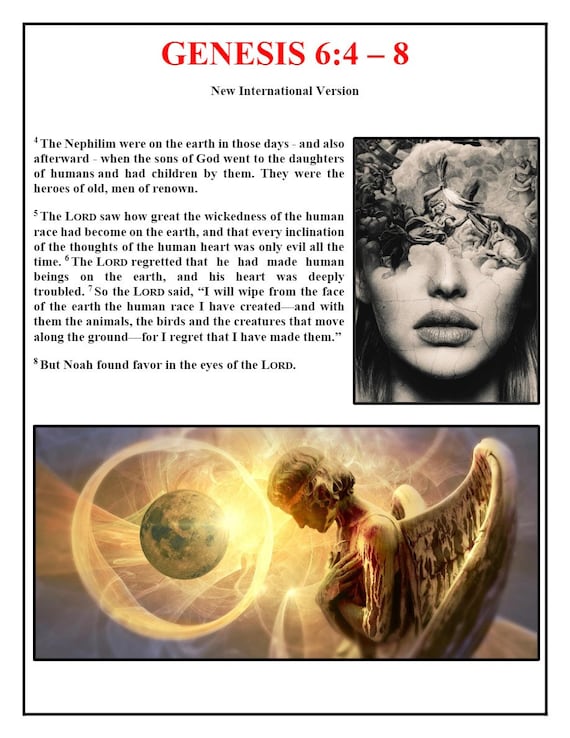
Genesis 6:1-4 presents one of Scripture’s most puzzling narratives. In just four verses, the biblical text describes “sons of God” taking “daughters of humans” as wives. Their offspring became the Nephilim, described as “heroes of old, warriors of renown.”
Think of it like discovering a competitor’s secret formula with half the instructions missing. Biblical scholars face a similar challenge. The narrator intentionally leaves details ambiguous, inviting interpretation rather than declaring certainty.
This ambiguity has sparked debate for millennia. What does it mean for your understanding of human nature and moral boundaries? If you’re interested in the practical side of leadership when information is limited, see examples of self-reliant leadership frameworks at self-reliant leadership frameworks.

The Angelic Interpretation: When Boundaries Are Crossed
The most prominent view holds that “sons of God” (bene ha ‘elohim) were fallen angelic beings. These entities took human form and produced offspring with human women. This interpretation draws support from multiple biblical references.
Job 1:6 and 2:1 use identical terminology to explicitly refer to angels. Jude 6-7 describes angels who “left their proper dwelling” and “did not stay within their own position of authority.” The parallel to Genesis 6 seems unmistakable.
For business leaders, consider this analogy. Imagine executives from a parent company descending to a subsidiary and violating every governance protocol. The resulting chaos would mirror the biblical narrative’s depiction of escalating corruption.
Critics argue that angelic beings lack capacity for marital relations, citing Mark 12:25. However, supporters note that angels assumed male human bodies elsewhere in Genesis 19:1-3. The theological debate continues.

The Sethite Interpretation: A Merger Gone Wrong
This view proposes a different narrative entirely. The “sons of God” were godly descendants of Seth. The “daughters of humans” came from Cain’s wicked lineage.
Genesis 5:1-3 emphasizes Adam’s likeness to God and Seth’s likeness to Adam. This suggests Seth’s descendants inherited a special “son of God” status. Intermarriage between these two lineages—one righteous, one corrupt—led to widespread moral decay.
Think of it as a corporate merger between a values-driven company and an ethically compromised competitor. The righteous culture gets diluted. Standards erode. Eventually, the entire organization loses its way. On the strategic risks of such mergers and alliances in a modern context, see lessons from large-scale defense contracts at large-scale defense contracts.
Proponents point to patterns in Genesis. Enoch exemplified righteousness from Seth’s line. Lamech typified wickedness from Cain’s descendants. Their intermarriage represented compromise with corruption.

The Dynastic Interpretation: Power Without Accountability
The third view identifies “sons of God” as tyrannical rulers from Lamech’s dynasty. These leaders exercised quasi-divine authority in ancient Near Eastern fashion. Royal figures regularly received celestial language in that cultural context.
These despots took any women they desired, following patterns of ancient tyrants. Their offspring became “heroes of old, persons of name,” suggesting military or political prominence.
For modern executives, this interpretation rings familiar. Unchecked power corrupts. Leaders who operate without accountability create toxic cultures. Their “heroic” offspring perpetuate the dysfunction. For real-world business implications of unchecked authority and lessons in risk management, explore strategic risks in major contracts.

What’s in a Name? Decoding “Nephilim”
The Hebrew word nephilim likely means “fallen ones.” However, the Septuagint translators rendered it as “giants” (gigantes). This translation shaped centuries of interpretation.
The connection between Nephilim and giants emerged from contextual clues. In Numbers 13:33, ten Israelite scouts called large-bodied Canaanites “Nephilim.” They described these beings with legendary language as “heroes of old.”
Yet the equation of Nephilim with giants remains interpretive rather than etymologically certain. The term appears sparingly—primarily in Genesis 6 and Numbers 13. Each occurrence adds layers of mystery without providing definitive clarity.

Mount Hermon: Where Heaven Met Earth
Mount Hermon holds special significance in Nephilim traditions and ancient Near Eastern religion. This snow-capped mountain on the Israel-Syria-Lebanon border reached over 9,000 feet elevation. Ancient peoples considered it a sacred threshold between earthly and divine realms.
Archaeological evidence reveals extensive religious activity at Mount Hermon. Temple ruins, altars, and inscriptions suggest it served as a cultic center for millennia. The Book of Enoch, an ancient Jewish text, explicitly connects Mount Hermon to the Nephilim narrative.
According to this tradition, Mount Hermon was where the “Watchers”—fallen angels—descended and made their fateful oath. They agreed to take human wives and corrupt humanity. Whether you accept this tradition or view it as legend, Mount Hermon’s archaeological record confirms its spiritual importance.
For business leaders visiting the region, Mount Hermon offers a tangible connection to this ancient mystery. The ruins speak to humanity’s eternal questions about power, boundaries, and divine-human interaction. For broader strategic perspectives that combine legacy, risk, and new frontiers, you can see how space missions manage unknowns at space mission risk management.

The Theological Consensus: Sin Escalated
Regardless of which interpretation scholars favor, all major views agree on one point. Genesis 6:1-4 describes sinful behavior that escalated human wickedness. The narrator’s theological focus emphasizes that human sinfulness reached severe levels.
God grieved creating humanity. The text says divine judgment through the Flood became necessary. This represents Scripture’s most catastrophic assessment of human moral failure before Christ. For a business parallel on how compounding ethical lapses can lead to catastrophic breakdowns, consider industry-wide risk scenarios like those detailed here: industry-wide risk scenarios.
The Nephilim serve as evidence of wickedness in the land. They appear again post-Flood among the Canaanites in Numbers 13. There, they function as a test of Israel’s faith rather than military capability.
Think about risk management in your organization. Small ethical compromises compound. Culture deteriorates gradually. Eventually, catastrophic failure becomes inevitable. Genesis 6 illustrates this principle on a civilization-wide scale.

Modern Parallels: The Genetic Engineering Question
Here’s where ancient text meets cutting-edge technology. Some theological circles now draw parallels between the Nephilim narrative and modern genetic manipulation. These discussions extend beyond mainstream evangelical scholarship but merit consideration.
The questions being asked sound strikingly familiar:
- What are the ethical boundaries of genetic modification?
- Should humans redesign their own biology?
- What happens when we cross lines nature established?
- Who decides what improvements are acceptable?
CRISPR technology enables precise genetic editing. Designer babies move from science fiction to scientific possibility. Transhumanism advocates argue for human enhancement through technology. These debates echo the boundary-crossing themes of Genesis 6.
Consider the business implications. Biotech companies face profound ethical questions. Regulatory frameworks struggle to keep pace. Leaders must navigate uncharted territory with limited historical precedent.
Or do they? Perhaps Genesis 6 provides exactly the precedent needed. The passage warns about crossing established boundaries. It illustrates how innovation without wisdom leads to catastrophe. For insights on managing innovation, transformation, and ethical leadership, see how tech-driven industries approach these dilemmas at tech-driven industry ethics.

Why Interpretive Humility Matters
Biblical scholars acknowledge that Genesis 6:1-4 deliberately uses obscure language. The narrator invites ongoing theological reflection rather than settling debates. As one source notes, “biblical readers are welcome to debate and choose among the various interpretations.”
However, readers shouldn’t lose sight of the passage’s central concern. Human sinfulness and God’s righteous judgment remain the focus. The scholarly community recognizes this as one of Scripture’s most difficult portions.
For business leaders, this teaches valuable lessons about decision-making under uncertainty. You won’t always have complete information. Ambiguity doesn’t excuse inaction. Wise leaders acknowledge what they don’t know while acting on what they do.
The Nephilim mystery demonstrates intellectual humility. Multiple interpretations can coexist. Thoughtful people disagree. Yet core truths remain—about human nature, moral boundaries, and consequences for crossing them.

Strategic Insights for Modern Leaders
First, boundaries exist for reasons. Whether the sons of God were angels, Sethites, or dynastic rulers, they crossed established limits. Innovation requires pushing boundaries, but wisdom requires knowing which ones to respect.
Second, culture matters more than credentials. The Sethite interpretation warns against righteous groups compromising with corrupt influences. Your company’s values aren’t negotiable. One bad merger can destroy decades of careful culture-building.
Third, unchecked power corrupts absolutely. The dynastic interpretation illustrates how leaders without accountability create toxic environments. Strong governance isn’t bureaucracy—it’s survival insurance.
Fourth, small compromises compound into catastrophes. Genesis 6 didn’t describe sudden moral collapse. Wickedness escalated gradually until divine judgment became necessary. Watch the small ethical breaches. They’re warning signs of larger failures ahead.
Fifth, mystery doesn’t excuse paralysis. Scholars debate the Nephilim’s identity after millennia of study. Yet the passage’s core message remains clear. Sometimes you must act on core principles despite ambiguity in details.

The Spiritual Dimension of Business Leadership
Here’s what many leadership books won’t tell you. Your decisions carry spiritual weight. The choices you make about genetic engineering, artificial intelligence, or organizational culture aren’t merely technical. They’re fundamentally moral and spiritual.
The Nephilim narrative reminds us that some innovations shouldn’t be pursued. Not everything technically possible is ethically permissible. Not every boundary exists to be crossed. Wisdom requires discernment about which limits protect rather than restrict.
Your role as a business leader involves stewardship of human flourishing. Will your innovations serve humanity or exploit it? Will your culture elevate people or dehumanize them? Will your legacy be “heroes of renown” or cautionary tales?
For broader perspective on leadership courage, resilience, and balancing risk and reward, see Mel Gibson’s example of conviction and authentic leadership at leadership and conviction.

Connecting Past and Present
The biblical text deliberately leaves certain details ambiguous. Yet its warnings couldn’t be clearer. When humans cross fundamental boundaries, consequences follow. When power operates without accountability, corruption spreads. When righteousness compromises with wickedness, both suffer.
Mount Hermon’s ancient ruins stand as monuments to these timeless truths. The archaeological evidence confirms humanity’s eternal wrestling with power, boundaries, and the divine. Technology changes. Human nature doesn’t.
As you navigate decisions about genetic engineering, AI ethics, or organizational culture, remember the Nephilim. Remember that boundaries exist for reasons. Remember that not every innovation represents progress. Remember that human flourishing requires more than technical capability.

Where Do We Go From Here?
The Nephilim mystery won’t be solved definitively in our lifetime. Scholars will continue debating angelic beings, Sethite lineages, and dynastic rulers. Archaeological discoveries may add context without resolving core questions.
But you don’t need complete certainty to act with wisdom. You need clear principles, moral courage, and intellectual humility. You need to recognize that ancient texts often address timeless truths.
Genesis 6 describes something profound about human nature and divine boundaries. Whether you interpret it literally or symbolically, the message remains: some lines shouldn’t be crossed. Some innovations shouldn’t be pursued. Some power shouldn’t be concentrated.
Your leadership legacy depends on how you respond to these warnings. Will you exercise power with wisdom? Will you maintain ethical boundaries under competitive pressure? Will you preserve human dignity while pursuing innovation?
The Nephilim story reminds us that these questions aren’t new. Every generation faces them. Technology changes the context but not the core challenge. How will you answer?
The mystery continues to fascinate because it touches something deep within us. We’re attracted to boundary-crossing innovation while fearful of its consequences. We’re intrigued by power while wary of its corruption. We’re drawn to knowledge while uncertain about wisdom.
Perhaps that’s exactly why this obscure biblical passage matters so much. It holds up a mirror to our eternal struggles. It warns us about our persistent temptations. It invites us to choose wisdom over mere knowledge, boundaries over boundless ambition, and human flourishing over technological conquest.
The Nephilim were here. They’ll come again, in different forms, presenting different challenges. The question isn’t whether you’ll face boundary-crossing opportunities. The question is whether you’ll have the wisdom to respond rightly when you do.

Key Takeaways
- The Nephilim narrative continues to invite debate and interpretation—embrace the mystery but heed its warnings.
- Unchecked power, compromised culture, or crossing natural boundaries always carries a price.
- The ancient text offers timeless lessons about risk, accountability, humility, and human flourishing.
- Modern parallels—genetic engineering, AI ethics, business alliances—reveal the persistent relevance of ancient wisdom.
- You don’t need to solve every mystery to lead wisely; you just need the courage to act with humility and discernment.
FAQ
- Are the Nephilim referenced anywhere besides Genesis 6?
Yes, the term “Nephilim” also appears in Numbers 13:33, where Israelite scouts claim to have seen them among the Canaanites in the land of promise. The Book of Enoch and other non-canonical texts expand on their legend. - Does mainstream scholarship support Nephilim as “aliens” or genetic hybrids?
No, mainstream scholarship treats the passage as an enigmatic reflection on sin, boundaries, and power. Claims of aliens or hybridization come from fringe interpretations, not established academic research. - Why does Mount Hermon matter?
Mount Hermon is linked in ancient Jewish tradition—especially the Book of Enoch—to the descent of the “Watchers” (fallen angels) and the origin of the Nephilim narrative. Archaeology confirms the site’s religious importance in the ancient Near East. - What is the practical leadership lesson of Genesis 6:1-4?
Understand the dangers of unchecked ambition, eroding ethical standards, and crossing crucial boundaries—then instill accountability, cultural strength, and humility in your organization. - Does the biblical text ever solve the Nephilim mystery?
No. Genesis 6:1-4 is deliberately ambiguous, inviting reflection rather than dogmatism. Its enduring relevance comes from the questions it raises, not the answers it settles.
See more at this link: https://www.youtube.com/watch?v=6OyV41lIof8