Key Takeaways
– Suno AI generates complete songs from text prompts in seconds, making music production accessible to businesses without specialized skills or expensive equipment.
– Traditional music production delivers superior emotional depth and customization but requires significant time, expertise, and budget investment.
– Speed is Suno’s killer advantage: create full tracks with vocals in seconds versus days or weeks with traditional methods.
– Business use cases differ dramatically: Suno excels for social media content, prototypes, and marketing videos, while traditional production suits brand anthems and high-stakes campaigns.
– The hybrid approach is emerging: export Suno stems to professional DAWs for the best of both worlds—speed plus refinement.
– Copyright matters for commercial use: understand ownership rights before deploying AI-generated music in your business.
– ROI calculation shifts: Suno offers predictable subscription costs versus variable traditional production expenses that can run thousands per project.

Picture this: You’re launching a product next week.
Your marketing team needs a catchy jingle for TikTok, Instagram Reels, and YouTube Shorts. The traditional route? Contact a composer, wait for demos, provide feedback, record vocals, mix, master. Timeline: two weeks minimum. Budget: $3,000-$10,000.
Now imagine typing “upbeat electronic track about sustainable coffee, female vocals, 30 seconds” and getting a polished, radio-ready song in 10 seconds. Welcome to Suno AI.
For business leaders navigating the intersection of technology and creativity, understanding what AI music generators can—and can’t—do isn’t just interesting. It’s strategic. Let’s break down exactly what Suno brings to the table and how it stacks up against the studio musicians and producers you might already be working with.

What Is Suno AI and What Can It Actually Do?
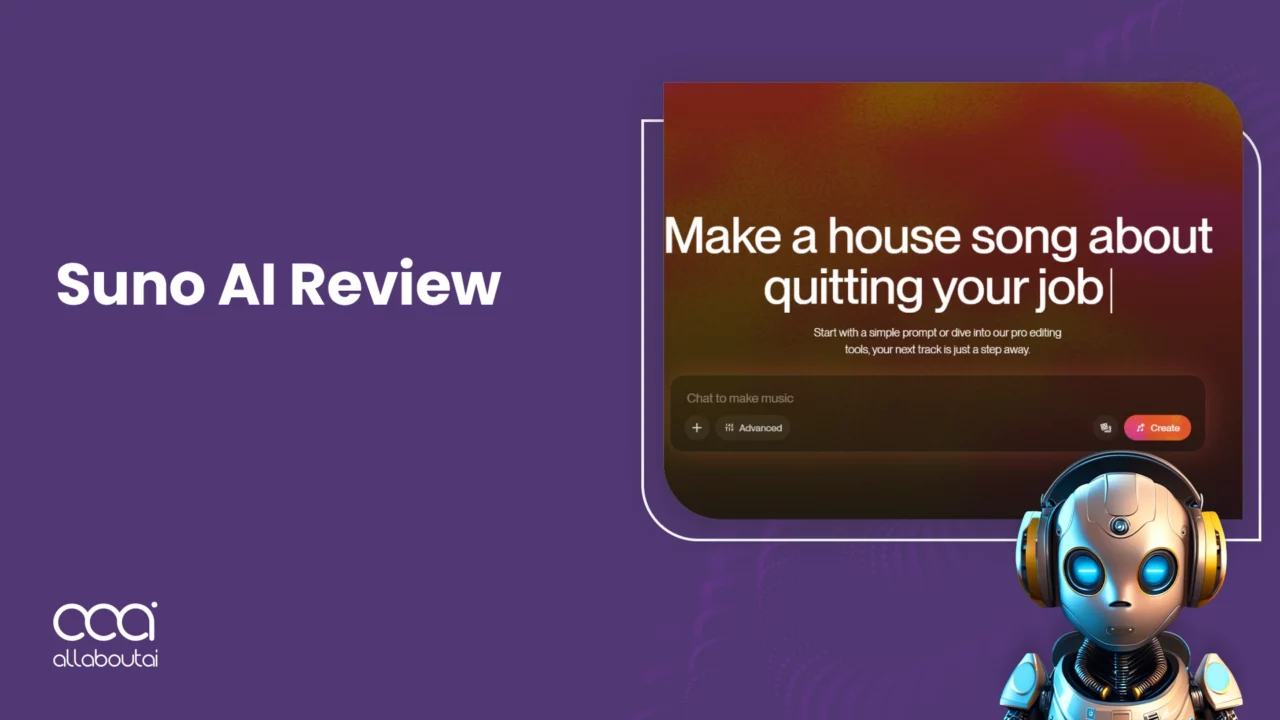
Suno AI is a text-to-music platform that generates complete songs from written descriptions. Think of it as ChatGPT for music. You provide a prompt, specify a genre or mood, optionally add lyrics, and the AI delivers a full track complete with vocals, instruments, and professional mastering.
The current version (v5) produces studio-quality audio at 44.1 kHz. That’s the same sample rate as commercial CDs. These aren’t simple MIDI loops or generic background tracks—we’re talking full songs with synthesized vocals that can mimic pop stars, rappers, EDM vocalists, and more.
Here’s what Suno can create right out of the box:
Complete Musical Compositions
- Tracks ranging from 1 to 8 minutes long
- Multiple genres: pop, hip-hop, rock, EDM, jazz, country, classical
- Vocal performances with emotion, inflection, and stylistic nuance
- Full instrumental arrangements with drums, bass, melody, and harmony
Professional Production Elements
- Automated mixing and mastering
- Genre-appropriate sound design
- Dynamic arrangement (verses, choruses, bridges)
- Stereo imaging and spatial effects
Export Options (v5 Studio)
- Individual stems for further editing
- MIDI files for use in digital audio workstations (DAWs)
- High-quality audio files ready for commercial use
The platform requires zero music theory knowledge. No understanding of chord progressions, time signatures, or mixing techniques. If you can describe what you want in words, Suno can attempt to create it.

How Fast Are We Talking?
Speed is where Suno absolutely dominates. A complete, polished song appears in seconds. Not minutes. Seconds.
For businesses, time is money. A corporate video needs a soundtrack? Done in under a minute. Testing five different musical directions for a campaign? Create them all in five minutes. This rapid iteration cycle is simply impossible with traditional production.
Compare that to the traditional timeline: initial consultations, composition drafts, revision rounds, studio booking, recording sessions, mixing sessions, mastering. Even a simple 30-second jingle typically requires 1-2 weeks and multiple stakeholders’ time.

The Traditional Music Production Process: What You’re Comparing Against
Before we dive into the comparison, let’s clarify what traditional music production actually entails. This is the method that’s created every hit song you’ve ever heard—at least until very recently.
The Traditional Workflow
- Composition: A songwriter or composer creates melodies, harmonies, and chord progressions
- Arrangement: Deciding which instruments play what and when
- Recording: Capturing live musicians and vocalists in a studio
- Editing: Cleaning up performances, timing corrections, pitch adjustments
- Mixing: Balancing levels, adding effects, creating the sonic landscape
- Mastering: Final polish for commercial release standards
This process requires expensive equipment, acoustic treatment, skilled engineers, and talented performers. A professional studio session can cost $50-$500 per hour. Session musicians charge $100-$500 per song. Mixing engineers: $300-$1,000 per track. Mastering: $50-$200 per song.
But there’s something that process delivers that no AI can fully replicate yet: human nuance, spontaneity, and genuine emotion. A vocalist’s unexpected inflection. A guitarist’s signature phrasing. The chemistry between band members playing together. These elements create the “magic” that makes certain songs unforgettable.

The Head-to-Head Comparison: Six Critical Dimensions
1. Workflow and Speed: The Time Factor
Suno AI: Instant gratification. Type your prompt, hit generate, receive a complete song in seconds. Need changes? Generate variations just as quickly. Perfect for rapid prototyping and deadline-driven projects.
Traditional Production: A measured, deliberate process. Even rush jobs take days. Complex productions can span months. However, this time allows for creative evolution and refinement that often leads to superior final products.
Business Impact: For social media content, ad tests, or internal communications, Suno’s speed wins hands down. For brand anthems, commercial campaigns, or anything representing your company long-term, traditional production’s thoughtful pace pays dividends.
2. Accessibility: Who Can Create?
Suno AI: Anyone with internet access and a subscription. No musical training required. Your marketing coordinator can generate tracks as easily as your creative director. The barrier to entry is essentially zero.
Traditional Production: Requires either in-house musical talent or budgets for external professionals. You need to speak the language of music to communicate effectively with producers and musicians. The learning curve is steep for non-musicians.
Business Impact: Suno democratizes music creation for teams without dedicated audio resources. Small businesses and lean startups can compete with larger competitors’ content output without proportional budgets.
3. Sound Quality: The Audio Fidelity Question
Suno AI: Polished and radio-ready, but with a caveat. The v5 model produces impressive vocal clarity and instrumental balance. However, experienced ears often detect a certain “sameness” or algorithmic quality. Think of it as the difference between a photorealistic digital render and an actual photograph.
Traditional Production: Rich harmonic depth, natural dynamics, and organic textures that come from physical instruments and human voices. Professional studio recordings have subtle complexities that algorithms can’t quite match—yet.
Business Impact: For most marketing applications, Suno’s quality is absolutely sufficient. For flagship campaigns or brand identity, traditional production’s superior fidelity and authenticity matter more.
4. Customization and Control: Getting Exactly What You Want
Suno AI: You control the big picture through prompts but have limited granular adjustment. You can’t precisely edit that one drum fill or adjust a specific vocal phrase. The AI interprets your instructions, sometimes brilliantly, sometimes frustratingly off-target.
Traditional Production: Complete control over every single element. Want the bass louder in the second chorus? Done. Need the vocalist to emphasize a specific word? Easy. This precision matters for projects with specific brand requirements.
Business Impact: Suno works beautifully when you’re flexible about exact execution. Traditional production is essential when precise brand alignment or specific creative direction is non-negotiable.
5. Creativity and Originality: The Innovation Question
Suno AI: Algorithm-driven pattern recognition. It’s trained on existing music, so it excels at creating competent, catchy tracks within established genres. It’s less capable of pioneering truly novel musical ideas or capturing nuanced brand personalities.
Traditional Production: Human musicians bring genuine innovation, emotional authenticity, and unique perspectives. They can pioneer new sounds and create music that reflects your brand’s specific personality in ways algorithms can’t anticipate.
Business Impact: For trend-following content, Suno performs admirably. For brand differentiation or thought leadership positioning, human creativity provides the edge you need.
6. Cost Structure: Investment and ROI
Suno AI: Subscription-based pricing makes budgeting predictable. No per-project costs, no studio time charges, no session musician fees. Unlimited generation within your plan limits.
Traditional Production: Variable project-based costs. A simple jingle might cost $2,000-$5,000. A full commercial track with original composition, professional musicians, and high-end production can easily exceed $15,000-$50,000.
Business Impact: Suno delivers extraordinary cost efficiency for high-volume content needs. Traditional production makes financial sense for tentpole projects where quality directly impacts campaign success.

Business Use Cases: When to Choose Which Approach
Ideal Suno AI Applications
- Social media content (TikTok, Instagram Reels, YouTube Shorts)
- Internal videos and presentations
- Rapid prototyping and concept testing
- Event background music
- Podcast intros and outros
- Low-budget marketing campaigns
- A/B testing different musical directions
- Training videos and e-learning modules
As seen with broader AI in 2026 trends, such rapid content creation and workflow automation are transforming how businesses operate in marketing and creative spaces.
Ideal Traditional Production Applications
- Brand anthems and sonic identities
- Major advertising campaigns
- Product launch events
- Trade show presentations
- Corporate image videos
- Investor presentations
- Award submissions
- Any project where music quality directly impacts brand perception

The Hybrid Approach: Best of Both Worlds
Here’s where savvy businesses are finding real value: using both approaches strategically. Generate concepts quickly with Suno, then export the stems and MIDI files to a professional producer for refinement.
This workflow combines AI’s speed and affordability with human expertise and polish. You might generate ten musical directions in Suno, select the most promising two, then hand them to a producer who enhances the arrangement, re-records vocals, and adds custom instrumentation.
The result? You’ve compressed your exploration phase from weeks to minutes, while still delivering a final product with professional-grade quality. Your costs might be 50-70% lower than full traditional production, while your timeline shrinks dramatically.
Notably, major creative software vendors like Adobe now offer integrated AI-powered solutions for rapid prototyping and hybrid creative projects, as highlighted in this overview: Adobe AI integration strategy for creative teams

The Copyright Question: Who Owns What?
For businesses, intellectual property matters tremendously. Here’s what you need to know.
Suno AI: Under current subscription terms, users typically own the outputs they generate. However, questions remain about the AI’s training data and potential copyright issues. For commercial use, carefully review Suno’s terms of service and consider consulting with legal counsel for high-stakes projects.
Traditional Production: Clear intellectual property ownership through standard work-for-hire agreements. You own what you pay for, with no algorithmic complications. This clarity matters for brand assets and commercial licensing.
Business Recommendation: For internal use and social media content, Suno’s ownership model is likely fine. For major campaigns, commercials, or any music that becomes part of your brand identity, traditional production’s clear legal framework provides essential protection.
This strategic legal consideration around IP is a recurring theme as businesses adopt both traditional and innovative AI-powered methods, as discussed in depth for creative and technology teams here: Adobe AI & business workflow

The Future: What Business Leaders Should Watch
AI music generation technology is advancing rapidly. Suno’s Studio interface is becoming more DAW-like, offering increased control and editing capabilities. Audio quality continues improving with each version release.
However, human musicians and producers aren’t becoming obsolete. They’re adapting. The most forward-thinking music professionals are incorporating AI tools into their workflows, using them for rapid ideation while applying human judgment and expertise for refinement.
For business leaders, the smart approach is platform agnostic. Evaluate each project’s specific needs:
- What’s the strategic importance?
- What’s the timeline?
- What’s the budget?
- How long will this asset be in use?
- What are the quality expectations?
- What are the legal and copyright requirements?
Match your music production approach to these answers, not to technology trends or cost alone.
Staying ahead with AI and hybrid workflows is at the core of the physical and agentic AI business transformation now driving change across creative, industrial, and service sectors.

Making the Strategic Choice
Neither Suno AI nor traditional music production is “better” in absolute terms. They’re different tools for different business objectives.
Suno AI revolutionizes speed, accessibility, and cost-efficiency. It empowers teams to create musical content at unprecedented scale and velocity. For the endless content demands of social media and digital marketing, it’s genuinely transformative.
Traditional music production delivers unmatched quality, control, and creative authenticity. For projects where music directly impacts brand perception and business outcomes, the investment in human expertise remains justified.
The most successful approach for most businesses? Strategic deployment of both methods. Use Suno for rapid iteration, concept exploration, and high-volume content needs. Invest in traditional production for brand-defining moments and flagship campaigns.
The competitive advantage isn’t choosing one approach over the other. It’s knowing exactly when to use each—and having the flexibility to leverage both strategically.
As AI continues advancing and traditional production methods evolve, the businesses that thrive will be those that view these not as competing options but as complementary tools in an expanding creative toolkit. The question isn’t “Suno or traditional?” It’s “How can we strategically deploy both to achieve our business objectives most effectively?”
That’s the conversation forward-thinking leaders should be having right now.
—
Word Count: ~2,450 words

FAQ
-
Is Suno AI music royalty-free and can I use it commercially?
Most Suno subscription tiers allow you to use generated tracks commercially, but be sure to read the latest terms of service carefully. For content that will be widely distributed or used in major branding campaigns, consult legal counsel regarding potential copyright risks.
-
Can Suno AI replicate famous artists or copyrighted songs?
Suno intentionally does not allow prompts that request specific copyrighted artists, songs, or styles by name. Any attempt to do so may result in rejected outputs.
-
How does Suno AI’s “stems export” work for hybrid workflows?
With Studio mode, Suno allows you to export vocal, drums, bass, instrumentals, and other stems as separate files. These can then be loaded into editing software like Ableton, Logic, or Pro Tools for further manipulation by a professional producer.
-
What are real-world business results from using Suno versus traditional music production?
Businesses using Suno report significantly reduced turnaround times and lower costs for content like social videos and prototypes, but traditional methods remain the gold standard for brand-defining and emotionally-driven projects.
-
Will AI music generators like Suno replace human songwriters and producers?
Not entirely. AI will automate high-volume, low-stakes content, but human musicians are still essential for originality, emotion, and projects demanding quality and nuance. The future is hybrid: humans plus AI.
-
Is there a risk of copyright claims on AI-generated music in the future?
Because AI models are trained on large datasets, there are open legal questions about outputs. For major campaigns, choose traditional music or have legal review before launch.